
2016 BMW X5 Suspension Warning but the Car Looks Level: Check How the Height Signal Responds

Quick answer: A level parked stance is a single observation, not a complete height-control test. A sensor must report changes correctly, so compare physical position, changing data and sensor condition before blaming the air spring or compressor.
Condition inspection can complement changing height data. An articulating camera such as the AUTOOL SVB308 can document safely accessible damage without becoming a height-measuring instrument. Vehicle support, sensor assessment and calibration still require the correct professional procedure; never get underneath a vehicle supported only by its suspension.
In this guide
Can the warning be real when the body looks level?
Yes. A parked vehicle can look normal at the moment you see it while a control-system problem remains. The warning and the photograph may describe different things: one records the outcome of a monitored event, while the other shows a single resting position.
That does not make every suspension warning evidence of a failed sensor. It means appearance alone is not enough to choose the repair. Record whether the warning occurs at startup, after loading or during ordinary use, without deliberately changing the suspension to provoke it. Include any visible change in stance or abnormal behavior.
Ask the workshop whether normal use is appropriate for the actual warning and condition. A level body is not a guarantee of road safety, and this case is not an instruction to disregard a suspension message.
A photograph and a changing signal answer different questions
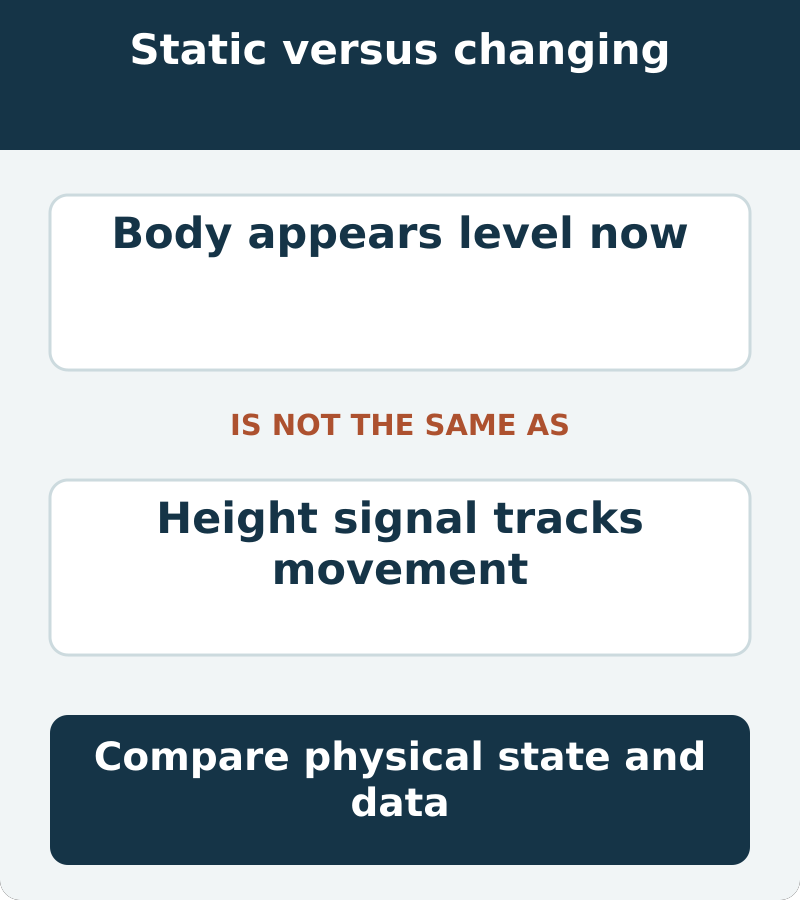
Static position and response are separate observations. One asks where the body is now; the other asks whether the reported position changes appropriately as the system goes through permitted movement. A sensible investigation compares the physical condition with the relevant data.
| Observation | What it can answer |
|---|---|
| Parked stance | How the vehicle sits at that moment |
| Changing data | Whether the signal responds during an appropriate test |
| Component condition | Whether visible damage needs further assessment |
The comparison must follow the vehicle procedure. It is not a rule that left and right numbers must always be equal, nor permission to lift or manipulate the suspension at home. Ask which response was abnormal, rather than requesting a particular numerical match. The important distinction is between an expected change and a signal that does not track it.
In the ALLDATA published case, the X5 looked level but stored 480DB2 for rear-left lifting control time. During controlled movement, left-rear height data did not track as expected. Inspection found a cracked, corroded height sensor. Replacement and ride-height adjustment were followed by a successful reported road check.
Inspect the sensor and its connection to the suspension
A height signal depends on both the sensing assembly and its relationship to the suspension. Inspection therefore needs to consider more than a clean-looking electrical connector. Ask how the technician checked the sensor’s condition, attachment and relevant connections for the particular fault.
Visible cracking or corrosion deserves documentation, but the photograph should be tied to the functional finding. It is stronger to explain how damaged hardware relates to an abnormal response than to offer a close-up as the whole diagnosis.
Keep the inspection boundary clear. Height-controlled suspension can move unexpectedly, and safely exposing its components requires suitable support and procedures. Do not move a link or sensor to see whether the warning disappears. That can change the system’s interpretation without repairing its condition, and the apparent result may be misleading.
Calibration cannot heal a cracked sensor
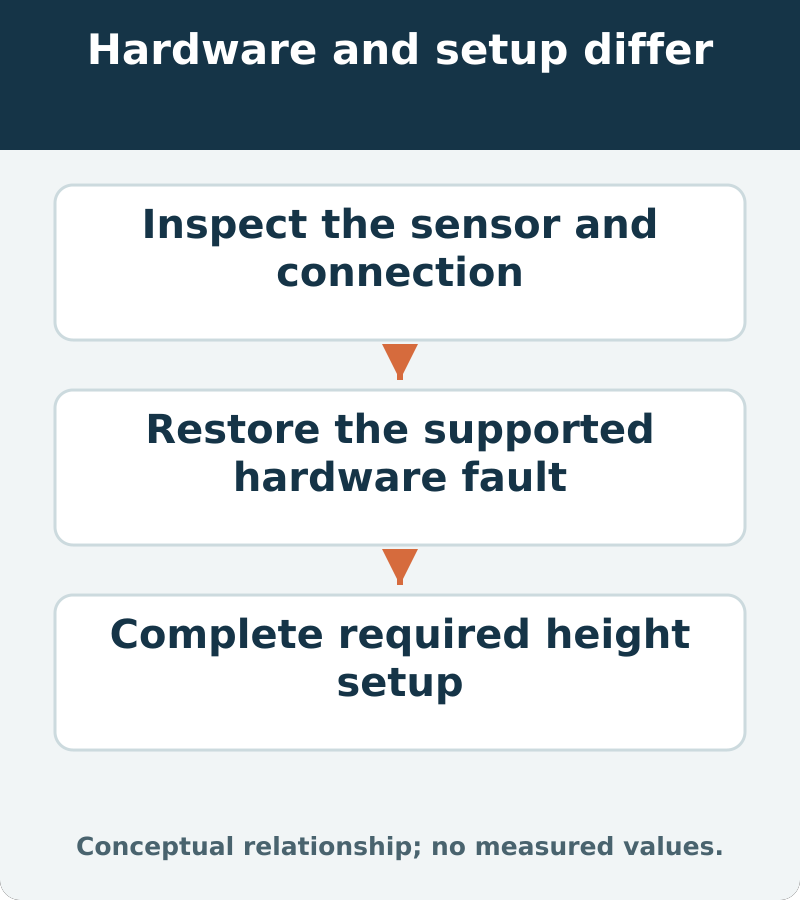
Calibration and hardware diagnosis answer different questions. An adjustment can establish the correct reference relationship after appropriate work; it cannot physically restore a cracked housing or damaged connection. Equally, fitting hardware does not excuse any setup the vehicle requires afterward.
If the estimate includes a height sensor and adjustment, ask why each is needed and what will be verified between them. If adjustment alone is offered, ask what confirms that the underlying component and signal are sound. The point is not to insist on a replacement, but to avoid using setup as an unexplained trial cure.
The published case gives a bounded example of replacement followed by adjustment. It does not supply settings for another X5, prove that the air springs and compressor are fault-free in every circumstance, or establish a universal sensor replacement interval.
What to confirm before normal use
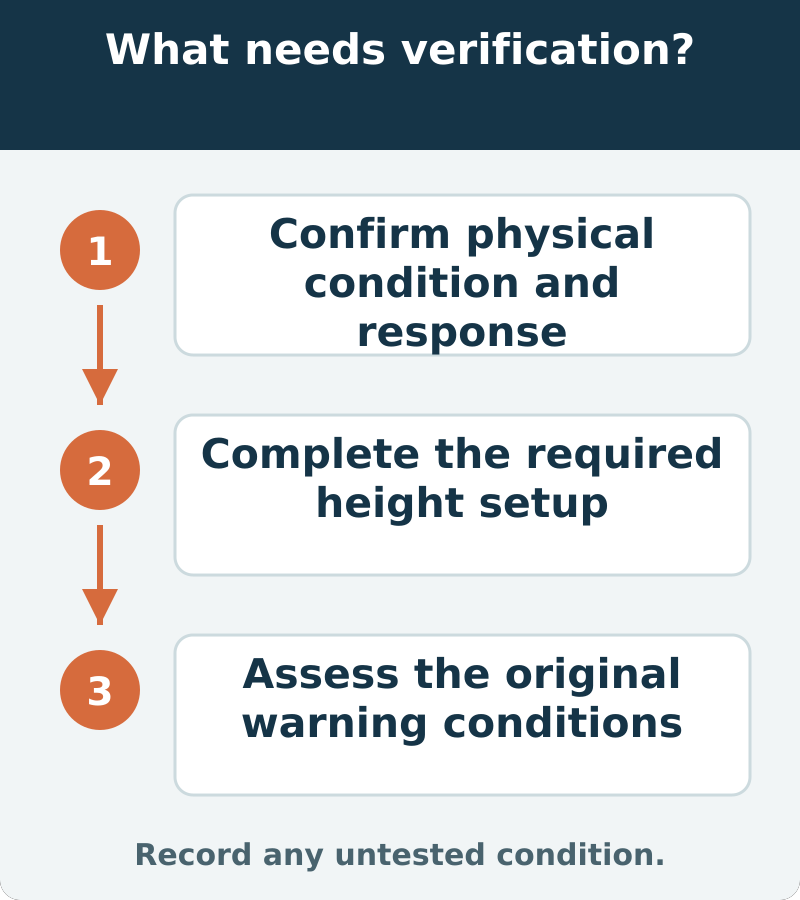
A complete explanation should connect three results: the relevant physical condition is acceptable, the signal responds appropriately and the required setup has been completed. Ask whether the final assessment included the conditions associated with the warning, not merely clearing stored information.
Have any remaining suspension concerns listed separately. If the shop has not carried out a full leak or compressor assessment, a sensor repair should not be described as proof of the entire system’s condition. That boundary helps you understand both the work you bought and the questions it was not intended to answer.
After collection, follow the repairer’s use guidance and report a returning warning or changed stance promptly. Do not repeatedly load the vehicle or command height changes as a home endurance test. The useful follow-up is whether the original symptom returns during permitted normal use.










Comments 0
Questions, fixes, and real-world diagnostic notes from readers.
Be the first to share a diagnostic result or ask a follow-up question.