
2011 Crown Victoria P018C and Stalling: Compare the Pressure Change, Not Just One Number

Quick answer: A normal gauge reading at one moment does not clear a pressure-feedback fault. Compare the sensor and an independent gauge as operating conditions change.
“Fuel pressure was okay” needs a second sentence: under what condition, and according to which measurement? An intermittently stalling car needs a controlled investigation, not repeated public-road attempts to catch a number.
A separate gauge can supply independent evidence. The AUTOOL PT635 is a low-pressure testing option only where fuel, range and adapter match the procedure. Fuel connections require a qualified setup; do not run a fuel hose into the cabin or connect this equipment to a high-pressure rail.
The purpose of comparison is to understand whether the feedback follows the physical condition—not to declare two unlike pressure readings wrong because their numbers differ.

In this guide
P018C is a circuit clue, not a pump order
Preserve the exact code, its status and relevant operating information before intervention. A code involving pressure feedback should lead to checks of the requirement that failed, not an automatic purchase of either the sensor or the pump.
Ask the workshop which evidence describes actual supply and which describes the controller’s information about that supply. Both can affect the investigation, but they are not interchangeable.
If a test passed while the car was running normally, keep that result with its conditions. It may be accurate and still leave the intermittent event unexplained. “Passed once” is not the same claim as “behaved correctly during the failure.”
The comparison that changed this case
ALLDATA’s 2011 Crown Victoria 4.6L Flex Fuel account describes intermittent stalling with P018C despite fuel pressure being within specification. The sensor PID did not follow mechanical-gauge changes across operating conditions. Replacing the fuel-rail pressure sensor restored agreement; the reported road test had no stalling and the MIL remained off. Raw logs and a complete sensor-circuit test record are not published.
That missing detail matters when applying the lesson. A disagreement should trigger the relevant reference, ground, signal and interpretation checks. It does not, by itself, prove which item internally failed on a different car.
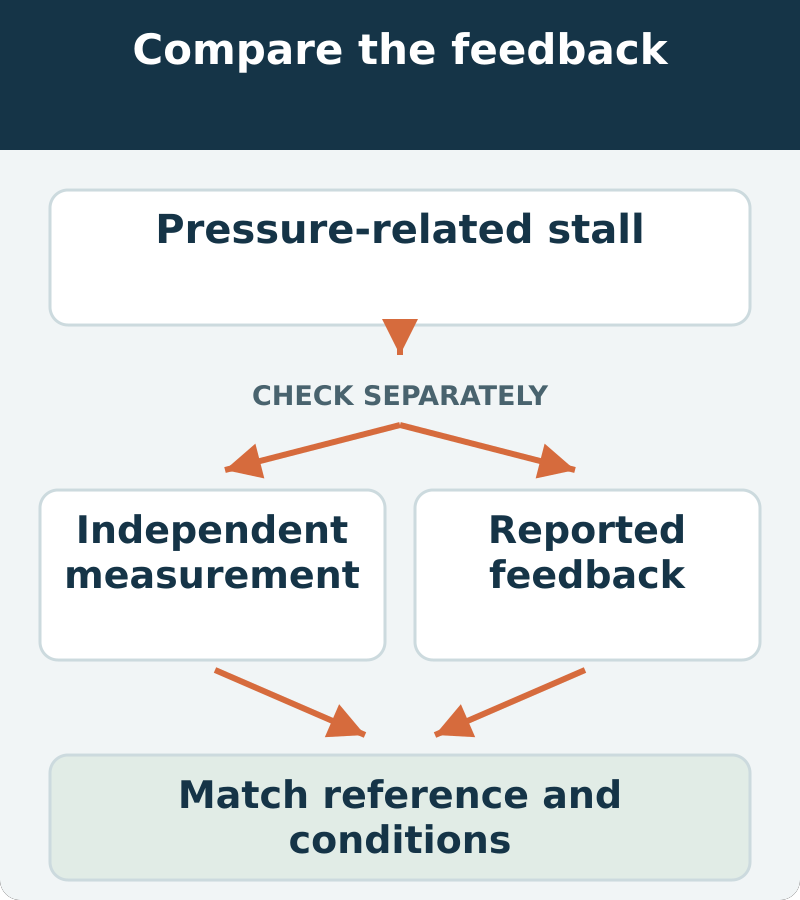
Make sure both readings describe the same pressure
Two instruments can use different pressure references. A gauge-relative value and a value referenced to another system condition cannot always be compared as if they were the same quantity.
The technician should identify the units, measuring location and reference used by each source of information. Confirm the application’s PID definition rather than infer it from a short display label.
Timing belongs in the comparison too. If one display updates slowly or a saved value belongs to a different operating moment, an apparent mismatch may be partly a comparison problem. Align the observation before deciding that a component is inaccurate.
For the owner, the request can stay simple: explain what each reading represents and why the expected relationship is valid for this car. You do not need to calculate an offset yourself to ask for a defensible comparison.
Watch the response rather than a frozen snapshot
A single plausible number can conceal feedback that does not respond appropriately when conditions change. A useful record shows the relevant state, what changed and how each observation responded.
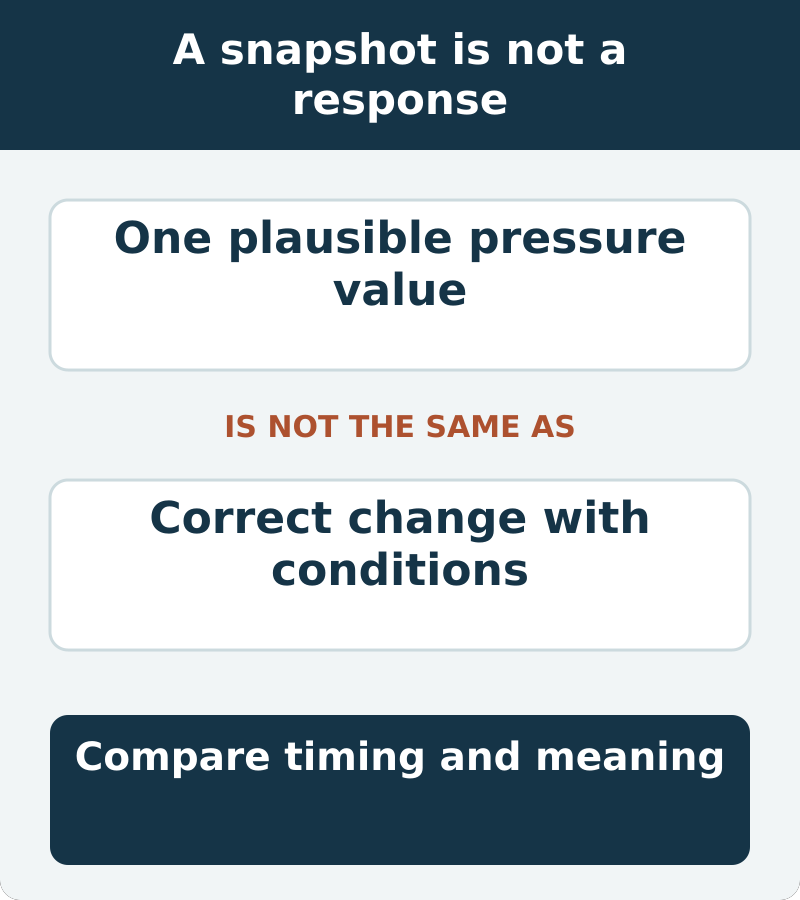
This does not mean every diagnostic report needs a graph. A short, clearly labeled sequence can be more useful than an unlabeled trace. What matters is that the comparison is actually observed, not illustrated with invented before-and-after values.
Any dynamic test must use a safe professional arrangement. The need to capture an intermittent event does not justify handling fuel connections around a running vehicle without the required precautions.
What should support a sensor replacement?
Ask how the shop distinguished inaccurate feedback from a genuine supply change, a wiring problem or an incorrect interpretation of the data. The replacement decision should identify the requirement that failed and the evidence supporting that location.
Also ask what will be checked after installation. Restoring a sensible signal and resolving the driver’s stalling complaint are related, but one does not automatically document the other.
If the next step is further diagnosis rather than a part, that can be a useful outcome. A normal static pressure reading should not force the workshop to choose between declaring the car healthy and guessing at a sensor. There is a third option: collect the missing comparison under the relevant condition.
Verify feedback and drivability separately
Request the appropriate installation and fuel-leak checks, then a repeat of the matched feedback assessment. Confirm fault status and the original operating complaint through the workshop’s safe verification plan.
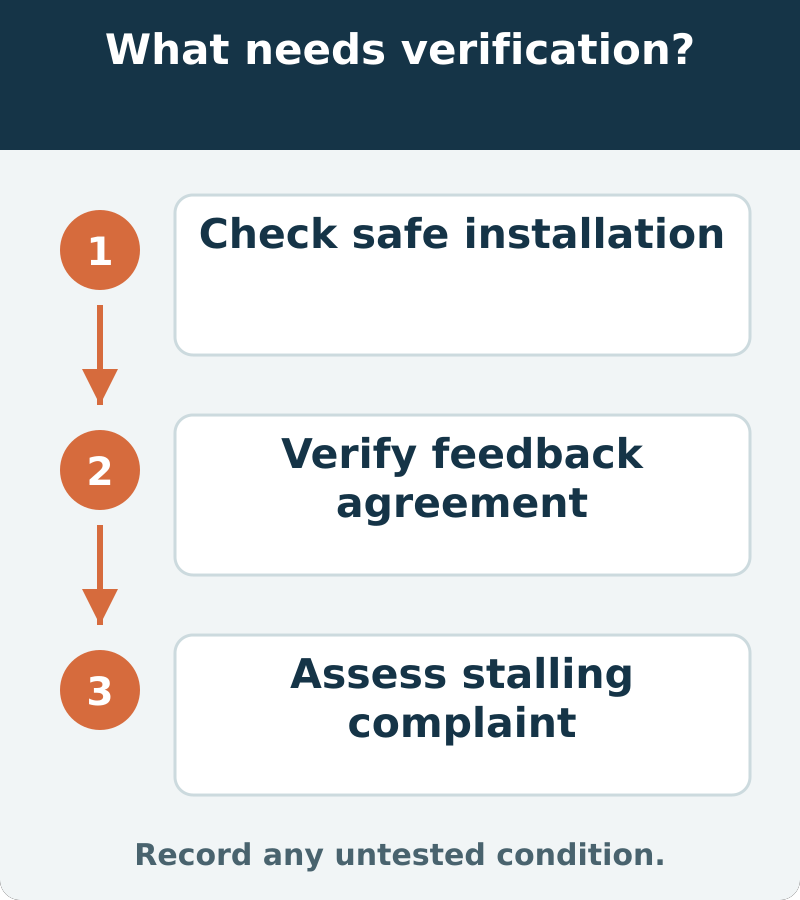
If the car later stalls again, retain the new event’s conditions and warnings. A returning symptom may provide evidence that was absent before. Begin with that information rather than assuming either the new sensor must be bad or the previous pressure check must have settled every fuel-related question.









Comments 0
Questions, fixes, and real-world diagnostic notes from readers.
Be the first to share a diagnostic result or ask a follow-up question.