
1988 GMC C1500 Stalls With the Heater On: The Weather Was Only Part of the Pattern

Quick answer: A cold-weather complaint can be triggered by heat inside the cabin. Record the heater setting and elapsed time before deciding which component deserves testing.
Cold weather changes more than the temperature under the hood. It changes how long the heater runs and which parts of the cabin become warm. If a truck stalls unpredictably, stop road experimentation and arrange a controlled diagnosis.
Before an expensive control-unit decision, identified electrical supplies and grounds deserve checking. A multimeter such as the AUTOOL DM301 can support those basic circuit checks. It cannot, by itself, establish the cause of an intermittent injector-command fault.
The more valuable first tool may be a precise description: weather, heater setting, elapsed time and what the engine did immediately before the stall.

In this guide
Ask what cold weather changed inside the truck
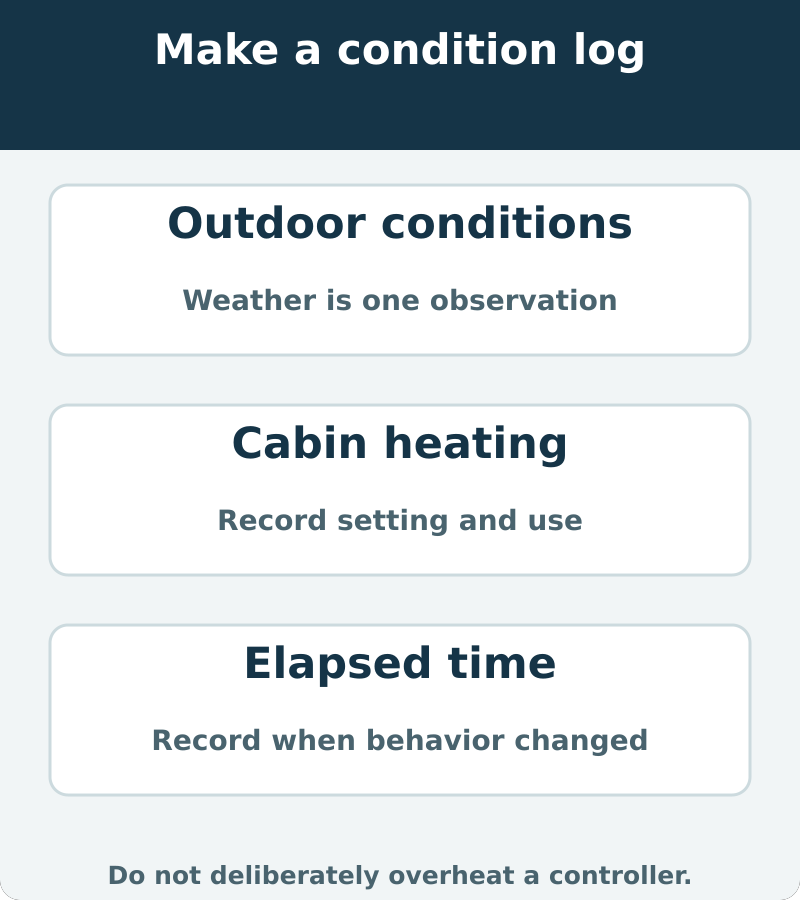
“Only in winter” is a useful clue, but it bundles several conditions into one phrase. Was the truck driven differently? Was the heater on maximum? Had the cabin been warming for a long time? Did the same fault occur after a short cold start?
Separate observations from interpretations. Write “heater on high for the journey” rather than “cold damaged the computer.” The former gives the technician something to compare; the latter starts with a conclusion that may be wrong.
An owner can keep this record without provoking another dangerous event. Note ordinary observations already available and let the workshop decide how to investigate safely. Do not deliberately heat a module or run an engine for hours in a garage.
The history contained more than one fault
In Gary Goms’s 1988 C1500 investigation, a previous ECM repair concerned an IAC fault. A later surge/stall survived distributor replacement. Extended cabin heating helped expose an injector-command problem associated with the ECM. A replacement module also produced trouble after warming, but with a different operating behavior; another replacement was reported dependable. The account matters because similar symptoms did not always represent the same failure mechanism.
Service history should therefore be read as a sequence of tested problems, not one long list of failed parts. Ask what each visit actually changed. A valid earlier repair does not prove a later complaint is unrelated, but neither does a return visit automatically invalidate the earlier work.
Make the symptom repeatable without forcing it
Repeatability means understanding the conditions well enough to make a useful comparison. It does not mean applying an arbitrary heat source until something stops working. Artificial stress can introduce a failure the driver never experienced.
A professional plan should define the observation sought, the safe setup and the stopping condition. It should also identify which signals or operating states need to be captured when the complaint appears. A perfect reading after the truck has recovered may say little about the event.
Temperature measurements need labels too. An infrared instrument reads a surface; it does not reveal the temperature inside a controller. Treat a case-temperature observation as contextual information, not a direct measurement of every internal component.
A new module can fail a different way
“It still stalls” describes an outcome. It does not establish that the replacement and original module behave identically. Compare the electrical or operating evidence that led to the first decision with what happens now.
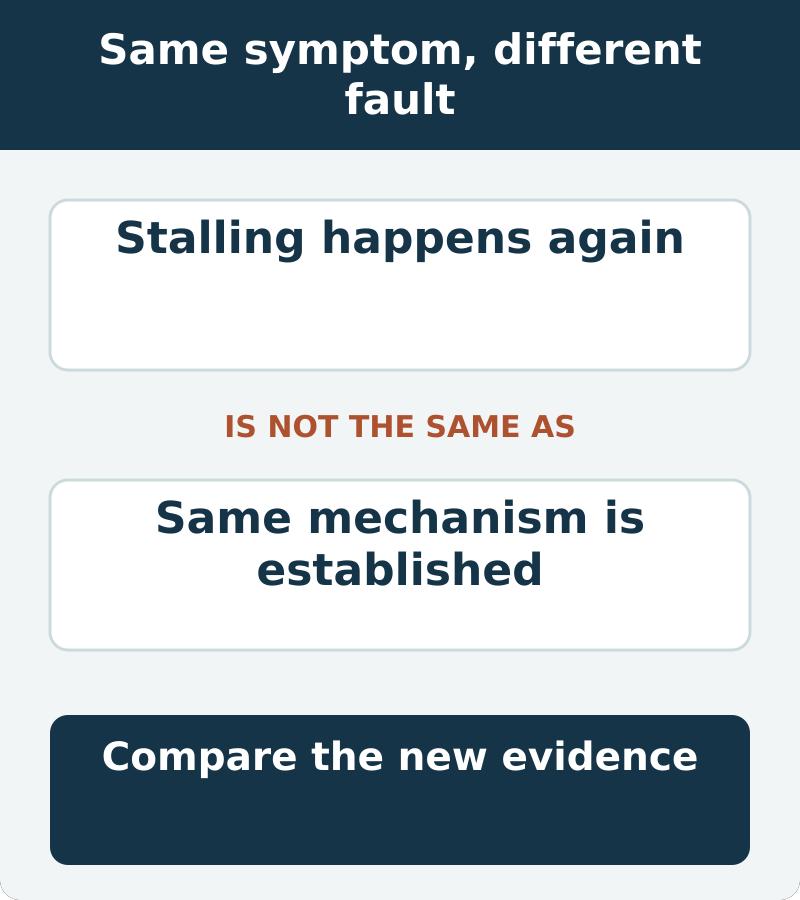
That protects against two mistakes: assuming a new component cannot be faulty, and assuming every return visit proves the same component failed again. Installation, electrical support and the actual replacement’s identity still matter.
For the owner, ask what changed in the evidence—not merely how many times a part has been replaced. A responsible explanation may distinguish a confirmed fault from a remaining possibility and propose a focused next test.
What to put on the return-visit worksheet
Bring the previous invoice and a short event record. Useful entries include the time since starting, heater use, whether the engine surged before stopping, restart behavior and any new warning. If something was not observed, leave it unknown rather than reconstructing it later.
Ask the shop to add the conditions under which its own checks passed or failed. “Tested okay” is much more useful when it specifies whether the vehicle had reached the state associated with the complaint.
There is no need to demand an expensive component swap to eliminate doubt. The next authorized action should address a defined uncertainty. If difficult access or substitution becomes appropriate, agree on what result would support continuing down that branch and what would send the investigation elsewhere.
Repeat the condition that exposed the failure
The proposed final check should revisit the relevant operating state through a safe workshop plan. Confirm that the repaired requirement holds, that the original complaint does not recur during the assessed period, and that any condition not tested is recorded.
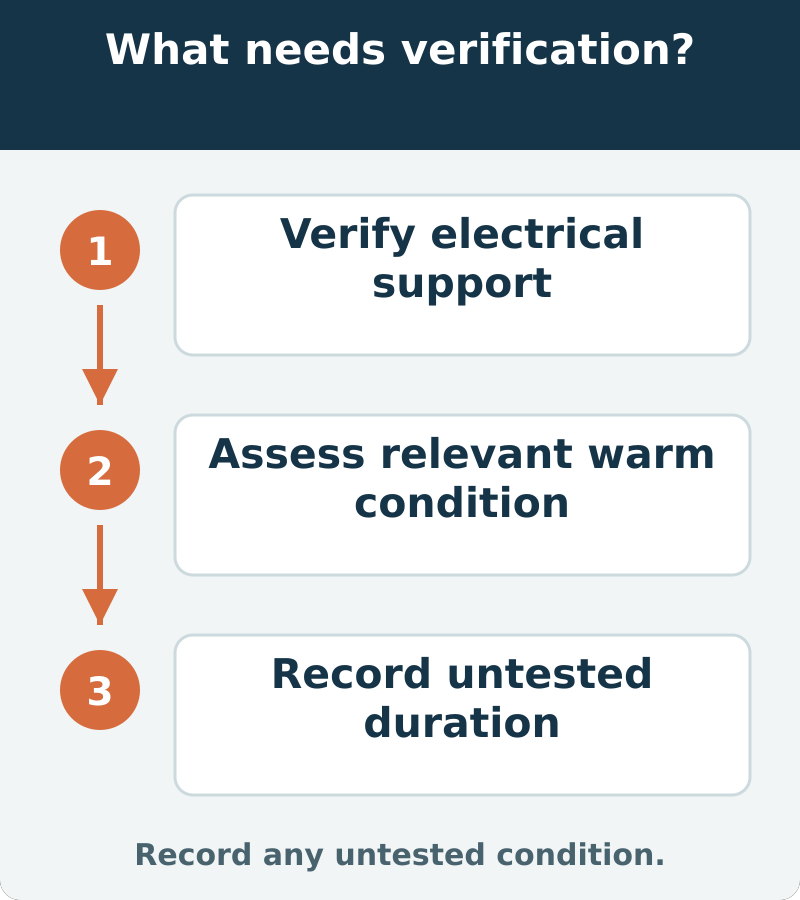
A short restart is not equivalent to a long-duration complaint. If the workshop cannot complete the relevant observation before collection, arrange the follow-up explicitly. A clear limited result is more useful than another assurance that the newest part must have ended the story.










Comments 0
Questions, fixes, and real-world diagnostic notes from readers.
Be the first to share a diagnostic result or ask a follow-up question.