
2006 Mercury Mariner Hybrid ABS Bleed Error 06: Pressure Alone Was Not Enough

Quick answer: A pressure bleeder can show pressure yet fail to deliver enough fluid during an active service routine. This Mariner case turned on the supply hose, not another HCU.
A brake-service routine that repeatedly stops at the same stage needs a reason, not another blind restart. With an incomplete bleed or uncertain pedal, keep the vehicle out of service. Hybrid brake hydraulics can retain pressure and activate unexpectedly; this is trained-technician work.
The fluid-supply equipment must match the procedure as well as the reservoir. A controlled bleeder such as the AUTOOL AST618 is an equipment option to evaluate for fluid, pressure, adapter and delivery compatibility—not a confirmed match to this Mariner’s hybrid routine or a substitute for its scan tool.
This case illustrates a service bottleneck: pressure can be available at the equipment while the connected path cannot deliver what the active procedure demands.

In this guide
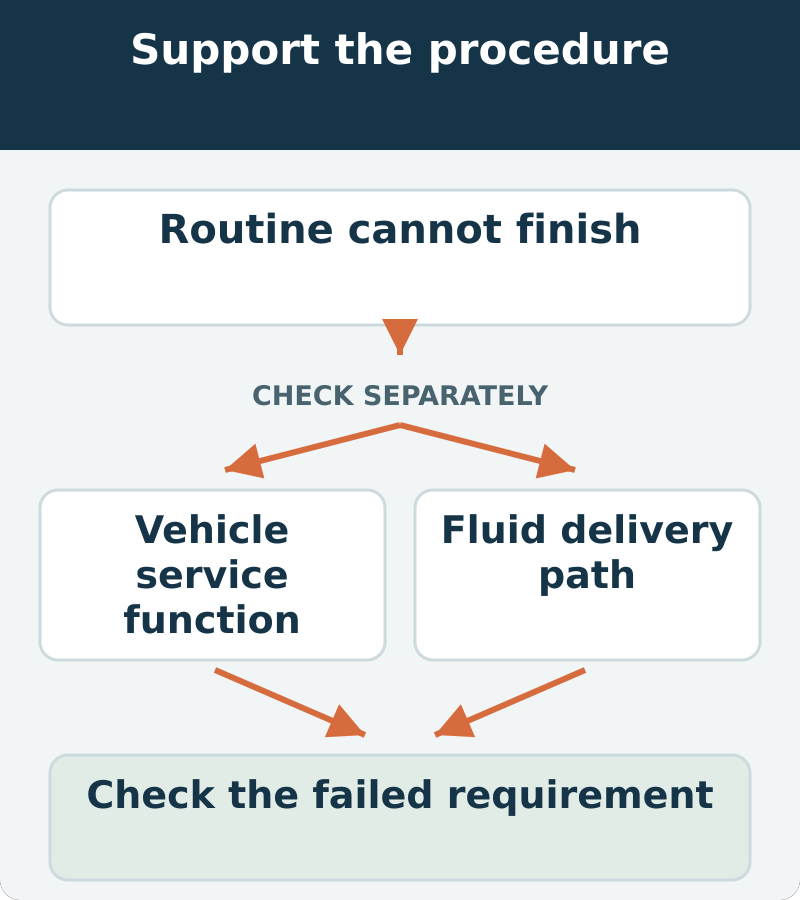
Stop repeating a routine that cannot finish
Before the next attempt, save the exact error, the stage reached and the procedure used. A recurring stop point is useful diagnostic information. Repeating the operation without changing or measuring anything may consume fluid without explaining the failure.
For an owner, ask whether the shop is following the procedure for the exact vehicle and work performed. “We have a pressure bleeder” is not the complete answer. The brake system’s required service functions and the external equipment’s capabilities need to be checked together.
This article deliberately does not provide a bleed order, pedal sequence or pressure setting. Those details must come from the applicable service information, including the precautions for stored pressure and system activation.
What changed in the reported repair
ALLDATA’s 2006 Mariner Hybrid account describes error 06 at the last wheel during repeated IDS-assisted bleeding after HCU replacement. The suspected restriction was the internal diameter of the hose between the bleeder and reservoir. Changing to a larger-ID supply hose allowed the routine to finish. The report does not publish a final braking-performance measurement.
That result supports investigating the equipment path in a similar failure. It does not establish that every error with that number means “hose too small,” or authorize a hose modification without checking the required equipment and vehicle procedure.
A pressure reading is not a delivery test
Static pressure describes a condition when demand is absent or limited. Delivery describes what reaches the destination while fluid is being requested. A restriction may be inconspicuous during the first observation and important during the second.
The practical question is therefore not only “What does the gauge show?” but “Where was that pressure observed, and what was happening at that moment?” A reading upstream of a restrictive path does not automatically describe conditions downstream during demand.
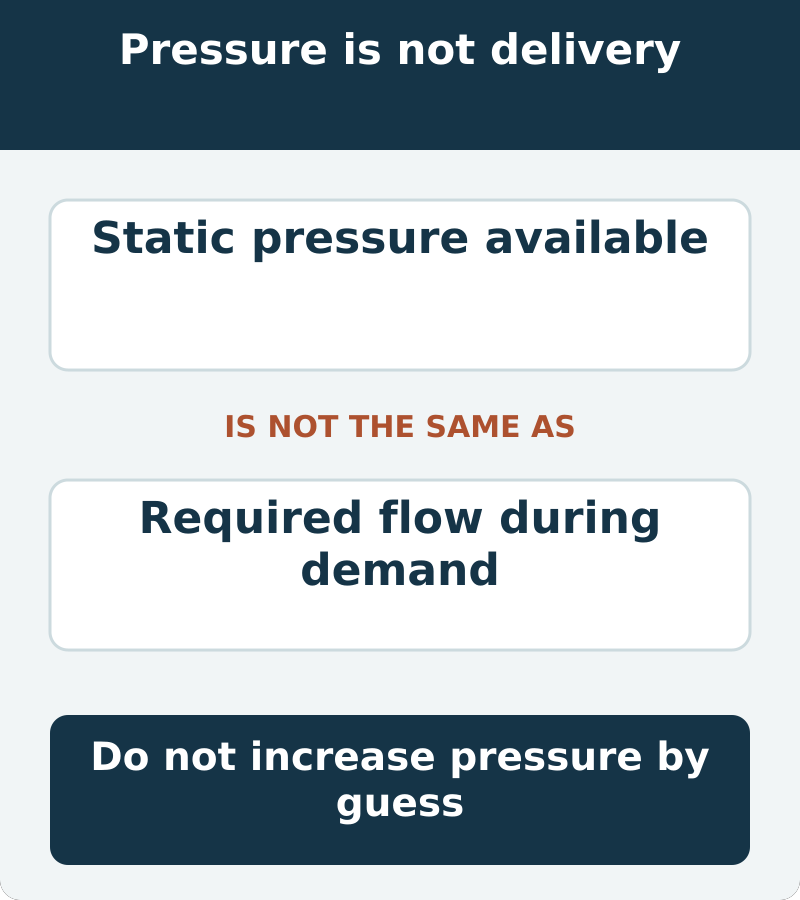
This distinction also explains why turning pressure up by guesswork is not an acceptable fix. The vehicle, reservoir connection and equipment have limits. A delivery problem calls for a correctly specified path, not an improvised attempt to overpower an unknown restriction.
Check the whole supply path before blaming the HCU
Have the technician evaluate the assembled equipment, not just its main unit. The reservoir adapter, hose, couplings, fluid supply and operating settings form one delivery path. A compatible-looking connector does not prove that the complete arrangement meets the required demand.
The review should also preserve alternatives. Incorrect procedure selection, an installation issue or another system fault may lead to a failed routine. The point is to check a plausible external bottleneck before treating a recently installed hydraulic control unit as defective.
| Service question | Evidence worth requesting |
|---|---|
| Was the correct routine selected? | Vehicle identification and the applicable service operation |
| Can the equipment support it? | Compatibility of fluid, pressure and the complete delivery path |
| Did the operation finish? | The actual routine result, with any remaining errors |
| Is the vehicle ready for use? | Completion of the required brake-system acceptance checks |
Why the scan tool and bleeder have different jobs
The diagnostic interface carries out the vehicle’s supported service functions. The external bleeder supplies fluid under the conditions the procedure requires. Neither role disappears because the other device has more features.
That is why a marketing description such as multi-wheel operation does not define the sequence for a particular hybrid. The vehicle procedure remains the authority. A workshop should be able to explain both roles without presenting the purchase of a different machine as proof that the brakes are repaired.
If the required capability or procedure is unavailable, the safe handoff is to a suitably equipped service provider. It is not to release the vehicle with an unfinished operation and hope ordinary driving completes it.
Completion still needs a brake-system sign-off
A completed automated routine is one result within a larger service process. Ask what the applicable procedure requires afterward, including system integrity, fault status and safe functional verification. These are acceptance questions for your repair, not additional results claimed for the historical case.
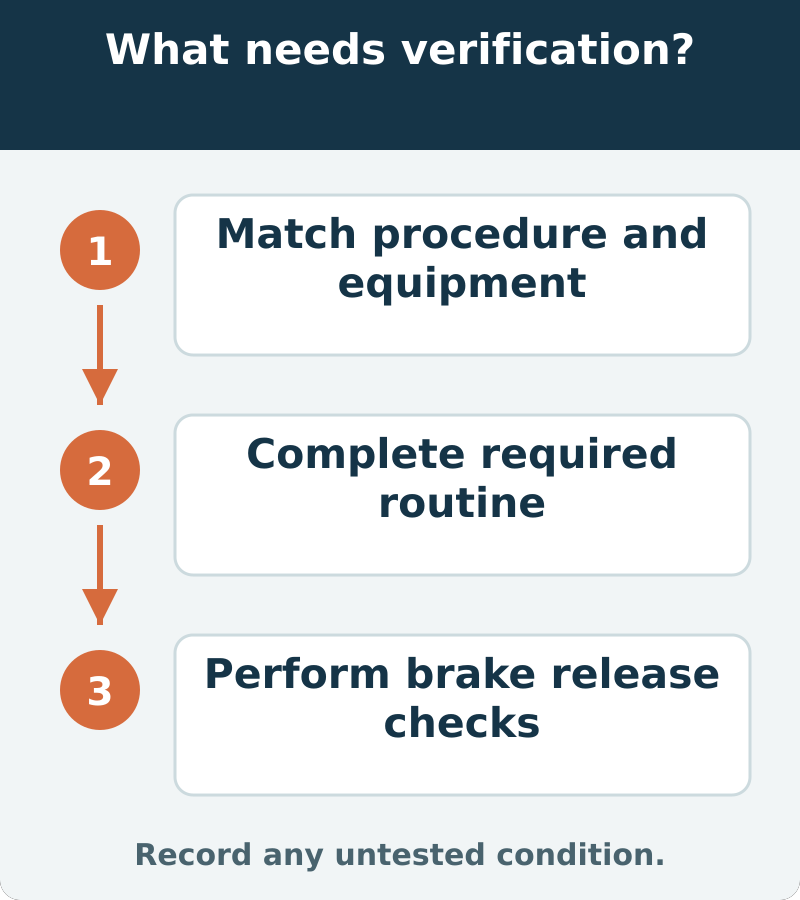
The final explanation should connect the original failure to the corrected requirement. “The routine now completes because its supply path was corrected” is meaningful. It still needs the separate answer to the owner’s most important question: what evidence supports returning this vehicle to use?










Comments 0
Questions, fixes, and real-world diagnostic notes from readers.
Be the first to share a diagnostic result or ask a follow-up question.