
GM Gasoline Engine Cranks but Won’t Start Cold? Compare Compression Before Fuel Parts

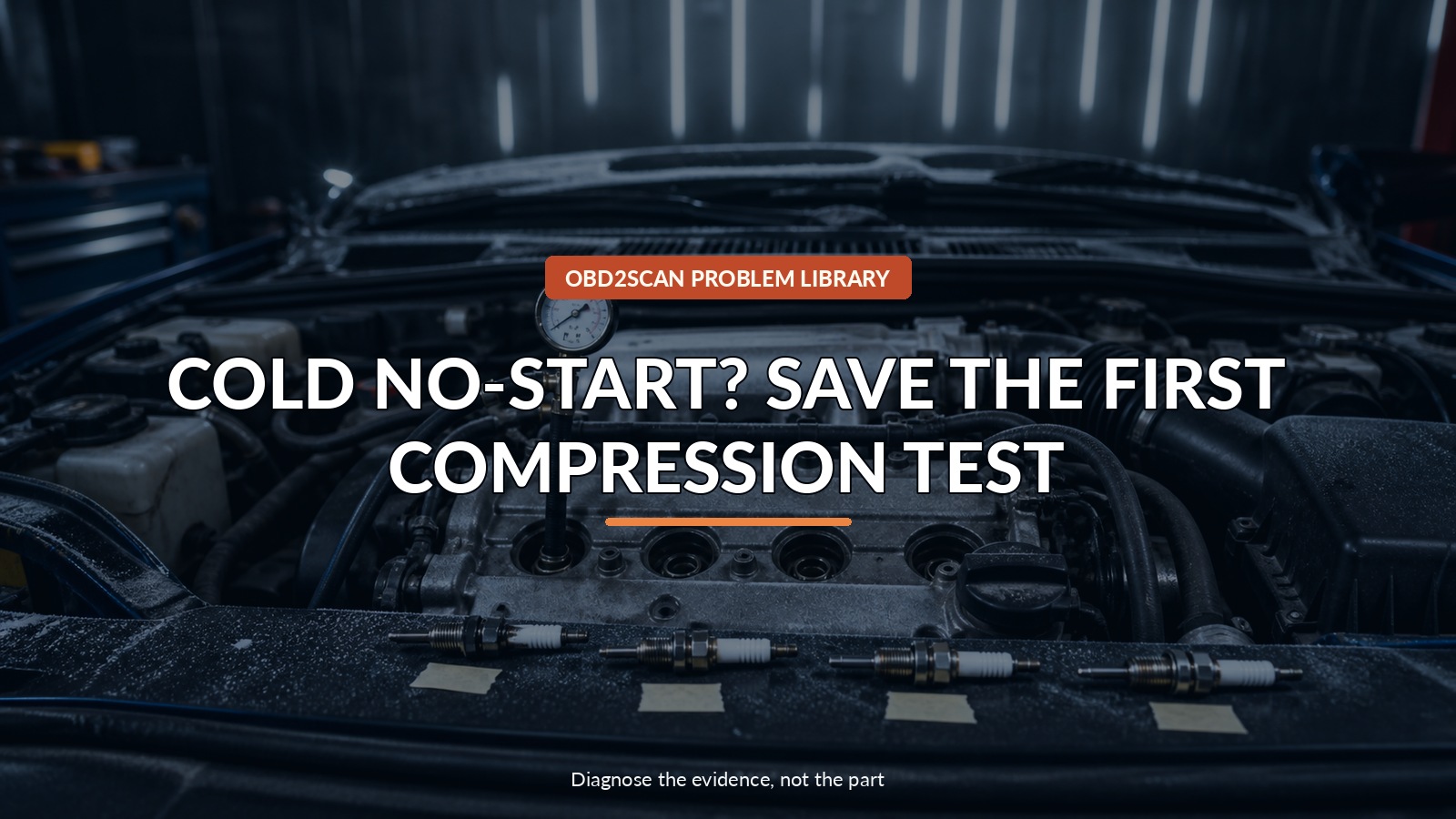
Cold No-Start? Save The First Compression Test
A GM gasoline engine that cranks without starting on a cold morning can quickly lose its best evidence. Repeated cranking wets the plugs, lowers battery voltage, and may warm or free a sticking valve. Preserve the sound and first revolutions, then compare all cylinders before fuel parts are replaced.
A gasoline-engine compression kit can quantify that first cold comparison when fuel and ignition are safely disabled. The AUTOOL PT610 cylinder-pressure gauge is one compatible route with the correct adapter. It cannot identify where pressure escapes, replace a leak-down test, make solvent induction safe, or authorize GM’s cleaning procedure.
GM bulletin 16-NA-383 notes an unusual cold pattern: multiple cylinders may show zero compression when valves stick, and the condition can change as the engine warms. Treat the diagnosis as a filmstrip—first crank, cold compression, leak path, warm comparison—not a single frame.
Quick answer: Stop repeated fuel-fouling cranks, preserve the first cold event, compare every cylinder cold, and use leak-down evidence to identify the escape path.
In this guide
Preserve the first cold crank
Record overnight temperature, soak time, oil viscosity, fuel source, recent short-trip pattern, battery voltage before crank, cranking RPM, and the exact sound. Note popping through the intake or exhaust, uneven cranking cadence, fuel odor, and whether the engine briefly fires.
Save all DTCs and freeze frames. Inspect the oil and coolant levels and stop for an overfilled crankcase, coolant intrusion, abnormal mechanical noise, or evidence of hydrostatic lock. Never force an engine through a hard stop with the starter.
Stop adding fuel to the evidence
After one useful reproduction, stop repeated start attempts. Excess fuel can wash cylinder walls, dilute oil, foul plugs, damage the catalyst if the engine begins firing, and lower measured compression. Follow service information to disable fuel and ignition before mechanical testing.
Remove and label spark plugs by cylinder. Photograph deposits immediately. Wet fuel on several plugs confirms delivery reached those cylinders, but it does not prove correct pressure, injector sealing, or fuel quality. Oil ash, coolant-cleaned electrodes, and impact damage open different branches.
Confirm cranking voltage and speed
Compression numbers cannot be compared fairly when cranking speed falls from cylinder to cylinder. Fully support or charge the battery using the approved method, verify starter current/voltage behavior, and hold throttle/air path as the procedure specifies.
If relative compression data is available from current or crank-signal analysis, use it as a quick balance screen. It can identify uneven contribution without plug removal, but absolute sealing still needs mechanical or leak-down evidence.
Compare every cylinder cold
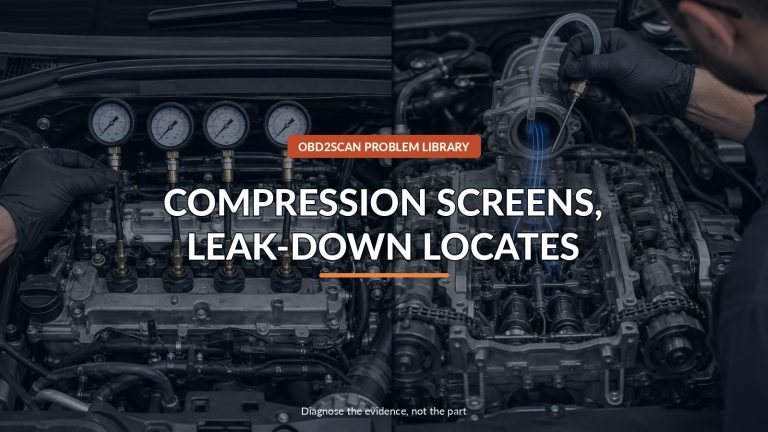
Use the exact threaded adapter, verify its seal, disable the systems correctly, and crank the same number of compression strokes per cylinder. Record first-puff pressure and final pressure rather than only the peak.
| Cylinder | First puff | Final cold pressure | Plug condition | Leak-down path |
|---|---|---|---|---|
| 1 | Record | Record | Label/photo | Later if needed |
| 2 | Record | Record | Label/photo | Later if needed |
| 3 | Record | Record | Label/photo | Later if needed |
| 4+ | Record | Record | Label/photo | Later if needed |
Use GM’s engine-specific specification. Consistency, cranking speed, and pattern matter; a generic universal psi threshold does not.
Interpret zero on several cylinders carefully
Multiple near-zero cold readings can occur when valves are held open by deposits, but also with incorrect valve timing, damaged valvetrain, severe wash-down, or a test setup error. Repeat the gauge seal check and compare cranking cadence before deciding.
GM describes popping through the intake/exhaust and fuel-fouled plugs as companion clues. Their combination increases the relevance of the sticking-valve bulletin; none alone proves it.
Add leak-down to name the escape path
Position each cylinder correctly and apply regulated air using a rated leak-down tester. Listen and measure at the intake, exhaust, crankcase, and cooling system. Keep hands clear because air pressure can rotate the engine.
Air at the intake supports an intake-valve sealing problem; exhaust flow supports an exhaust valve path; crankcase flow points toward rings/cylinder; bubbles in coolant raise head-gasket or casting concerns. A cylinder at the wrong position can make a healthy valve appear open, so verify timing position.
Separate sticking from damaged valvetrain
GM’s bulletin separates possible deposit-related sticking from damaged components such as a bent valve or cam-follower concern. Use borescope, lift, timing, and leak-path evidence as current service information directs. Do not pour solvent into the intake or cylinders as an internet shortcut.
The OEM cleaning process involves controlled chemicals and explicit hydrolock precautions. It belongs with trained technicians and the correct equipment. A fuel-quality recommendation may help prevention, but it cannot repair bent hardware or prove the fuel caused this event.
Verify the next true cold start
After repair, change contaminated oil if required, restore labeled components, confirm no leaks, and perform a warm running check without catalyst-damaging misfire. Then let the engine reach the same overnight temperature and repeat cranking-voltage, start-time, misfire, and compression observations.
A warm restart is not proof for a cold sticking event. The next true cold start must be normal, compression must remain balanced, and no misfire or fuel-dilution evidence should return.
Package the before-and-after filmstrip
Give the engine technician a cylinder-labeled set: plug photos, cold first-puff and final compression, cranking RPM and voltage, leak-down percentage and escape point, borescope observations, oil/fuel condition, and the temperature at each stage. Add the next-morning start video and post-repair scan. Keeping cylinder identity intact prevents a deposit or damage clue from being averaged away, and it lets the shop show whether the repair restored sealing or merely warmed the engine enough for the symptom to disappear temporarily.




Comments 0
Questions, fixes, and real-world diagnostic notes from readers.
Be the first to share a diagnostic result or ask a follow-up question.