Subaru Forester SJ, SK, or SL? Identify the 2014-2025+ Generation

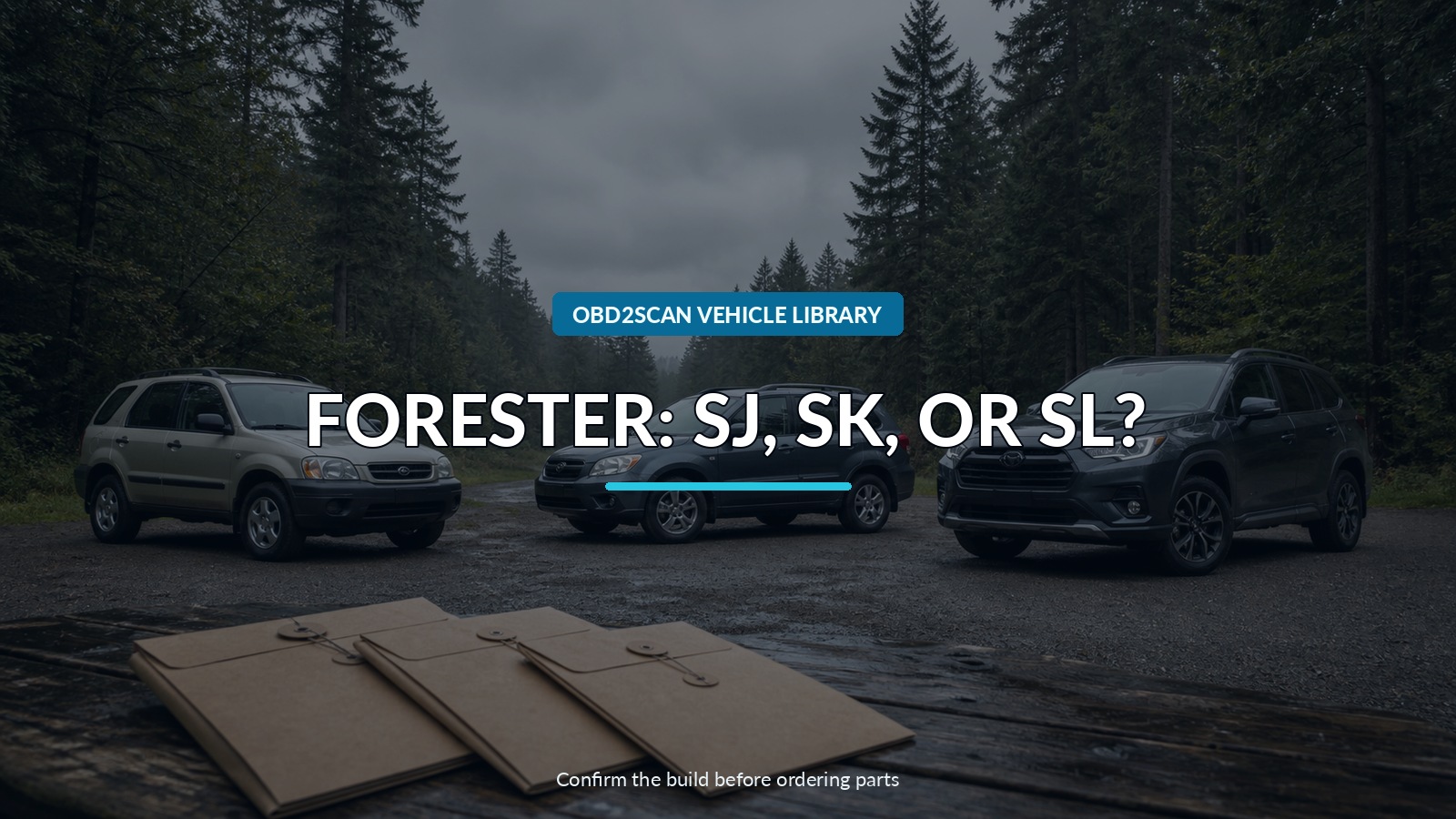
Conceptual identity-verification scene: Forester: Sj, Sk, Or Sl?
A modern U.S. Subaru Forester fits into three useful envelopes: 2014–2018 is the fourth-generation SJ era, 2019–2024 is the fifth-generation SK era, and the redesigned 2025 model begins the sixth-generation SL-era family. The code on an enthusiast listing is only the envelope label. The contents are VIN/build, engine, drivetrain, trim, safety equipment, production date, and the part actually fitted.
Open the envelopes in order instead of mixing photographs, memories, and marketplace descriptions. The first holds factory identity. The second holds the vehicle’s physical configuration. The third holds evidence for the specific job.
This structure keeps owner-friendly observations useful without allowing them to outrank labels. Each envelope answers a different question, and the job closes only when their contents agree.
Quick answer: For U.S. Foresters, 2014–2018 is the SJ-era fourth generation, 2019–2024 the SK-era fifth, and 2025+ the SL-era sixth; then verify build and equipment.
In this guide
Label three ownership envelopes
| U.S. model years | Generation shorthand | First-envelope answer | Questions that stay open |
|---|---|---|---|
| 2014–2018 | SJ era | Fourth generation | Engine, trim, EyeSight, transmission, production split |
| 2019–2024 | SK era | Fifth generation | The same, plus hybrid/market caveats outside U.S. assumptions |
| 2025 onward | SL era | Sixth generation | Exact grade, safety hardware, powertrain, options and revisions |
Chassis-code language is convenient, but not every OEM publication or market uses it identically. Put “U.S. model year” beside the shorthand so another reader knows which map you used.
The physical VIN should match the certification label. Subaru build data and the NHTSA VIN Decoder provide separate checks. Neither substitutes for inspecting a component that may have been replaced.
File the SJ evidence
For a 2014–2018 Forester, photograph the VIN, certification label, emissions label, and overall body. Record the exact engine, transmission, all-wheel-drive configuration, trim, wheel/brake equipment, and whether the vehicle has EyeSight or other option-dependent systems.
Do not let a late SJ fascia become an SK in your notes. Styling updates, wheels, roof rails, fog lamps, and infotainment can change inside a generation or be replaced by owners. For glass, mirrors, steering components, or cameras, the safety-system configuration matters as much as the generation.
The job envelope should contain the installed part number, connector, mounting points, left/right position, and production notes. A broad 2014–2018 listing may still exclude a trim, engine, or mid-cycle revision.
File the SK evidence
The all-new 2019 Forester begins the SK-era row. Its newer body and cabin make a quick visual separation from SJ, but the same evidence order applies. Copy the build month, engine and transmission identity, trim, safety hardware, wheels/brakes, and option content relevant to the work.
EyeSight deserves explicit documentation. Camera generations, windshield requirements, control modules, mirror equipment, and calibration procedures cannot be inferred from “Forester with EyeSight.” Record the actual camera and glass identifiers through Subaru service information.
For drivetrain or engine parts, match the U.S. application and emissions evidence. Overseas Foresters can use powertrains and hybrid systems that do not map to a U.S. catalog. Mark an import as an import instead of forcing it into a domestic trim.
Open the 2025 SL-era envelope
The redesigned 2025 model starts the sixth generation. Its broader grille, lighting, body surfacing, dashboard, and updated safety package make the generation easy to spot in complete photos. Those cues should prompt a new catalog, not authorize a part.
Record the exact 2025-or-later grade and installed powertrain. Verify camera, radar, infotainment, liftgate, seat, wheel/brake, suspension, and electrical equipment when the job touches them. New-generation parts listings often look broad before production revisions and supersessions become visible, so retain the build date and old number.
Do not assume every feature described at launch is standard on every grade. The factory build record and vehicle must agree.
Match safety and powertrain equipment
Keep the factory and current stories separate. A replacement windshield may lack the correct bracket or optical properties. A salvage front end may carry a different radar mount. An engine replacement may preserve the original intake while changing the long block. Record what Subaru built and what you observe.
For used parts, require the donor VIN, build month, generation, engine, transmission, trim/safety equipment, and complete part-number photo. For a body panel, also request color and mounting details. For a module, match hardware and software identifiers according to service information and plan any required setup.
If the envelopes disagree, do not merge them. Create a mismatch note and resolve it before ordering, calibration, or purchase.
Leave a Forester record another shop can read
A clear line reads: “U.S. 2021 Subaru Forester, SK-era fifth generation, VIN/build month verified, engine and transmission recorded, EyeSight and trim equipment confirmed, installed component number photographed.” A 2025 line should name the sixth-generation/SL-era map and the precise safety equipment.
Three envelopes prevent one attractive photograph from overruling the vehicle. They also make the answer portable when the owner, shop, glass installer, and parts desk are not in the same room.



Comments 0
Questions, fixes, and real-world diagnostic notes from readers.
Be the first to share a diagnostic result or ask a follow-up question.