
2013 BMW 525 No-Start: Confirming a Valvetronic Servo Motor by Cross-Test

A fault code can identify the system that noticed a problem without identifying the part that caused it. This 2013 BMW 525 case is useful because the workshop did not treat two Valvetronic servo-motor codes as an automatic order to replace the motor. Instead, it changed one controlled input—a known-working used motor—and watched what happened to the fault state.
The vehicle would not start normally when the start button was pressed. The initial scan recorded 135A08 and 135808, both associated in the source with the electronic valve-control servo motor. Code 135A08 was described as intermittent. Code 135808 remained present and could not be cleared. Those details made the motor circuit a strong direction, but they did not by themselves prove that the original motor was internally defective.
Case at a glance
| Element | Case record |
|---|---|
| Vehicle | Reported 2013 BMW 525; engine, chassis, and mileage not reported |
| Complaint | Engine would not start normally |
| Initial evidence | 135A08 intermittent; 135808 present and not clearing |
| Turning point | Known-working used motor changed the fault state |
| Repair | Servo motor replaced; access-related seals renewed |
| Verification | Valvetronic learning and successful first start/system recheck |
Why the codes were only a starting point
A component-named DTC describes what the control unit detected in a monitored circuit or function. The same record can potentially be influenced by power supply, ground, wiring, connector contact, control output, or mechanical resistance. The local case page recognizes those alternatives, although it does not publish the voltage, current, continuity, waveform, or load-test results obtained on this car.
That missing evidence sets an important publication boundary. This case cannot supply a universal pin test or a numerical pass/fail threshold. It also does not identify the engine, chassis, VIN, market version, or mileage. Anyone applying service information must first identify the exact vehicle and select the matching wiring diagram, motor, seals, torque specifications, and learning routine.
The usable lesson is the diagnostic structure: preserve the original DTC identities and statuses, check plausible external causes, then perform a comparison that can separate the suspect component from the rest of the system.
The cross-test changed the evidence
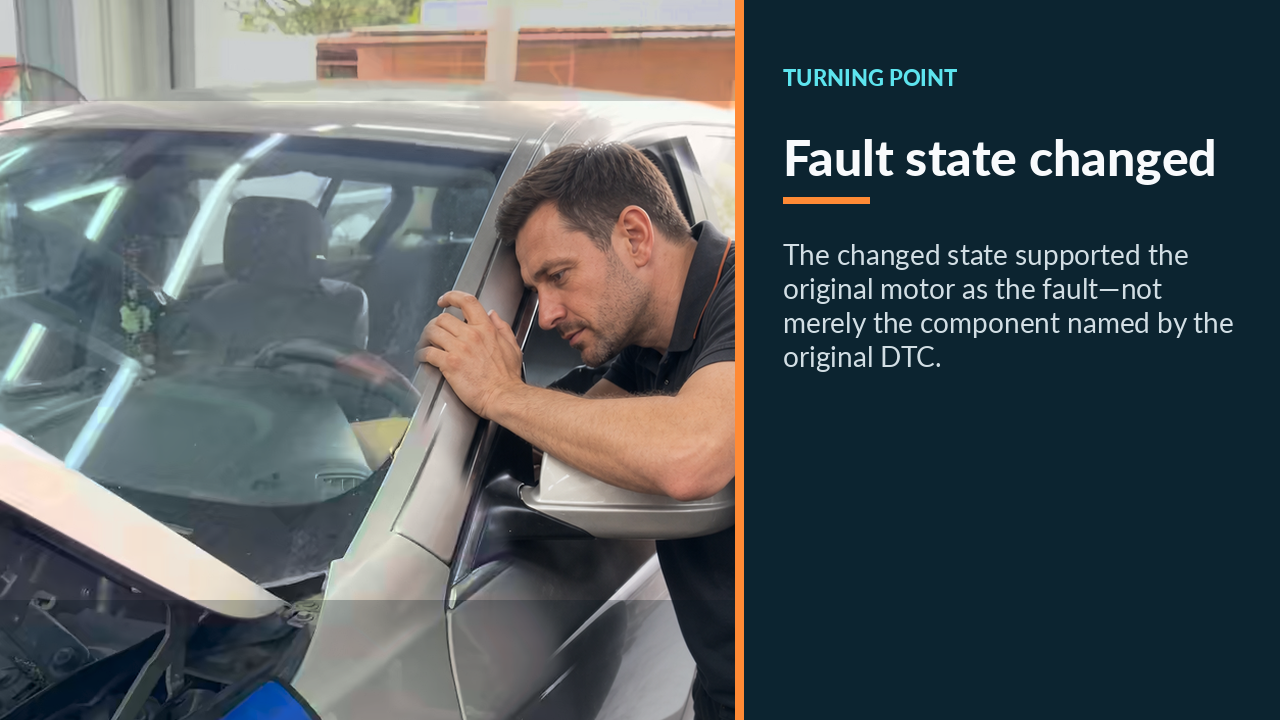
The workshop had a used Valvetronic servo motor whose working condition was known. It was connected to the vehicle electrically for comparison before a replacement decision was made. After the test motor was connected and the system was read again, the original persistent fault state changed. That response supported the conclusion that the original motor itself was faulty.
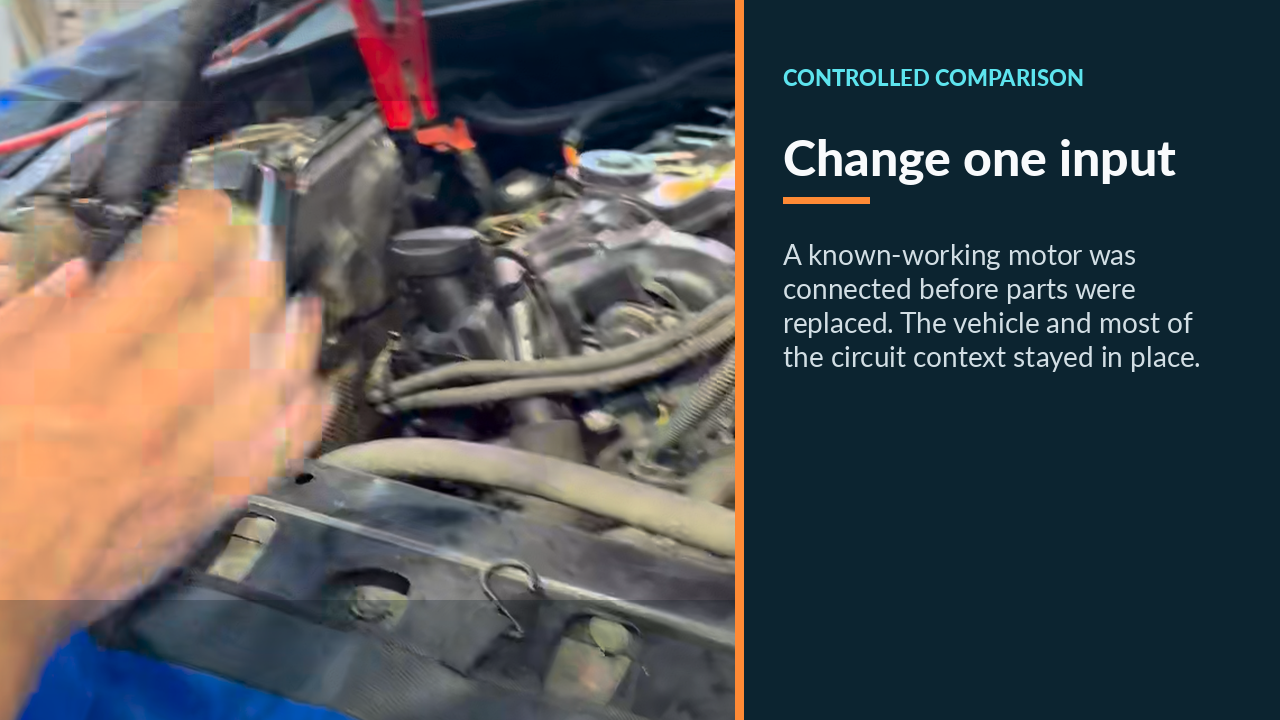
This is stronger than saying “the code named the motor.” The test changed the motor while keeping the vehicle and most of the circuit context in place. When the observed state changed with that bounded substitution, the original motor became the supported fault. The source does not provide a complete before-and-after scan export or the comparison motor’s part and revision numbers, so the result should not be expanded beyond this specific case.
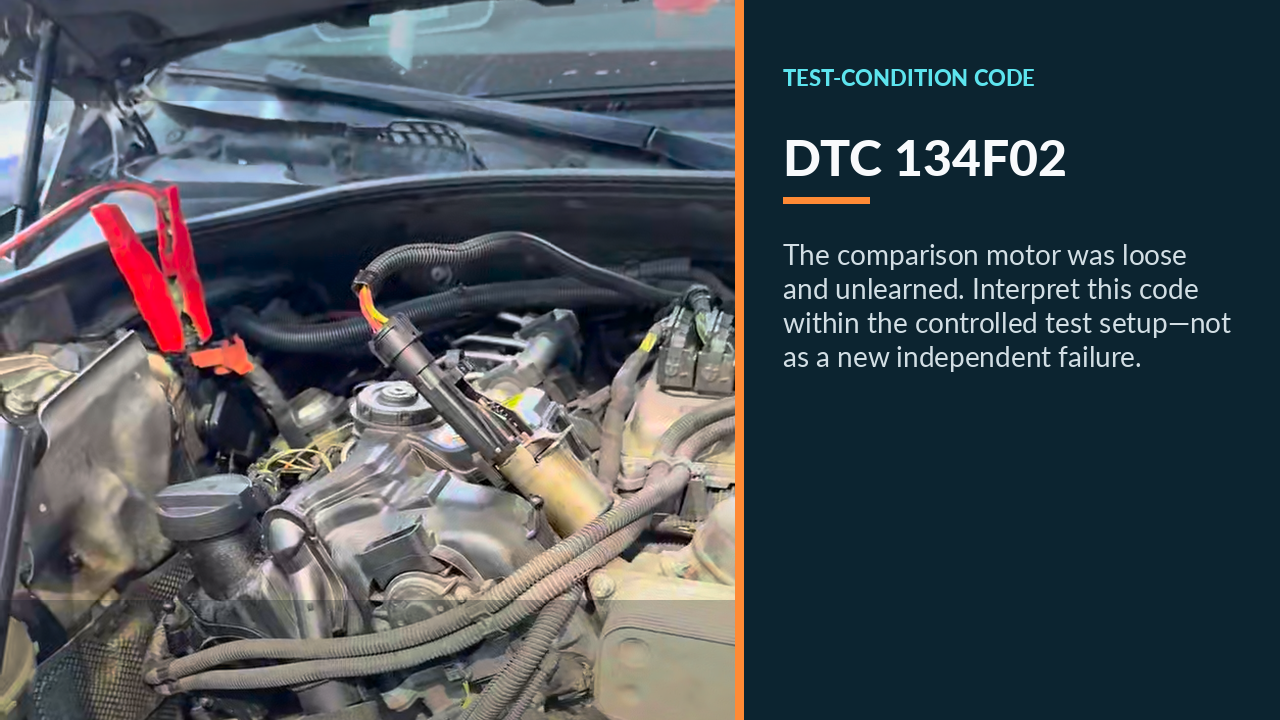
The setup also produced code 134F02. The source explains that the comparison motor was connected to the wiring but was not installed on the engine and had not completed position learning. In that context, 134F02 represented the incomplete test setup rather than proof of another independent vehicle failure. That explanation is another reason to record test conditions: a code produced during a controlled test must be interpreted within that test, not detached from it.
Repair, inspection, and sealing
Once the cross-test supported the original servo motor as the fault, the valve cover had to be removed for access. The motor was replaced, and the eccentric-shaft gear was inspected while the assembly was open. The source does not publish a wear measurement or a detailed gear-condition result, so this draft does not claim that the gear passed a particular limit.
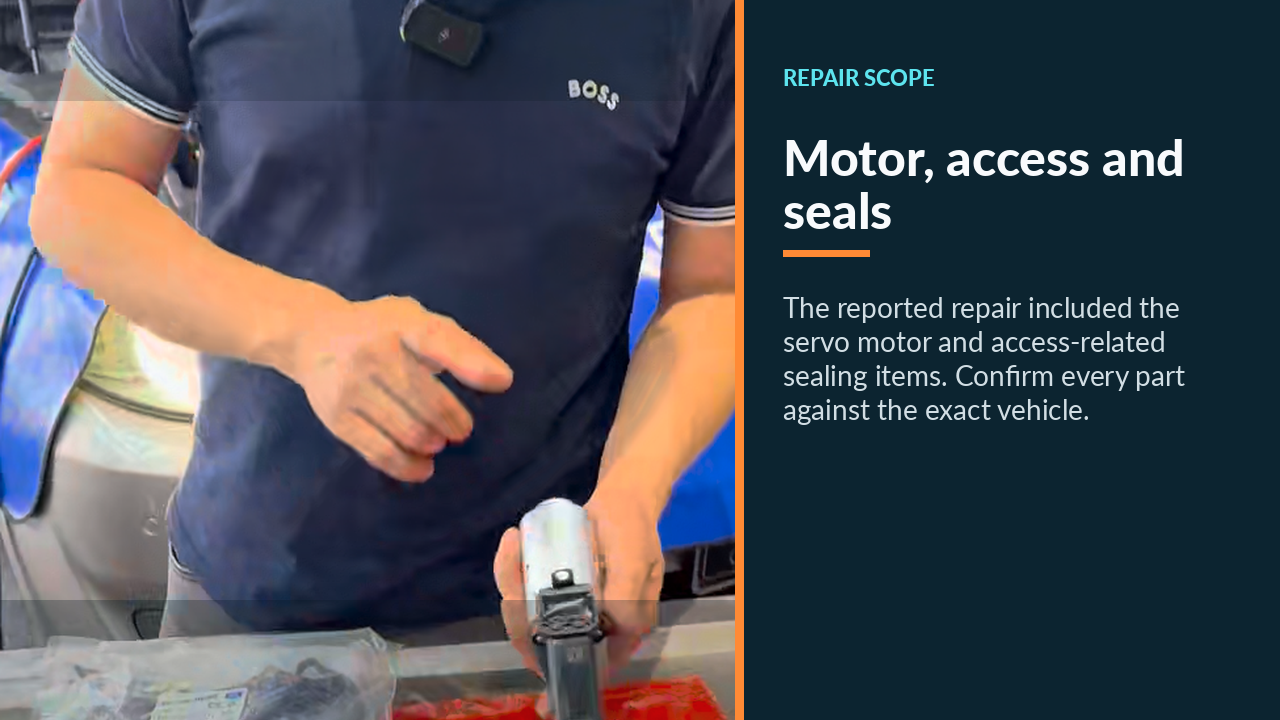
Reassembly involved more than placing the new motor. The reported work included renewal of the valve-cover gasket, brake-vacuum-pump gasket, servo-motor seal, and spark-plug-well-related seals. Handling aged sealing items while access is already open can reduce the chance of an immediate repeat teardown, but the exact list still belongs to this vehicle and this repair. It is not a shopping list for every BMW 525.
Opening this area also carries a workmanship boundary. Cleanliness, correct fasteners and torque sequence, compatible seals, connector condition, and the mechanical state of the eccentric-shaft drive all matter. None of those should be guessed from a short case video. Exact service procedures remain necessary.
Learning was part of the repair, not an optional extra
After installation and reassembly, the workshop used a diagnostic computer to complete Valvetronic system learning. This allowed the control unit to establish the mechanism’s working range after the motor work. The related fault records were then cleared, and the start and system status were checked again.
The source reports that the no-start fault was resolved at this first recheck. That is useful verification because it returns to the original complaint and includes system learning and another scan-state review. It is not, however, evidence of an extended road test, a documented number of repeated starts, or a later follow-up scan. Those items were not reported. The accurate conclusion is therefore a successful initial repair result, not a promise of long-term durability.
What a technician or owner should take from this case
Do not buy a Valvetronic motor solely because a scan report contains a motor-related code. Preserve the code status, identify the exact vehicle, and have the circuit and mechanism checked under the correct service information. A qualified workshop may use a compatible known-working component as one part of a controlled comparison, but the setup, compatibility, and resulting records all need to be documented.
In this BMW, the decisive evidence was not the wording of 135A08 or 135808. It was the change observed after the known-working motor was connected, followed by replacement, proper restoration, system learning, and a successful first recheck. That sequence turned a plausible code-based direction into a case-supported diagnosis while keeping the limits of the public evidence visible.


Comments 0
Questions, fixes, and real-world diagnostic notes from readers.
Be the first to share a diagnostic result or ask a follow-up question.