2022 Mercedes S 450 P04427A: Leaking Purge Valve Replaced
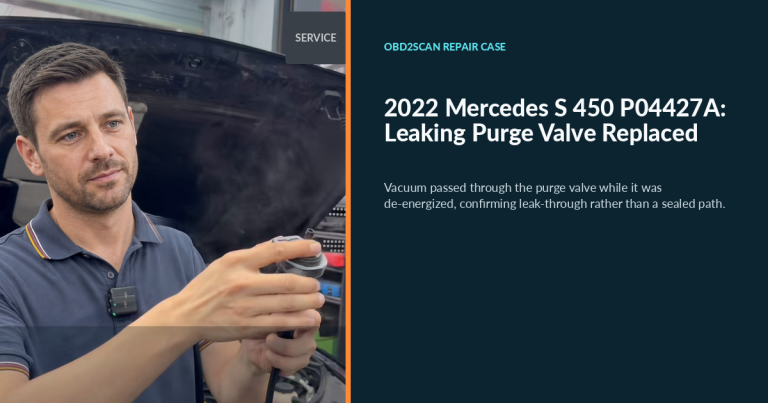
A 2022 Mercedes-Benz S 450 logged P04427A and sometimes cranked longer when hot; an isolated zero-voltage sealing test confirmed purge valve Y58/1 was leaking through.


A 2022 Mercedes-Benz S 450 logged P04427A and sometimes cranked longer when hot; an isolated zero-voltage sealing test confirmed purge valve Y58/1 was leaking through.
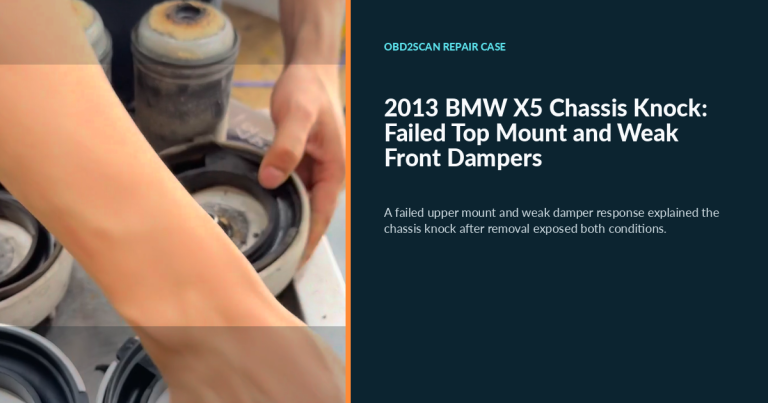
A 2013 BMW X5 developed a chassis knock. A damaged front shock top mount caused the noise, while removed dampers showed weak resistance; replacement and a road test restored normal behavior.
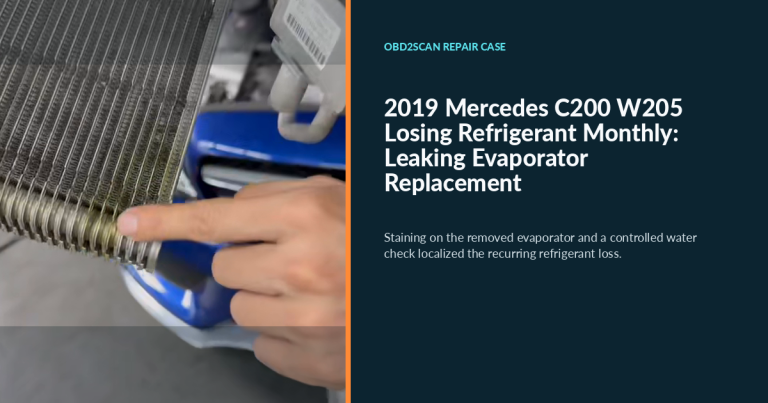
A 2019 Mercedes C200 needed refrigerant again after about one month. Evidence at the removed evaporator confirmed the hidden leak, leading to dashboard removal, evaporator replacement, system restoration, and staged cooling and reassembly checks.
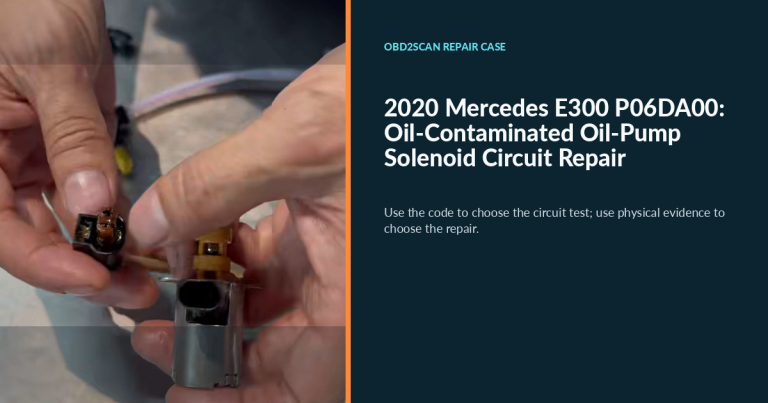
A 120,000-km Mercedes E300 stored P06DA00 and kept its engine warning lamp on. Oil found at the oil-pump control solenoid connector led to solenoid and anti-siphon lead replacement, terminal cleaning, oil-pan resealing, and a successful initial code-and-warning recheck.
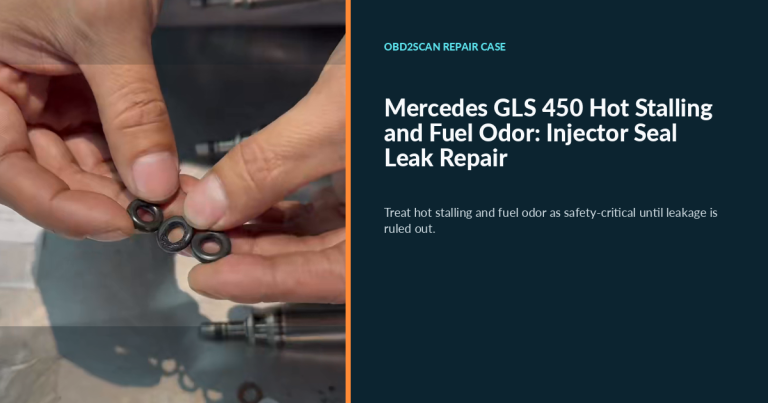
A Mercedes GLS 450 developed unstable hot idle, intermittent stalling, and a strong gasoline odor. Fresh fuel at the injector seats and deformed injector seals confirmed the leak; the workshop cleaned the injectors, installed seal kits, and reported leak-free static and dynamic pressure-hold checks with stable rail-pressure feedback.
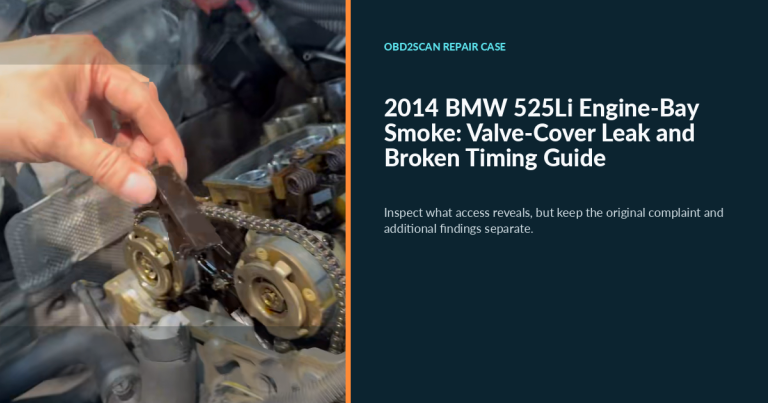
A 2014 BMW 525Li with an N20 engine produced a burnt-oil odor and white smoke without abnormal mechanical noise. A hardened valve-cover gasket was leaking onto the exhaust area; opening the engine also exposed a broken timing-chain guide. The workshop renewed the sealing, timing-guide, and oil-contaminated accessory-drive parts, then completed a 30-km dynamic test with stable timing feedback and dry external surfaces.
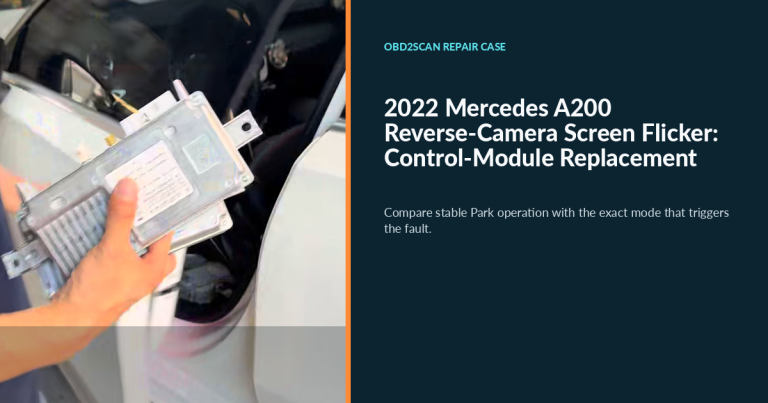
A 2022 Mercedes A200 displayed normally in Park but flickered whenever Reverse or the camera was selected. The workshop traced the condition to the reverse-camera control module, replaced and coded it, then repeated the original trigger with a stable image and no flicker.
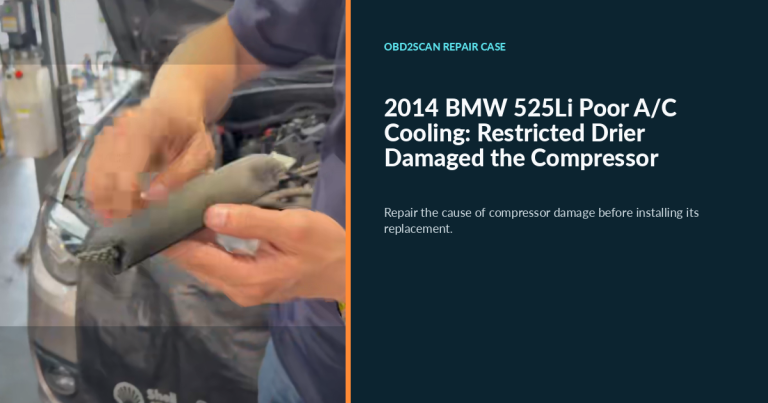
A 2014 BMW 525Li cooled poorly three years after a compressor replacement. A rapidly oscillating high-side gauge led to damaged compressor valves; inspection then found a restricted condenser drier that distorted downstream pressure feedback. The shop replaced the compressor and drier, flushed the circuit, restored the closed system, and documented stable pressures and 5.4°C vent air.
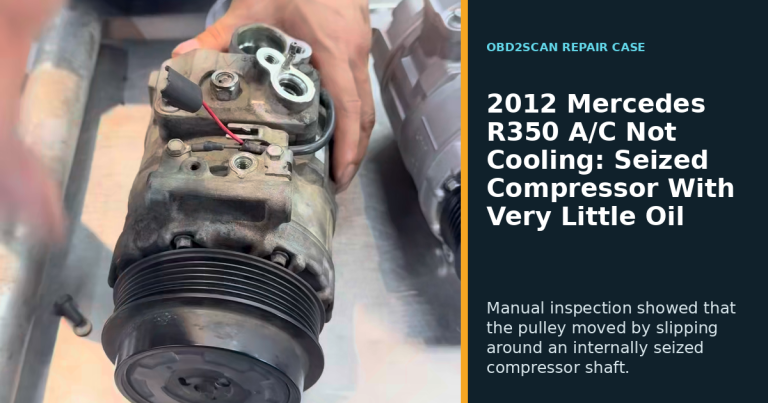
A 2012 Mercedes R350 stopped cooling after a history of refrigerant leakage. Inspection found a seized compressor shaft, a slipping pulley, and very little oil in the removed unit. A DENSO compressor was installed and the center-vent temperature reached 8.4°C and continued falling.
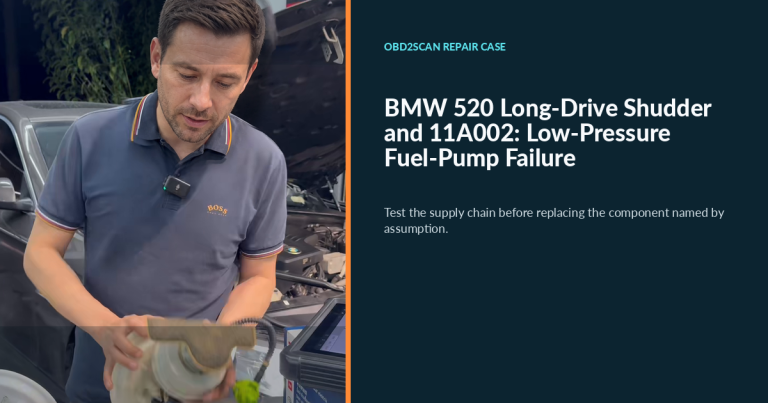
A BMW 520 developed an engine shudder under sustained high load and stored 11A002 for high fuel pressure too low. The workshop traced the supply shortfall to the in-tank low-pressure pump, replaced the pump module and seal, then documented a clean start, zero misfire counters during a stationary acceleration check, and no remaining fault codes.