
Acura TLX or MDX AWD Warning? Inspect Connector C125 for Corrosion

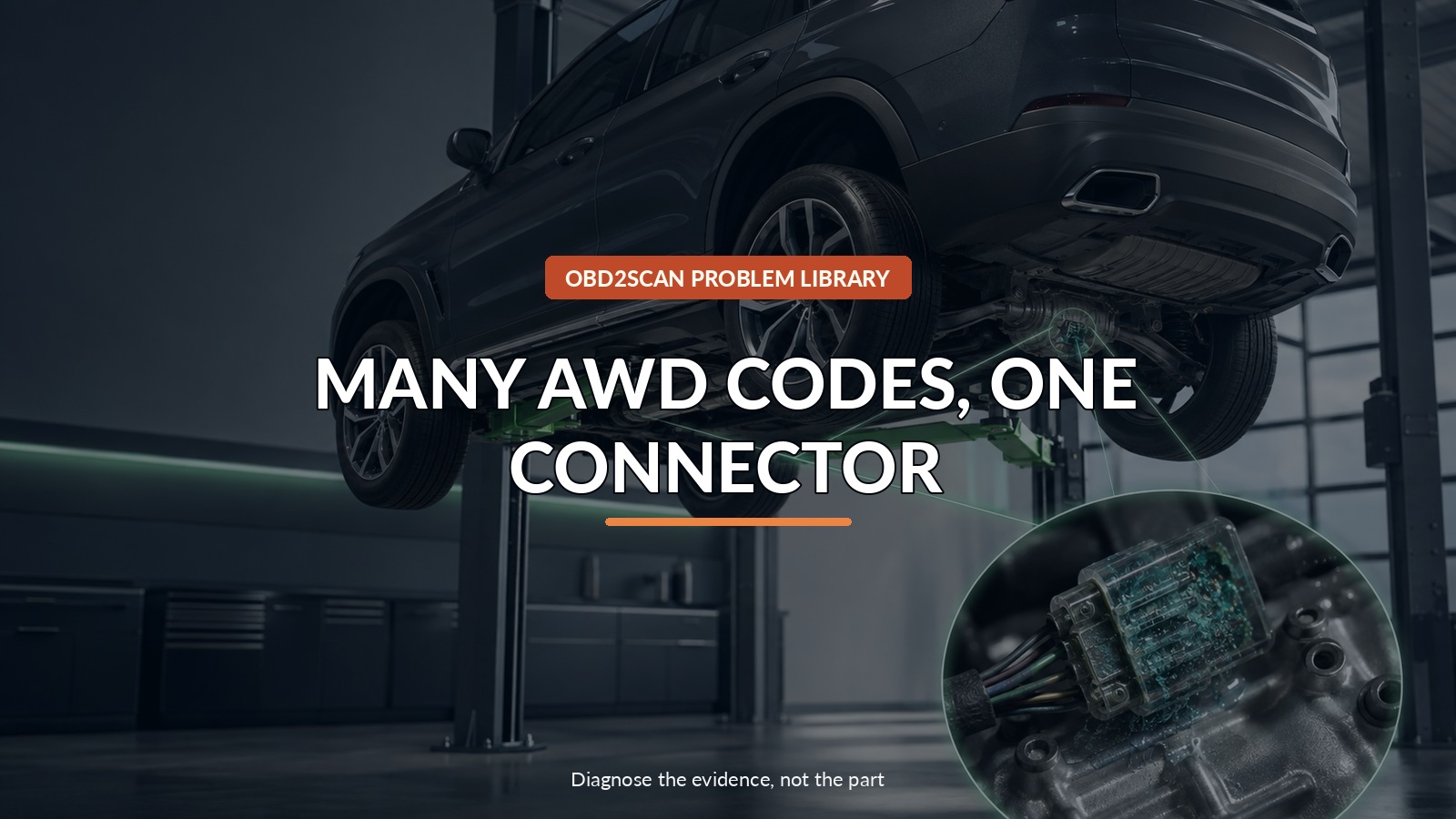
Many Awd Codes, One Connector
Six different AWD codes can make an Acura repair look like six different failures. Service bulletin 24-022 Version 2 collapses the first decision to one physical place: connector C125 between the rear subframe harness and rear differential pump motor. If either connector half shows water intrusion or corrosion, the bulletin’s pump-motor and subharness branch opens. If both halves are clean, the bulletin closes and normal troubleshooting resumes.
Once the connector is photographed and the wiring diagram identifies safe low-voltage circuits, a circuit tester can help compare power, ground, continuity and load behavior. The MRCARTOOL B550 automotive circuit tester is one option. It cannot read Acura AWD codes, safely power CAN or sensor circuits, prove terminal tension from voltage alone, or replace lift and wiring-diagram control.
The investigation is an evidence tree: codes establish the system, vehicle scope finds the branch, and C125 condition decides whether this bulletin applies.
Quick answer: Save the AWD code family, confirm TLX/MDX scope, and inspect both halves of connector C125; corrosion opens the TSB, a clean connector closes it.
In this guide
- Save the whole AWD code family
- Confirm AWD and exclude the hybrid
- Locate C125 only with safe lift support
- Inspect both connector halves before measuring
- Let corrosion open the bulletin branch
- Use electrical tests only on identified circuits
- Let a clean C125 close this shortcut
- Verify fluid service, warnings, and code return
Save the whole AWD code family
Record every control-unit code, status and freeze frame before clearing anything. The bulletin lists common examples: C1841-27, C1842-27, C1850-12, C1851-87, C1851-96 and C1855-92. They cover temperature-sensor circuits, a pressure-sensor circuit, lost F-CAN communication, pump function and low motor speed.
Do not pick only the code whose wording sounds most mechanical. The combination and timing can show whether several observations share supply, ground, connector or communication context. Record weather, road salt, standing water, recent underbody work, rear-differential service and whether the warning is intermittent.
If the warning arrives with binding, grinding, fluid loss, smoke, or a sudden change in vehicle control, stop the road test and arrange professional inspection. A dashboard message by itself cannot tell you whether continued driving is safe, and this connector bulletin is not permission to ignore a new mechanical symptom.
Confirm AWD and exclude the hybrid
The bulletin applies to 2015–2020 TLX AWD and 2016–2020 MDX AWD non-hybrid vehicles. A front-wheel-drive TLX, hybrid MDX, different model year or another code family does not inherit the repair.
Confirm VIN, trim, drivetrain, prior pump or subharness work and latest Acura service information. Check recall status separately; a bulletin is not a recall and does not promise coverage.
Locate C125 only with safe lift support
Acura instructs technicians to place the vehicle on a lift using the published front and rear support points. Underbody access exposes the worker to vehicle weight, rotating or hot components and differential fluid service. Do not crawl under a vehicle supported only by a jack.
Use the current location diagram to identify C125. Photograph the connector and surrounding harness before disconnecting it, including routing, retainers, splash evidence and any abrasion. Similar nearby connectors are not interchangeable evidence.
Inspect both connector halves before measuring
Disconnect only under the approved ignition and power state. Examine both the harness and pump-motor sides for water droplets, green or white corrosion, darkened terminals, pushed pins, damaged seals, loose locks and wicking under insulation. Use magnification and neutral lighting.
Do not clean first. Cleaning can remove the decisive evidence and make a later photograph meaningless. Terminal corrosion also does not reveal terminal tension; use the approved pin-fit method where needed.
| C125 observation | Evidence-tree branch |
|---|---|
| Water intrusion or corrosion on either half | Follow bulletin repair procedure |
| Both halves clean and dry | Bulletin does not apply; continue normal diagnosis |
| Connector damaged from prior work | Document separately and use current repair guidance |
| Different connector is wet | Trace that circuit; do not relabel it C125 |
Let corrosion open the bulletin branch
For the confirmed condition, Acura directs replacement of the rear differential pump motor and rear subframe subharness. The procedure also includes draining and refilling the rear differential with the specified Acura AWD fluid, performing the published air-bleeding step, setting the final level and resetting the relevant Maintenance Minder item.
That is a system repair, not just terminal brushing. Follow VIN-specific parts and service data. Improvised terminal coating or partial harness repair may leave corrosion, seal damage or fluid-service requirements unresolved.
Use electrical tests only on identified circuits
If further testing is required, work from the Acura wiring diagram. Verify meter/tester setup on a known source, use high-impedance measurement where required, protect terminals with proper back-probes and compare voltage drop under the relevant commanded load.
Never inject battery voltage into a sensor signal, communication line or unknown control-unit pin. An active circuit tester can damage a module very quickly when the circuit has not been identified. Photograph and label every connection used in the test.
Let a clean C125 close this shortcut
When both connector halves are free of water and corrosion, the bulletin says to continue normal troubleshooting. Possible paths include power and ground, harness continuity, pump operation, differential fluid condition/level, sensor circuits, network integrity or a control issue, guided by the stored codes.
Do not replace the pump and subharness simply because the code list matches. The inspection gate is part of the bulletin, not an optional step.
Verify fluid service, warnings, and code return
After the confirmed repair, check harness routing, seal engagement, retainers, drain and fill plug sealing, correct fluid level and the required air-bleed sequence. Save the post-repair scan, clear codes only after preserving the original report and reset only the maintenance item actually serviced.
Verify no AWD warning during startup and a controlled road check, then recheck for leaks and code return. The result is a dry secure C125 area, correct differential service, normal AWD status and no returning fault—not only a cleared dashboard.


Comments 0
Questions, fixes, and real-world diagnostic notes from readers.
Be the first to share a diagnostic result or ask a follow-up question.