
2004 Ford F-150 Will Not Select 4WD: A Motor That Works Only One Way

Quick answer: One successful motor movement does not prove a reversible drive is healthy. Compare the two commanded directions and the electrical paths that produce them.
Transfer-case testing can cause unexpected driveline movement. Leave powered actuation and underbody access to a workshop using the correct service conditions and secure support.
Passive supply checks can help separate the paths. A MRCARTOOL B550 provides voltage measurement, but neither the meter nor a generic relay swap establishes the correct shift procedure.

In this guide
The question is which direction fails
“The motor works” is incomplete when a mechanism must move in more than one direction. The same assembly can respond correctly to one request and fail to respond to the reverse request. Testing only the successful direction leaves half of the function unexamined.
For the owner, the useful description is which selections are unavailable and what the indicator does. Include whether the problem appeared after a repair or an extended period without using the system. Avoid repeated attempts on an unsuitable surface simply to test every combination. A technician can choose the permitted conditions from the vehicle’s actual configuration.
One motor can depend on two paths
In a reversible drive, changing the electrical arrangement changes the direction of motion. The wiring diagram explains which switching components participate in each direction. This is why a shared motor can be healthy enough to move while one of its control paths is not.
The practical test question is broader than whether voltage exists somewhere nearby. Does the correct request produce the required electrical condition at the motor, and does the mechanism respond? Keeping request, circuit state and movement together makes the comparison interpretable. A disconnected or altered test setup also needs its own safety and validity checks.
What changed when the relays moved
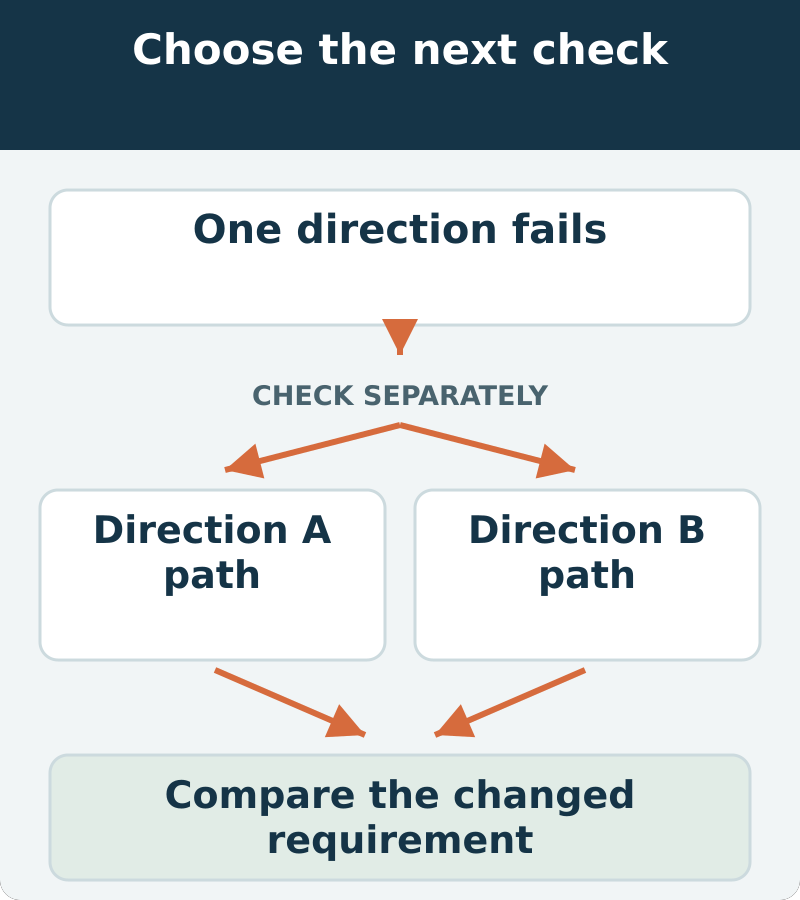
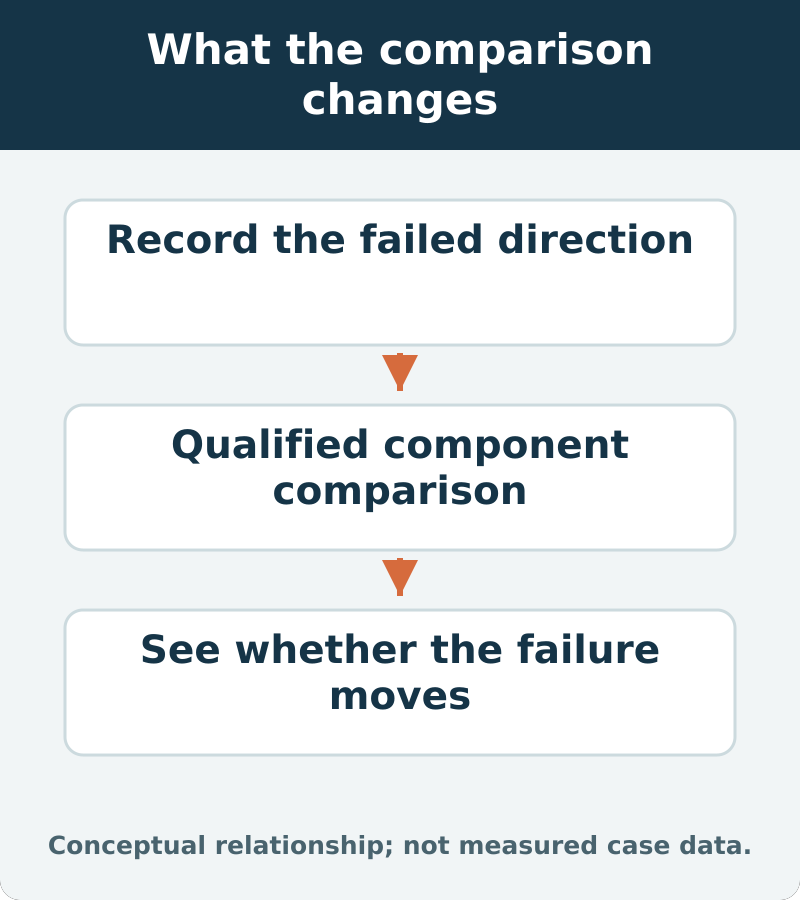
In ALLDATA’s 2004 F-150 case, the truck would not select four-wheel drive and had no stored codes. A controlled test found movement in only one direction. Exchanging the two relays reversed which direction failed. The technician replaced both relays, and the report describes restored four-wheel-drive operation.
A fault that follows an exchanged component is stronger evidence than a symptom that merely disappears after several things are changed at once. The comparison still depends on the components being suitable for interchange and on the test preserving the conditions that matter. Similar-looking relays are not automatically equivalent.
Why replacing both was a separate choice
The report says age motivated replacement of both relays. That is a maintenance-scope decision alongside the diagnostic finding; it does not establish that two relays had independently failed.
This distinction is useful when discussing an estimate. Ask which item the evidence identifies and which additional work is preventive, convenient or recommended because of shared service access. There can be reasonable grounds to renew a companion part, but those grounds should be clear. The owner can then compare the options without confusing optional scope with the minimum supported repair.
Keep shift permission in the test plan
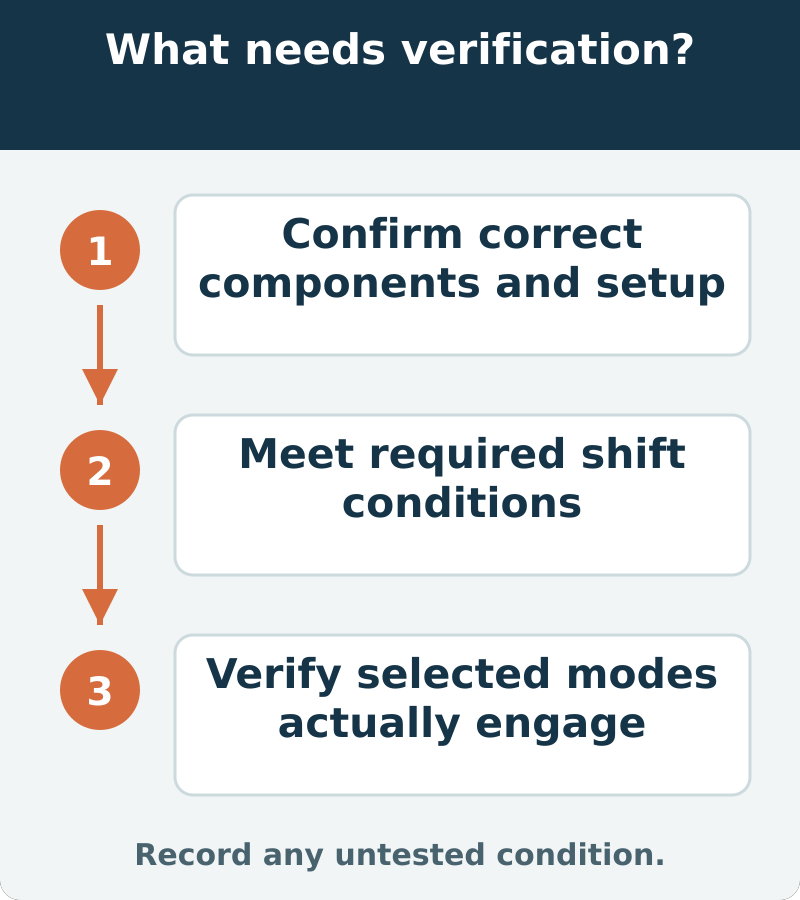
An electrical fault is only one reason a requested mode may not engage. The vehicle’s required operating conditions, control inputs and mechanical state still matter. A motor test performed separately from the assembled system does not certify that every part of normal mode selection is working.
Use the correct owner and service information for the particular transfer case. Do not transfer an internet sequence from another F-150 merely because the model name matches. If the motor responds but the requested mode remains unavailable, the next question belongs to the remaining control or mechanical links, not automatically to another motor.
Confirm the selected mode actually engages
After the repair, the final assessment should cover the assembled vehicle under permitted conditions. The requested mode, reported mode and actual system behavior should agree. Any required return to the normal driving mode also belongs in that check.
Ask the workshop to record the failed direction and the evidence that followed the relay. That short explanation is more useful than “four-wheel drive fixed.” It preserves the reason for the repair and helps distinguish a later shift-permission or mechanical complaint from a recurrence of the same electrical fault.









Comments 0
Questions, fixes, and real-world diagnostic notes from readers.
Be the first to share a diagnostic result or ask a follow-up question.