
2021 F-350 Will Not Shut Off and the Seat Moves: A Wire Connected the Complaints

Quick answer: Unexpected behavior in several systems calls for a communication map, not several immediate module orders. A prior bulletin repair does not eliminate the need to test the remaining fault.
A truck that ignores shutdown and moves its seat unexpectedly needs a safety response before another test drive. For the subsequent network investigation, passive diagnostic access such as the AUTOOL OBD2 Breakout Box Upgraded Version can support measurements on correctly identified DLC circuits. It does not expose every network automatically or explain a fault from its LEDs.
In this guide
Treat uncontrolled behavior as the first concern
Contact a qualified repairer or recovery provider for immediate guidance when the engine will not shut off normally or the driver’s seat moves unexpectedly. Do not search for a fuse to pull while assuming that any apparent stop will leave the vehicle safe.
Once the situation is controlled, record the exact behavior: whether the key was removed, which controls still responded and what the seat did. Keep people clear of a moving seat mechanism. Those observations establish the complaint without turning the owner into an improvised shutdown technician. A safe vehicle state is the first objective; identifying the electrical relationship comes afterward.
Put the unavailable modules on one map
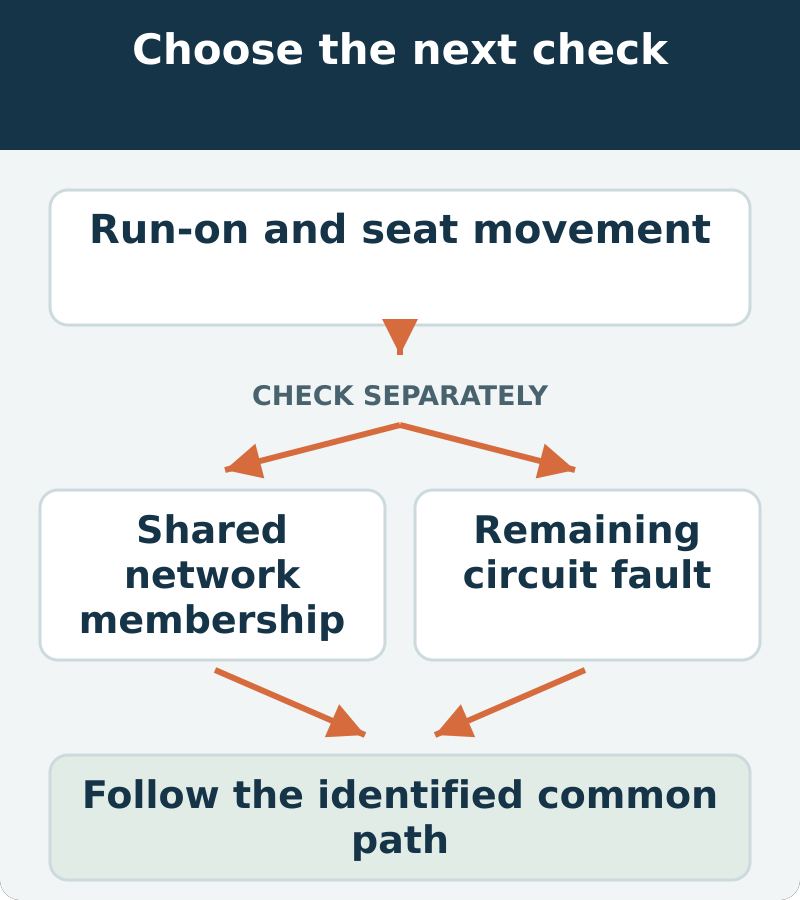
A list of offline modules becomes more useful when the repairer places them on the correct communication map. Shared network membership can suggest a common path to investigate instead of several simultaneous controller replacements.
The map must match the actual truck. A generic label such as CAN does not identify every circuit or test point. Nor does a module being unreachable necessarily prove that its internal electronics have failed. Ask which units could not communicate and what they shared. That explanation should distinguish the observed loss of communication from the technician’s hypothesis about where the path is interrupted.
Why the earlier bulletin did not finish this job
A bulletin can be relevant to a vehicle and still not explain every remaining symptom. If earlier work did not finish the job, obtain the bulletin reference, the work performed and the result rather than assuming the whole earlier diagnosis was wrong.
The new investigation should address the unresolved complaint on its own evidence. This is particularly important when a large electrical assembly has already been replaced: the replacement history can make another module seem like the next obvious purchase. It is more useful to revisit the shared requirements of the affected systems. A previous repair narrows the history; it does not remove the need for testing.
In the published ALLDATA case, the F-350 continued running after key removal and its driver seat changed position. A junction-box replacement had not solved it. Several offline modules shared the medium-speed network. A broken wire near a cabin connector was repaired, restoring normal shutdown and seat behavior. Detailed network captures are not supplied.
Diagnostic-port access is not the entire network
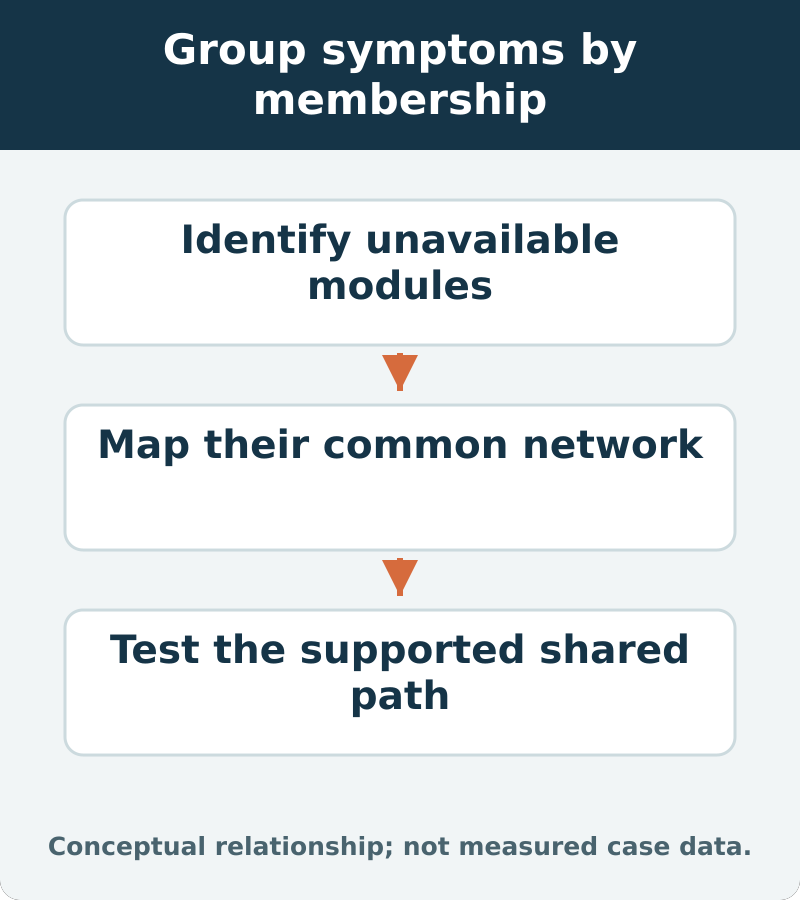
Diagnostic-port access is only useful for circuits actually present and correctly identified there. Some investigations require other approved access points. Do not assume that a medium-speed network uses a universal pair of DLC pins or that a resistance figure from another model applies.
A breakout device is a connection aid, not a decoder, a network-health verdict or a programming tool. The technician still needs the correct diagram and suitable measurement equipment. No bus bridging, voltage injection or casual restraint-connector probing belongs in this investigation. Owners can ask for the network findings without buying hardware or opening the cabin harness themselves.
Repair the break without changing network design
The repair should restore the specified conductor and connection arrangement. Network wiring is not a place for arbitrary splices, added branches or a convenient bypass. The appropriate method and physical protection must fit the damaged location and circuit.
Ask the shop to identify the repaired section and explain how it verified the result. The original short case does not publish detailed captures, so it cannot provide a complete test specification for another truck. A photograph of a repaired wire can document location and workmanship, but communication and functional checks are still needed to establish that the original concern has been addressed.
Verify shutdown and seat control separately
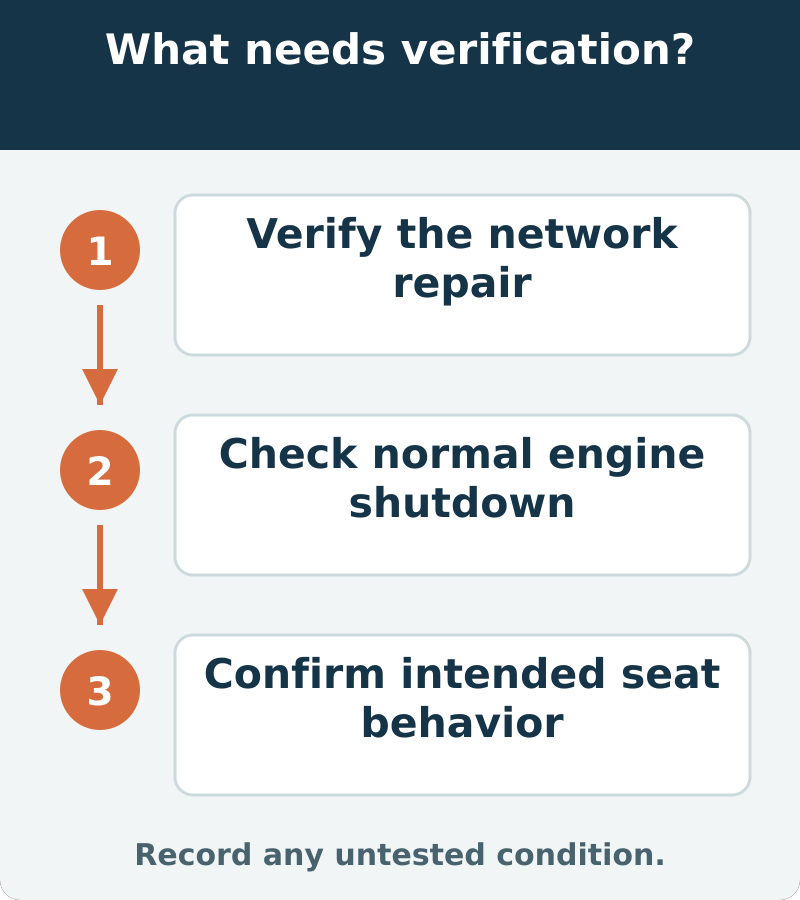
Normal shutdown and normal seat control should each appear in the completion discussion. Restored scan communication is another useful result, but it does not substitute for checking the behaviors the driver actually experienced.
If any unexpected movement or failure to shut down remains, resolve it before normal use. Keep the earlier junction-box work and the later wiring repair together in the history, with the result of each. The important lesson is not that two strange symptoms always share one broken wire. It is that shared dependencies can connect apparently unrelated complaints, and a careful map can be more useful than another module order.





Comments 0
Questions, fixes, and real-world diagnostic notes from readers.
Be the first to share a diagnostic result or ask a follow-up question.