
2020 Silverado Squeaks at Speed: Start With What Can Move in the Airflow

Quick answer: A speed-related squeak can come from loose body trim, but grinding near a wheel still needs a safety inspection before it is dismissed as plastic rubbing.
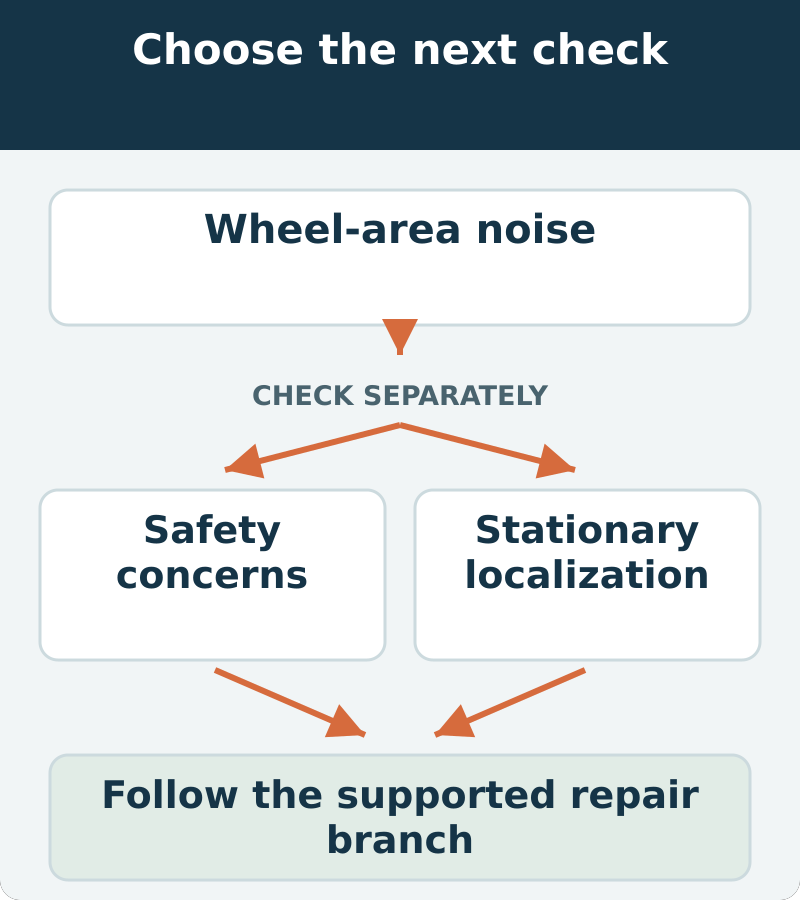
If the noise accompanies steering changes, tire contact or a loose wheel-area part, stop and arrange an inspection. Never reach into a moving wheel or crawl under an unsupported truck.
Hidden attachment points sometimes need a better viewing angle; an articulating camera such as the AUTOOL SVB308 can help document accessible areas with the vehicle safely stationary. A picture cannot establish fastener tightness.

In this guide
Describe the sound without diagnosing it
“Right-front squeak” is a useful observation. “Bad wheel bearing” is a theory. Keeping those two statements separate gives the workshop room to investigate the sound instead of merely quoting the part named on the booking form.
Record what you already noticed during ordinary use: whether the noise follows road speed, changes on a different surface, or appears with braking or steering. Include recent tire, liner and body work. Do not conduct extra road experiments to fill every box. An incomplete but accurate description is more useful than a confident guess, particularly when the complaint includes grinding.
What the parked truck revealed
In ALLDATA’s 2020 Silverado case, the right-front noise became more noticeable with speed. Initial checks were inconclusive. Contact with the wheel liner reproduced the sound while parked, leading to a loose attachment. Securing the liner fasteners was followed by a quiet road test. The report describes airflow moving the loose material; it does not include an aerodynamic measurement.
The valuable change was the test setting. A sound previously associated with driving could now be investigated with the truck stationary. That makes access and comparison easier, but the technician still needs to establish that the reproduced noise matches the customer’s complaint.
Speed can load more than rotating parts
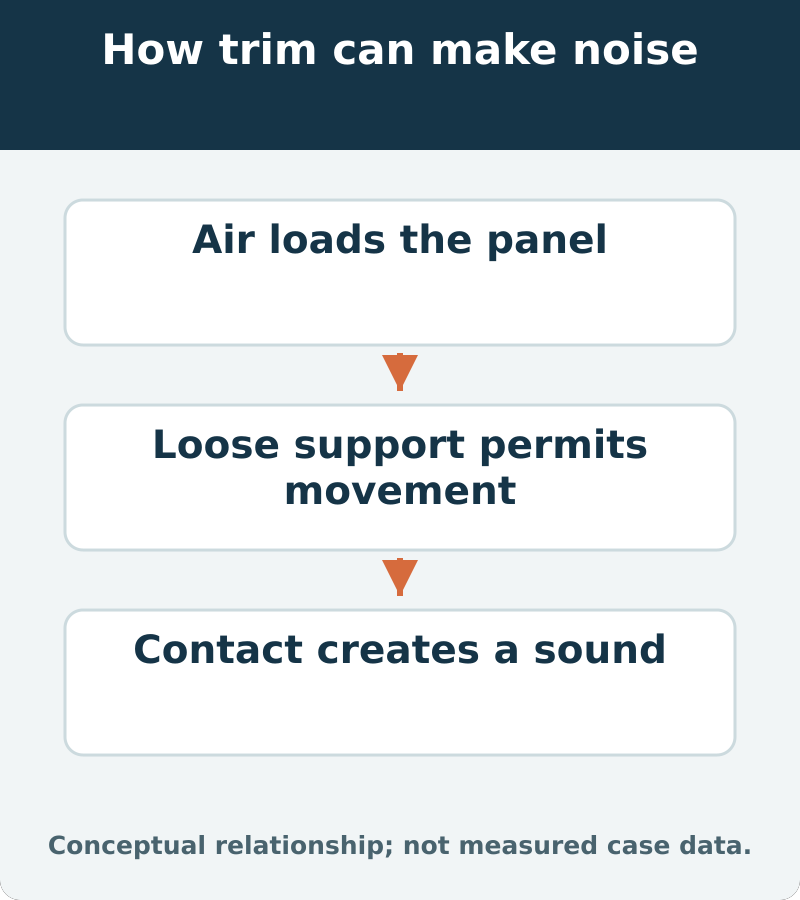
Road speed changes several conditions together. Wheels rotate faster, the suspension receives different inputs, and air pushes against exposed body surfaces. A noise that grows with speed therefore does not uniquely identify a bearing, tire or driveline component.
A flexible panel with an insecure edge can move relative to a neighboring surface. The resulting contact may sound surprisingly mechanical from inside the cab. Think of the distinction as three links: a force acts on the panel, an attachment allows movement, and contact creates the sound. Finding one link suggests what to inspect next; it does not clear every other component around the wheel.
Check the attachment, not just the screw
Before treating a fastener as the whole repair, inspect what it is meant to hold. A damaged hole, missing clip or distorted edge may keep the panel loose even when the screw feels tight. Conversely, applying more force to a damaged attachment can make the problem worse.
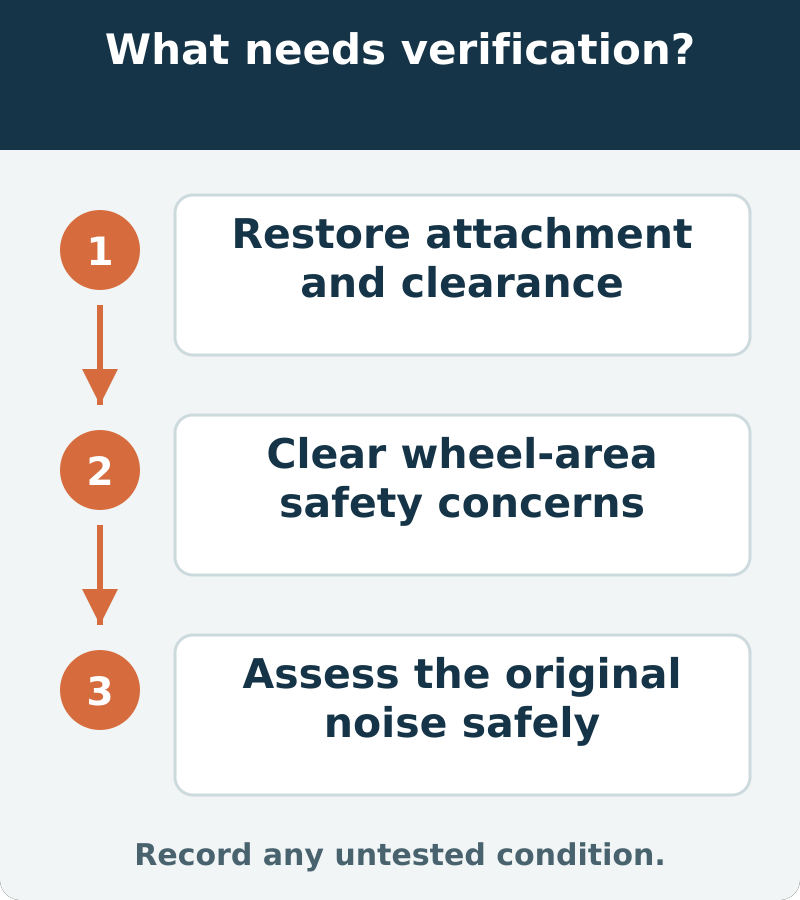
Ask the workshop to identify the required fastener and the condition of the mating material. Where a liner has been touching another part, the inspection should also address that contact area. The correct repair restores the intended support and clearance; it is not simply an instruction to tighten everything as hard as possible.
When the noise needs a different route
Suppose the liner is secure but the sound remains. That result is useful: the proposed trim explanation has not resolved the complaint. Return to the observations and the wheel-area safety inspection rather than adding improvised padding or another fastener at random.
Likewise, a rubbing panel and a separate brake or tire problem can coexist. Ask whether the repair addressed only the reproduced squeak or also explained the grinding description. Two sounds should not be merged merely because the driver hears both from the same corner. A short recording made safely by a passenger can help distinguish them, but it cannot substitute for inspection.
What a quiet return trip should confirm
The final check should follow a secure installation and a cleared safety inspection. The workshop can then assess the original complaint under appropriate, controlled conditions. No particular speed from another owner’s case is a required test target.
Keep a brief record of what was secured or replaced, whether surrounding contact damage was found, and which noise disappeared. If another sound remains, give it its own description before leaving. The useful outcome is a securely supported liner and a resolved, identified complaint—not a general promise that every future front-end noise is harmless.









Comments 0
Questions, fixes, and real-world diagnostic notes from readers.
Be the first to share a diagnostic result or ask a follow-up question.