
Check the Fisker Ocean Battery Label Before Choosing an EM Mode

“12V” is not enough information to choose a charging mode for a Fisker Ocean. First identify the battery physically fitted to the vehicle, confirm its chemistry and replacement history, and check the current vehicle and battery instructions. If the label is missing or conflicts with the records, stop before selecting a program.
On this page
Why 12V is only the first field
A battery label can carry several facts that answer different questions. Nominal voltage identifies the electrical class. Capacity describes stored charge under defined conditions. Chemistry and construction determine which charging program may be appropriate. Polarity affects the installation and connection rules.
None of those fields, by itself, proves that a charger is suitable for the installed vehicle. Battery condition, approved connection points, vehicle loads and the current procedure still matter. Case color, terminal layout and dimensions are not reliable substitutes for readable identification.
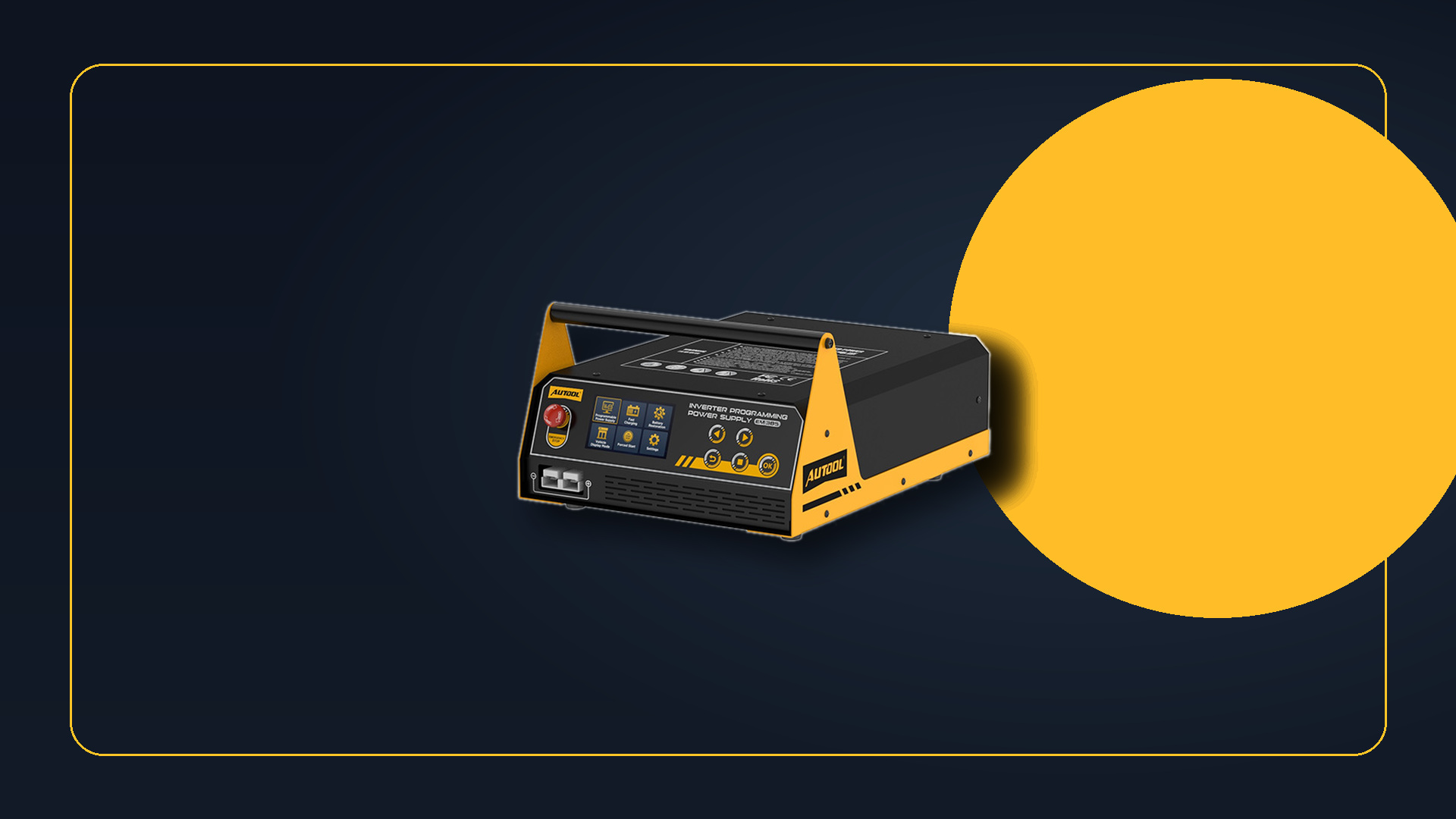
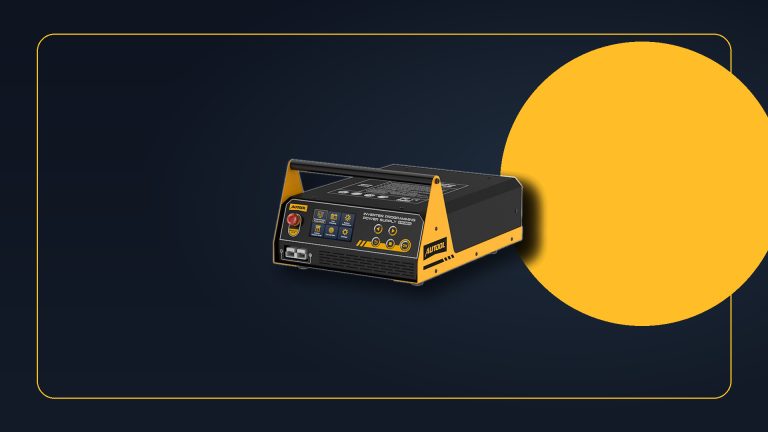
The AUTOOL EM355 includes an AGM charging choice documented in the EM355 manual, but that menu option is a chemistry-level capability. It does not turn every 12V battery into an approved application or supply an Ocean-specific setting.
Original specification versus the battery fitted today
Fisker’s Ocean 12V technical table identifies the original auxiliary battery as 12V, 50Ah, AGM lead-acid and negative ground. Treat that as a reference point, not proof of what is in the vehicle now.
Read the accessible installed label and look for replacement documentation. Record nominal voltage, chemistry or battery type, capacity marking, manufacturer and model. Fisker’s 12V battery guidance also places battery work inside vehicle-specific safety and replacement constraints.
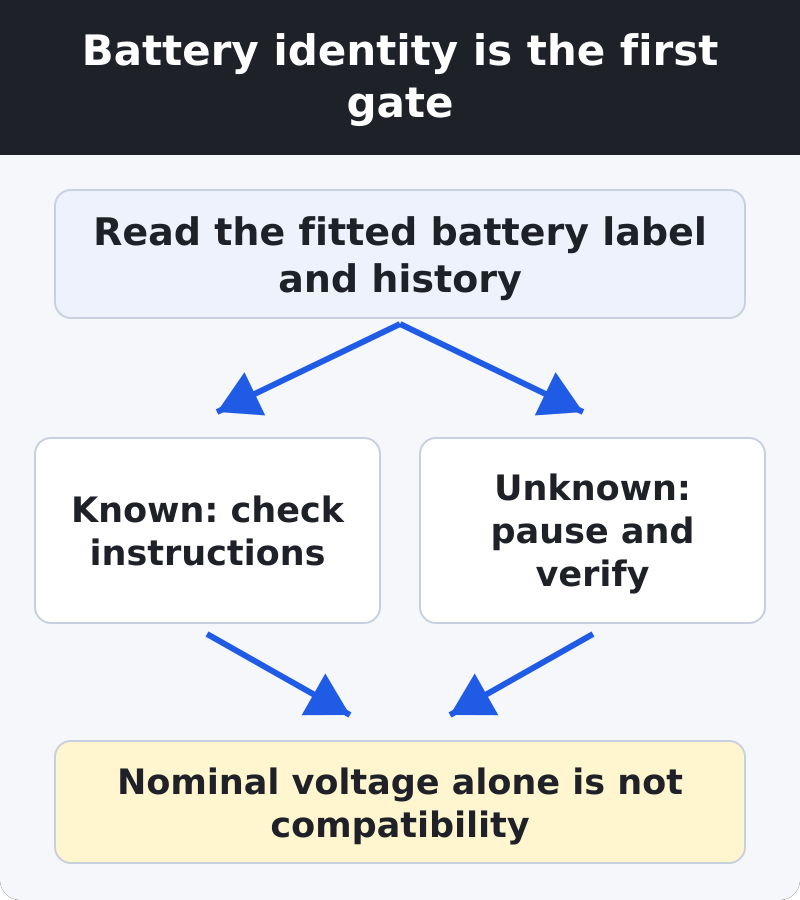
The distinction creates three practical cases:
- Original-specification AGM still fitted: verify that identification, then follow current vehicle and charger instructions.
- Documented replacement fitted: use its actual label and manufacturer requirements together with the vehicle constraints.
- Unknown or conflicting replacement: identify the battery before mode selection.
Pass the identity, chemistry and instruction gates
The identity gate asks what is physically installed. The chemistry gate asks whether the exact charger has a matching program. The instruction gate asks whether the battery may be charged in its current location, where the approved connection points are, and which settings and supervision rules apply.
The AUTOOL EM365 also provides an AGM choice documented in the EM365 manual and a display-oriented workflow. That can make equipment status easier to observe during an authorized session, but the display cannot supply a missing chemistry label, approve an installed-battery procedure or assess battery health.
A pass at one gate cannot compensate for a failure at another. A visible AGM program does not resolve an unreadable label. An original Ocean specification does not override a documented replacement. A compatible chemistry does not establish clamp access, service-load capacity or the correct procedure.
Permission comes before mode selection
Select a mode only after all three gates agree. The current instruction should control whether charging is allowed, how the battery remains installed or is removed, which connection points are used, what supervision is required and what condition ends the session. This article does not supply universal voltage or current values because those facts depend on the actual battery and job.
The AUTOOL EM385 has an AGM choice plus separate LFP/NCM modes for removed batteries documented in the EM385 manual. Those lithium choices do not apply to the Ocean traction pack, and they are not a fallback for an unknown installed auxiliary battery.
The EM355 manual, EM365 manual and EM385 manual require constant supervision during operation and restrict restoration work to a battery removed from the vehicle. Restoration should never be used to guess around an unidentified battery, and a completed restoration cycle would not prove recovered capacity or health.
Stop when the label and records disagree
Pause the plan if the label is unreadable, the chemistry is absent, the replacement record conflicts with the battery, the charger manual does not cover the identified type, or the current vehicle procedure is unavailable. Record the label and documentation you do have, then ask the battery manufacturer or an Ocean-capable workshop to resolve the mismatch.
No EM model in this article is a traction-battery charger, EVSE, diagnostic scanner or proof of Fisker approval. Its useful role begins after identification: carrying out a compatible, supervised low-voltage function defined by current instructions.
If that verification leads to an EM purchase, coupon code HCM6E4GZ can be entered at checkout; confirm that it is accepted and check the final total before paying. The checkout result does not change the compatibility decision.


Comments 0
Questions, fixes, and real-world diagnostic notes from readers.
Be the first to share a diagnostic result or ask a follow-up question.