
2017 Acura MDX A/C Stopped Cooling: The Intact Fan Fuse Had No Supply

Quick answer: An intact fuse does not establish that power reaches it. With both the compressor clutch and cooling fan inactive, check the upstream supply before adding refrigerant.
An intact fuse cannot deliver power it never receives. When the compressor clutch and cooling fan both fail to operate, include the upstream supply in the investigation. Overheating, hot cables or signs of burning take priority over restoring cabin comfort.
A circuit tester such as the MRCARTOOL B550 can help check voltage at identified points in passive mode. High-current battery-cable work needs a qualified safe setup; never bridge a fuse, fit a larger one or guess at relay terminals.
The diagnostic question moves backward through the supply path: where does the expected electrical support stop being available?

In this guide
Two inactive components are worth noting together
Warm air at the vents can encourage an immediate refrigerant diagnosis. But the workshop should first record the operating picture: requested A/C, actual clutch behavior, fan behavior, temperature conditions and relevant fault information.
Several missing functions can share a dependency, or they can have separate causes. The distinction comes from the actual circuit and test results, not from counting symptoms alone.
For the owner, report recent battery or electrical work as well as A/C history. If nothing relevant is known, say so. A useful history records possible changes without claiming one must have caused the failure.
What the repair changed on this MDX
ALLDATA’s 2017 MDX 3.5L account reports no clutch or fan operation. Correcting a slightly low charge did not restore cooling. The main fan fuse was intact but had no power on either side. An upstream fuse within the positive battery-cable assembly had opened; replacing that assembly restored A/C operation. The account does not establish why the upstream fuse opened.
The result redirects attention from the appearance of the downstream fuse to its electrical supply. It does not prove that every warm-air complaint on this model requires a battery-cable assembly.
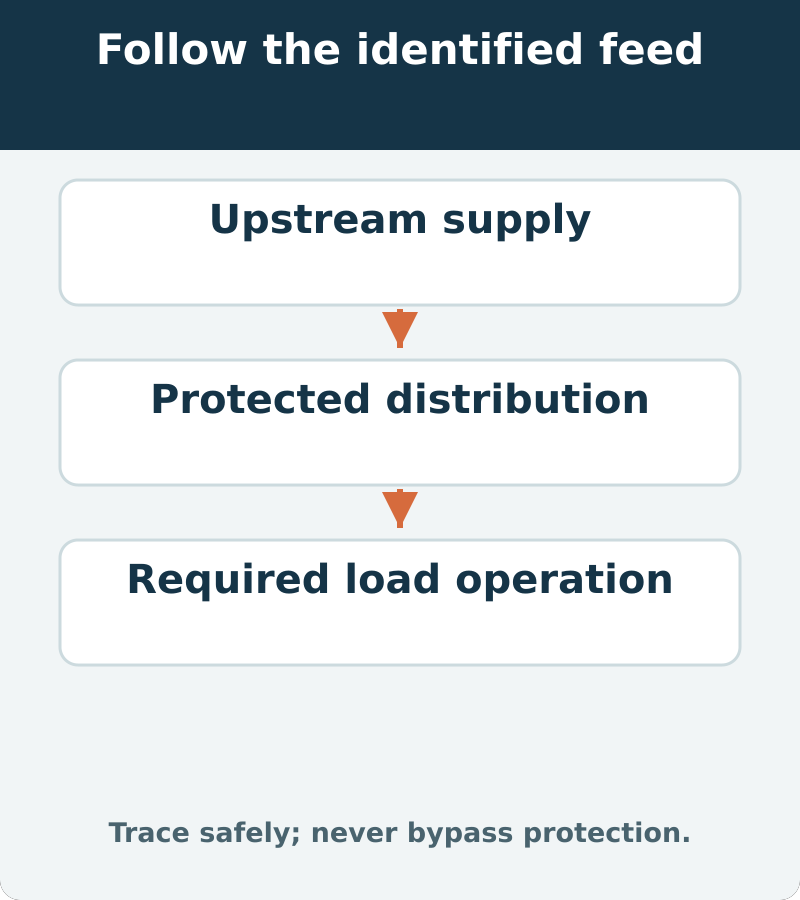
An intact fuse can sit in a dead circuit
Visual condition and electrical availability are different observations. A fuse may be intact while the expected supply is absent. It may also be assessed in a vehicle state when power is not supposed to be present.
That is why every useful voltage check needs the operating state, measuring point and reference. The technician should use the correct circuit information to establish what is expected before interpreting the result.
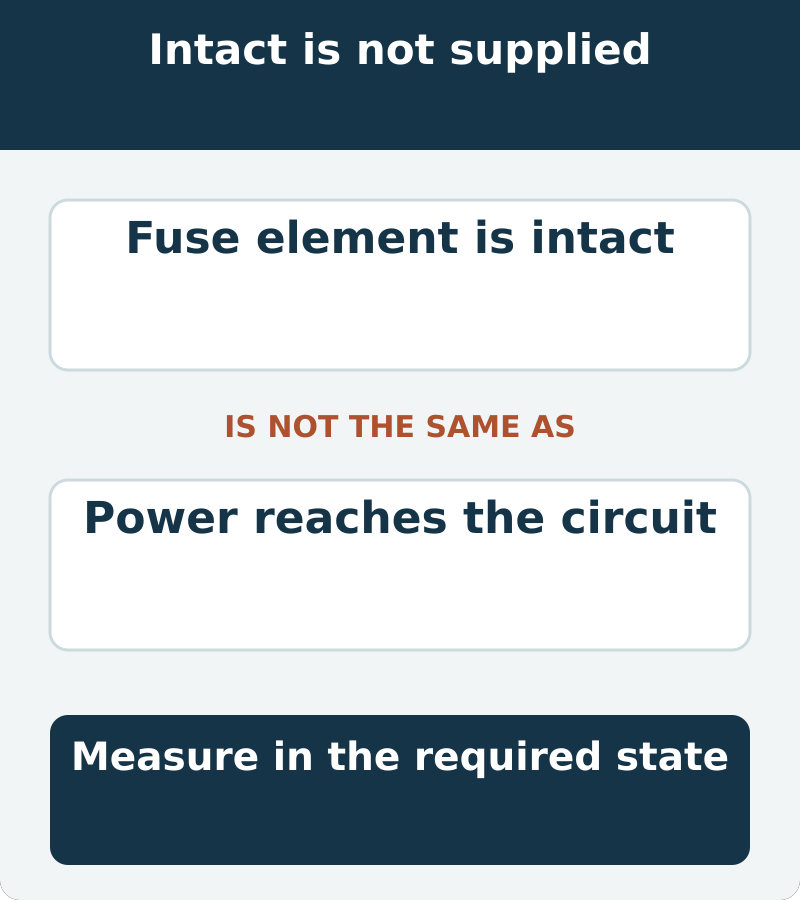
Ask what was measured rather than whether the fuse “looked fine.” A concise report of the expected and observed condition can explain why diagnosis moved upstream without turning the owner into a high-current electrical troubleshooter.
Trace upstream without bypassing protection
The right response to missing supply is to localize the failed requirement. It is not to feed the circuit from a convenient battery terminal and see whether cooling returns.
A bypass can remove protection, create a dangerous condition and make an incomplete diagnosis appear successful. The correct wiring, safe isolation and specified tests should govern the investigation.
If the evidence leads to an integrated cable or fuse assembly, confirm the actual application and repair method. A connection that physically fits does not establish the correct protective construction. The service proposal should explain why the specified assembly is needed.
The same discipline applies downstream. Do not force compressor operation while fan behavior or other protective conditions remain unresolved. A temporary cold vent does not certify that the whole A/C system is operating safely.
Ask why the fuse opened before accepting the repair
Finding an open protective device establishes a failed condition. The reason it opened is a separate question. Ask the technician what inspection or testing is needed to assess possible damage, overload or other contributing conditions on the identified path.
Do not invent that explanation from the historical account. A previous electrical incident may be relevant if documented; without evidence, it remains a possibility rather than the repair’s proven cause.
If the cause cannot be fully established, the handover should say what was checked, what passed and what would trigger further investigation. Repeatedly replacing the protective assembly after another failure is not a substitute for reassessing the circuit.
This is a useful point to agree on scope. Ask whether the quote includes assessment of the affected path and final system operation, rather than only the physical installation of a new cable.
Verify cooling with the full system working
Request correct assembly and the required electrical checks, followed by confirmation of fan behavior, compressor operation and cooling under the appropriate conditions. Record any warning or operating state that remains unresolved.
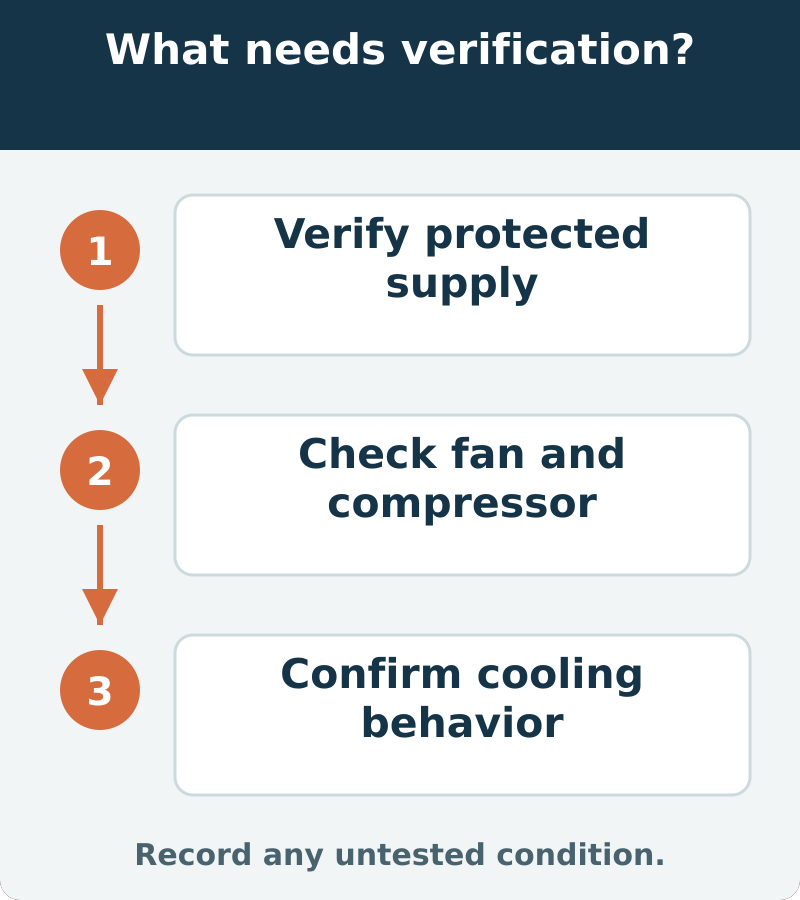
The final answer should connect the repaired supply to the restored functions. It should also preserve the distinction between “cooling returned” and “the reason the fuse opened was proved.” Both are useful statements when they accurately describe the evidence available.










Comments 0
Questions, fixes, and real-world diagnostic notes from readers.
Be the first to share a diagnostic result or ask a follow-up question.