
2019 Chevrolet Silverado 1500 LD vs. New Body: The Same-Year Identity Trap

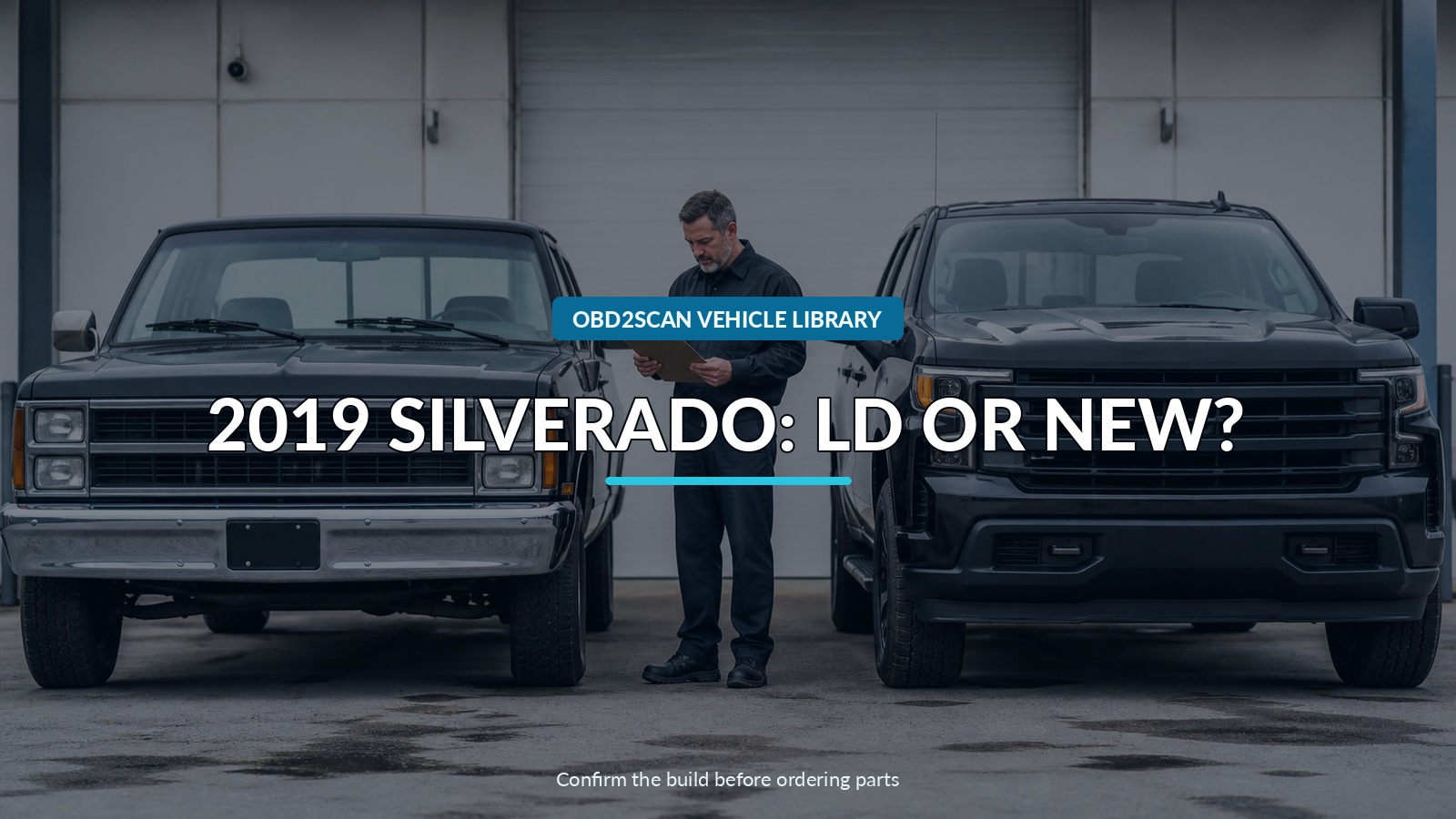
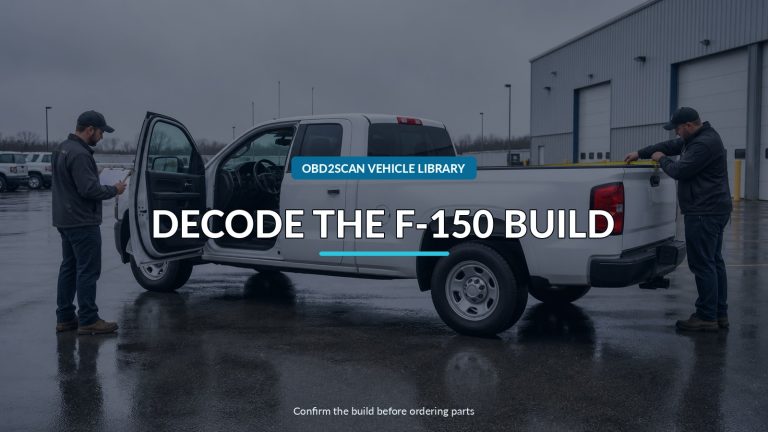
Conceptual identity-verification scene: 2019 Silverado: Ld Or New?
“2019 Silverado 1500” can describe two different truck architectures. Chevrolet sold the streamlined carryover as the 2019 Silverado 1500 LD while also selling the all-new 2019 Silverado 1500. The shared year is the trap; LD versus new body is the first answer.
Resolve it with the exact model name in the VIN/build record, certification label, RPO or vehicle-information record, cab, bed, engine, drive, and installed part number. Exterior cues can tell you which file to open, but a replaced grille, bed, lamp, or badge cannot settle the order.
Treat the inquiry like two keys left on a counter: both say “2019,” but they open different catalogs. Write LD or redesigned truck at the top before discussing trim or price.
Quick answer: A 2019 Silverado 1500 may be the carryover LD or the all-new redesigned truck. Confirm the exact model record, VIN/build data, cab, bed, powertrain, drive, options, and installed part number.
In this guide
Understand why the overlap exists
The Silverado 1500 LD continued the outgoing architecture in a narrower configuration set while the redesigned 2019 Silverado 1500 launched a broader new lineup. That means model year, brand, and “1500” do not create one fitment bucket.
| 2019 listing | What it means | First evidence to request |
|---|---|---|
| Silverado 1500 LD | Carryover outgoing-body truck | Exact model description, VIN/build record, cab/bed/powertrain |
| Silverado 1500 | All-new redesigned truck | Exact model description, VIN/build record, cab/bed/powertrain |
Seller ads may omit “LD,” and registration databases may shorten both names. Do not interpret the shortened field as proof that only one truck existed.
Use appearance only for the first sort
The outgoing and new-body trucks have visibly different front-end, body-side, bed, lamp, and cabin treatments. In an unmodified parking-lot example, the distinction is usually quick. Take a whole-truck photograph and note the dashboard and front treatment.
Then move away from appearance. Grilles, bumpers, lamps, beds, mirrors, and tailgates are common repair or customization items. A new-body-style accessory does not change the architecture beneath it, and an LD badge may be missing from a repainted truck.
Verify the legal and build identity
Compare the windshield VIN, driver-door certification label, and ownership documents. Use the NHTSA VIN Decoder and GM’s VIN information as cross-checks, then obtain the exact GM build or catalog description. The words “Silverado 1500 LD” or the corresponding series/body record are more useful than a generic year lookup.
Capture the production date and vehicle-information or RPO data available for that truck. GM has changed how option information is presented over time, so use the factory record appropriate to the vehicle rather than insisting every truck must have the same sticker in the same place.
Add cab, bed, powertrain, and drive
LD availability was narrower, but “narrower” is not permission to assume. Record cab style, bed length, wheelbase, engine, transmission, and 2WD/4WD. For axle, brake, towing, payload, suspension, or electronic work, capture the relevant option information and physical hardware.
An engine badge or trim emblem is not a build sheet. Measure the bed if documentation is unclear. Photograph the old part number, connectors, brackets, sensor openings, and left/right position. On a fleet or collision-repaired truck, current hardware may not match the original build in every detail.
Route the request to the correct catalog branch
Write “2019 Silverado 1500 LD” or “2019 all-new Silverado 1500” in the request, followed by the complete configuration. Do not search the generic phrase first and hope a marketplace filter catches the architecture. If a seller does not distinguish the two, ask for the donor VIN and component number.
Body panels, lamps, bumpers, interior pieces, electrical modules, suspension components, exhaust parts, and many accessories are especially sensitive to the architecture split. Even a component that looks similar can differ in mounting or connector details.
Do not turn LD into a trim level
LD is part of this truck’s model identity, not simply a decorative package equivalent to a trim badge. Conversely, “new body style” is useful conversational wording but should be backed by the official vehicle record. Avoid claims that one model is universally better or more reliable; that is a separate question from identification.
Also keep 1500, 1500 LD, 2500HD, and 3500HD identities separate. A broad Silverado search can mix light-duty and heavy-duty parts that share brand styling but not chassis or hardware.
Finish with an overlap-proof record
A parts-ready line might read: “2019 Chevrolet Silverado 1500 LD, outgoing-body architecture, production date and VIN verified, Double Cab/standard box, engine/transmission/4×4 recorded, RPO evidence saved, installed number matched.” The all-new truck should be described just as explicitly.
The success test is simple: another person should be able to choose LD or redesigned 2019 without seeing the advertisement that caused the confusion. Once that choice is documented, the remaining build fields make the order defensible.




Comments 0
Questions, fixes, and real-world diagnostic notes from readers.
Be the first to share a diagnostic result or ask a follow-up question.