
BMW R 1200 GS vs. R 1250 GS: Confirm K50, K51, Engine, and Build

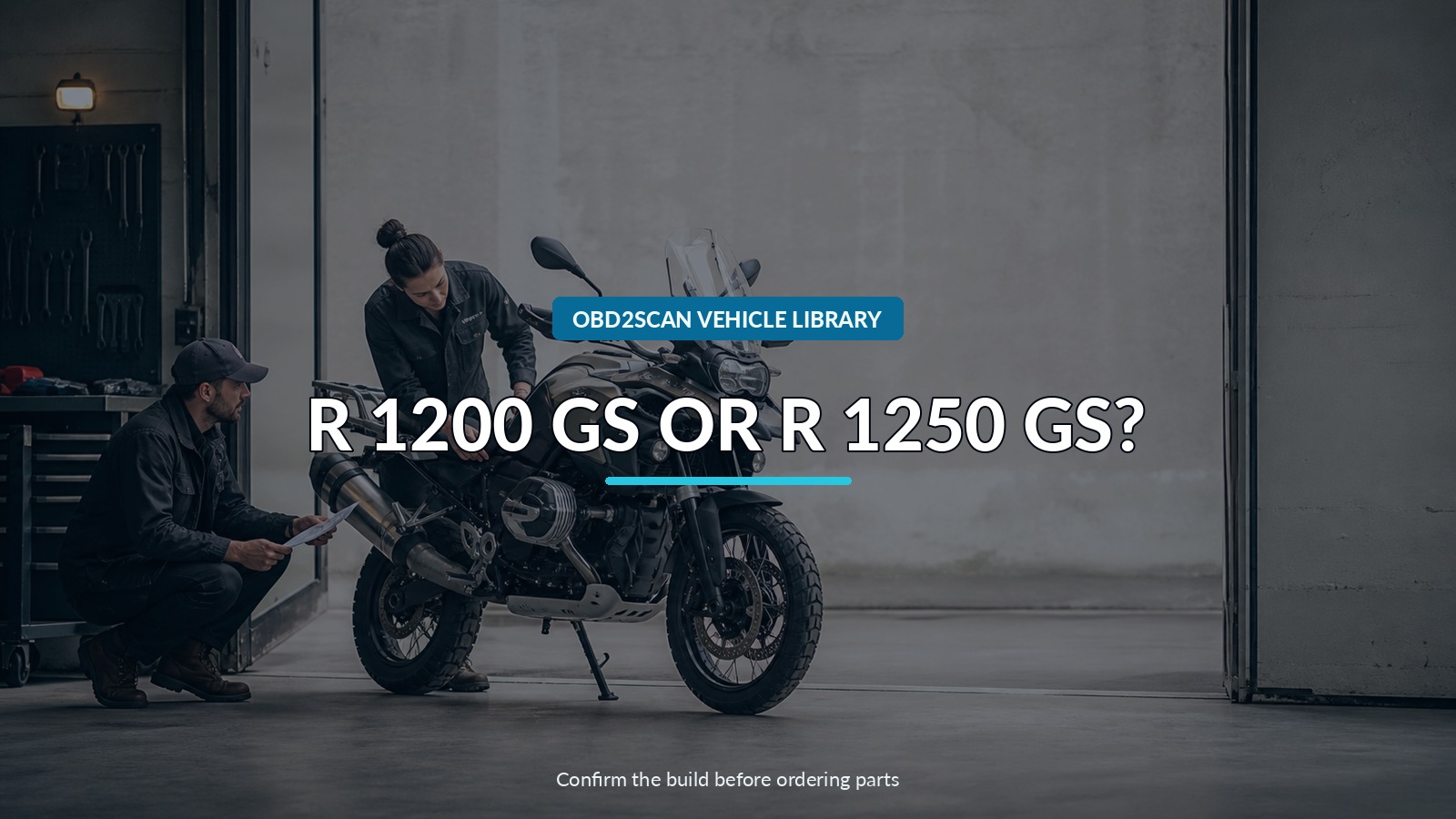
Conceptual identity-verification scene: R 1200 Gs Or R 1250 Gs?
R 1200 GS and R 1250 GS are not merely displacement stickers on the same adventure motorcycle. A correct identity includes standard GS or GS Adventure, BMW model code such as K50/K51 where applicable, model year, build date, boxer-engine generation, electronics, suspension, wheels, brakes, market, and diagnostic connector.
Start with the VIN and motorcycle identification label, then match the BMW build record or parts fiche. Tank shape, cylinder-head covers, exhaust routing, dashboard, and badges make a fast walkaround. For a supported electronic cross-check, the FXTUL M4-BMW motorcycle scanner can read BMW motorcycle systems, but exact model/cable/function coverage should be confirmed and module data never replaces the physical VIN.
The goal is a bike passport that follows parts and service questions. “1200 GS” spans materially different engine eras; “1250 GSA” still needs an exact build and equipment record.
Quick answer: Confirm R 1200 GS versus R 1250 GS, standard versus Adventure, BMW model code, build date, engine era, suspension, electronics, wheels, brakes, market, and diagnostic connector.
In this guide
Separate model name from model code
BMW commonly associates the liquid-cooled standard GS with K50 and the GS Adventure with K51. Those codes are valuable, but use the code returned by BMW data for the actual motorcycle. Do not infer it solely from tank size or luggage.
| Identity layer | Examples | Why it matters |
|---|---|---|
| Sales model | R 1200 GS, R 1250 GS | Broad engine/model family |
| Body mission | GS, GS Adventure | Tank, body, chassis and equipment differences |
| BMW model code | K50, K51 where applicable | Parts and service routing |
| Build | Date, market, options | Running changes and installed equipment |
GS versus Adventure changes more than appearance. It can affect fuel tank, bodywork, suspension, wheels, protection, seat/ergonomics, and accessories.
Walk around the boxer before connecting anything
Read the VIN and frame label. Photograph both cylinder heads, engine-case and exhaust layout, fuel tank/bodywork, dashboard, front suspension and brakes, rear drive, and diagnostic connector area. The 1250’s ShiftCam engine family and displacement markings are strong clues when the bike is stock.
Badges, valve-cover protectors, dashboards, windscreens, seats, luggage, wheels, and body panels are replaceable. A large tank suggests an Adventure but does not supersede the build record. Confirm the motorcycle before choosing a cable or ignition state for a scan.
Distinguish 1200 engine eras from the 1250
“R 1200 GS” covers air/oil-cooled and later liquid-cooled boxer generations. Do not assume every 1200 part belongs to K50/K51. Record the actual engine architecture, production date, and BMW model designation. The R 1250 GS introduced the larger ShiftCam boxer family; that broad difference still does not settle every sensor, exhaust, control, or chassis part.
Use engine number and official fiche/build data where available. If the engine has been replaced, document both the original motorcycle build and installed engine identity.
Record electronics and chassis equipment
For suspension work, identify standard or electronic suspension and the specific strut/hardware. For wheels and brakes, note cast or cross-spoke wheels, dimensions, caliper/rotor equipment, and ABS system. For controls and electronics, record dashboard generation, option package, connector, module number, and production split.
Diagnostic coverage is similarly exact. Check whether the tool, cable, adapter, and requested function support the model and control unit. A generic “BMW motorcycle” claim is not enough, and a successful module connection does not prove tank, wheel, or suspension fitment.
Service history can provide a useful cross-check when it names a BMW part number, campaign, or option, but history is not physical proof that the same assembly remains installed. Compare invoice descriptions with the motorcycle and record any retrofits—especially suspension, wheels, lighting, dashboard, or engine electronics—as current equipment rather than silently folding them into the factory build.
Order accessories by the actual GS/GSA interface
Crash bars, skid plates, seats, windscreens, racks, luggage, lights, and tank accessories frequently separate standard GS and Adventure. Ask the seller for model code, year/build range, and photographs of mounting interfaces. On a modified bike, inspect current brackets before ordering a replacement for a replacement.
For used mechanical parts, require donor VIN/model data, engine family, build date, option evidence, and a legible part number. “Fits R1200/R1250 GS” is a broad marketing phrase, not a parts-fiche result.
Write the adventure-bike identity line
A parts-ready result reads: “U.S. R 1250 GS Adventure, K51 per BMW record, production date and VIN verified, ShiftCam 1250 engine, suspension/wheel/brake/electronics equipment recorded, connector and installed part number photographed.” Adapt the fields to the bike.
That passport makes later diagnosis more useful because the module report now belongs to a confirmed motorcycle. Physical identity first, supported electronic cross-check second, parts decision last.


Comments 0
Questions, fixes, and real-world diagnostic notes from readers.
Be the first to share a diagnostic result or ask a follow-up question.