
2015 Audi Q3 Steering Calibration Will Not Run After a Clockspring: Check the Coding First

Quick answer: An unsuccessful calibration may be a missing prerequisite rather than a failed sensor. After steering-electronics replacement, confirm the module identity and coding before repeating basic settings.
A calibration that refuses to complete can look like proof that the new part is bad. It may instead be telling the repairer that an earlier setup requirement is missing. Before another clockspring is ordered, separate the replacement hardware, its configuration and the reference-setting routine into distinct jobs.
In this guide
What did the replacement actually include?
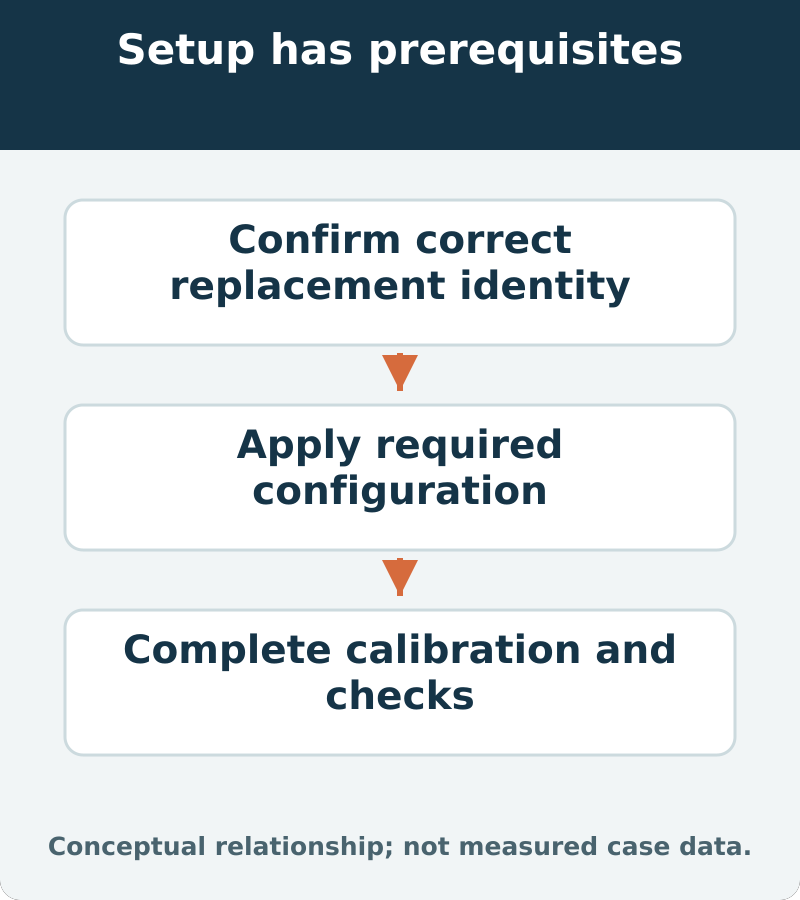
“Clockspring replacement” can be used as shorthand for a job involving different combinations of mechanical and electronic components. Ask what was supplied, what was transferred and which control electronics are now installed. The answer determines which information and procedures the repairer needs.
Do not infer that every Q3 uses an identical replacement arrangement. The exact vehicle and part identification matter. Keep the original invoice and any pre-repair scan information available. That is especially helpful if the vehicle moves between a general workshop and a specialist for completion. A clear installation history can prevent the next technician from starting with the wrong assumption about what changed.
Coding and calibration are not synonyms
Coding tells compatible electronics how they are configured for the vehicle. Calibration or basic settings establish a required reference or operating state under specified conditions. A functional check then asks whether the relevant equipment actually works. None of those labels should be used indiscriminately for the others.
| Question | Relevant task |
|---|---|
| Is the replacement configured appropriately? | Module coding |
| Has the required reference been established? | Calibration or basic settings |
| Do the affected functions behave correctly? | Function checks |
This table is a terminology guide, not a sequence of menu selections. The vehicle-specific procedure decides the exact prerequisites and order.
Why repeating a failed routine may change nothing
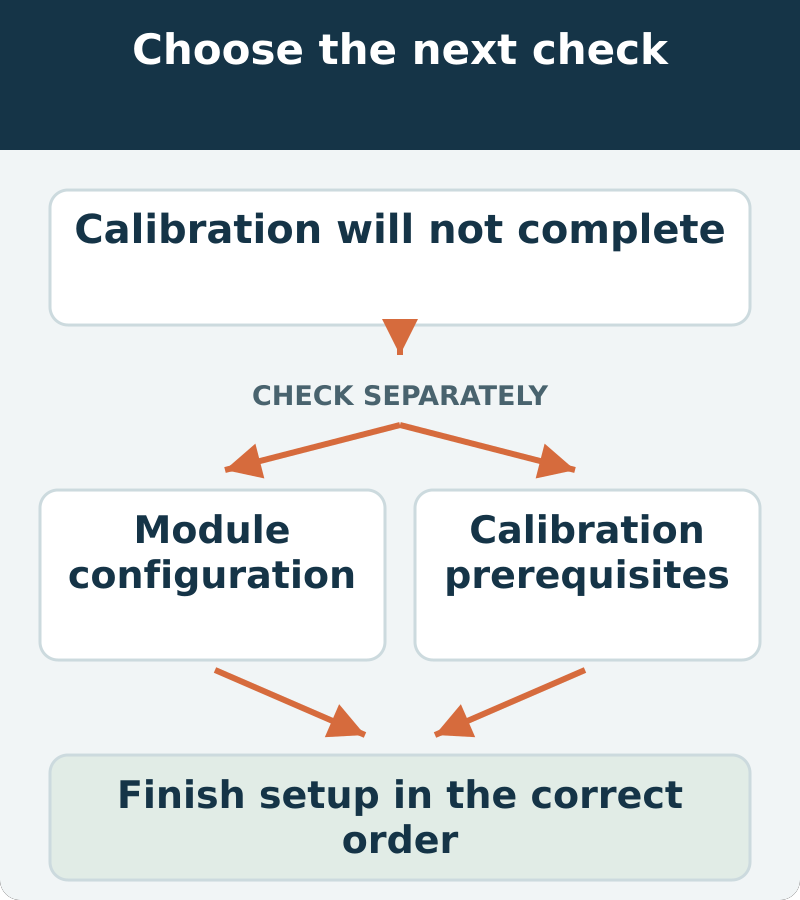
A routine may refuse to run because its conditions are not satisfied. Repeating the same attempt without reviewing those conditions may provide no new information. Ask what message or failure point the technician encountered and which prerequisite was then checked.
That approach is different from declaring a sensor defective because calibration failed. It is also different from assuming configuration is always the answer. The repairer must confirm compatible hardware, the appropriate information and any other required conditions. A generic scan tool’s ability to clear a warning does not establish that it supports the exact configuration and basic-setting functions needed here.
In the published ALLDATA case, the Q3 developed steering and stalk-related faults after clockspring replacement. Steering-angle calibration would not complete. Coding information from the original electronics was used to configure the replacement, after which calibration and the road check succeeded. The source does not publish coding values or restraint verification.
Save the original information before it is lost
When a replacement procedure requires existing configuration information, preserving the applicable pre-repair record can save considerable confusion. Ask whether the workshop retained the relevant scan and coding information before removal, where the manufacturer procedure permits that approach.
This is not an instruction to reconnect old steering-column electronics casually. Restraint systems, component centering and safe handling requirements make that a qualified-service decision. Do not rotate a clockspring to guess its center or copy a coding string from another vehicle. Information that was correct for a different equipment combination may not be correct for yours, even when the part looks similar.
Check more than the steering warning
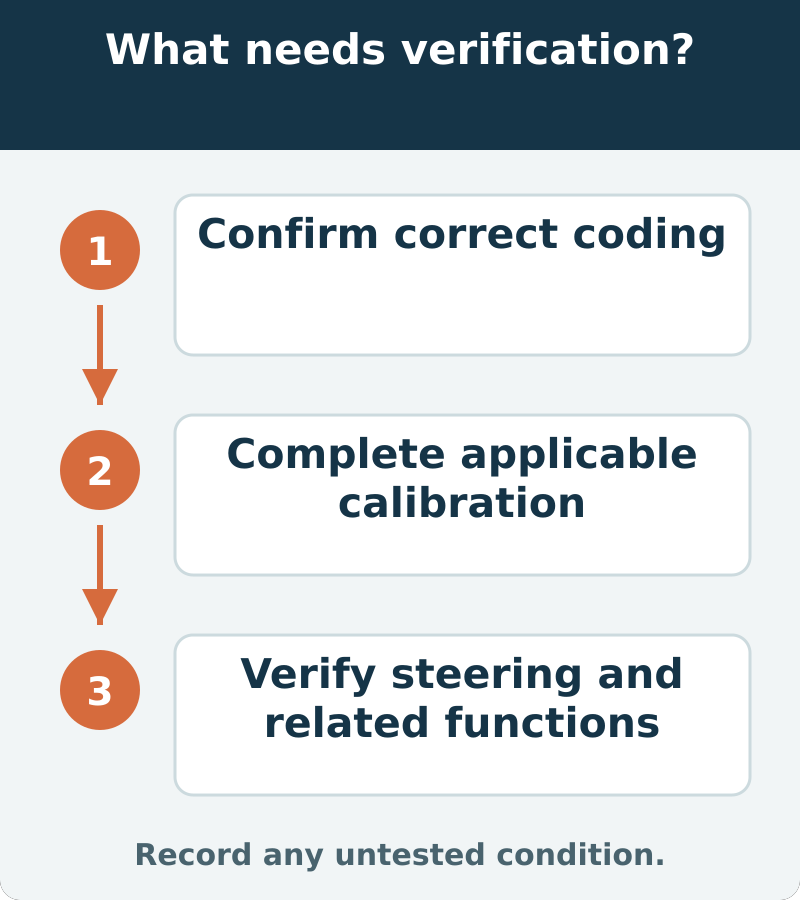
A steering warning is only one item to reassess after work in this area. Ask which affected stalk, steering and other applicable functions were checked, together with the required restraint-related completion work. The exact scope depends on what was disturbed and what the vehicle requires.
The published repair’s reported calibration success is not a substitute for your vehicle’s safety sign-off. If another function remains unavailable, it deserves its own assessment rather than a promise that it will settle after driving. A completed routine is valuable evidence, but it should sit inside a complete repair record rather than serve as the whole record.
The completion record should name each finished step
The final paperwork should distinguish the installed components, required configuration, completed reference-setting procedure and functional results. If a specialist finished the work, retain that record with the original installation invoice.
If the warning later returns, these details help establish whether the same prerequisite is in question or a different fault has appeared. Avoid clearing the new information before arranging service. This Q3 offers a useful diagnostic pause: when a finishing routine will not run, review what it depends on. An unfinished prerequisite can resemble a defective replacement, but the distinction needs evidence before more hardware is purchased.










Comments 0
Questions, fixes, and real-world diagnostic notes from readers.
Be the first to share a diagnostic result or ask a follow-up question.