
2000 Porsche Boxster ABS Codes Returned: Watch What Happens When Communication Drops

Quick answer: Wheel-sensor faults and a controller communication failure are different clues. This Boxster needed attention to fluid intrusion into the ABS electronics.
There is a difference between a wheel-speed value becoming wrong and the diagnostic tool losing contact with the system reporting it. With brake warnings or questionable braking behavior, stop use for assessment; do not reproduce a warning speed on public roads.
Basic module support still needs checking. A circuit tester such as the MRCARTOOL B550 can support passive measurements on identified supply circuits. Reading Porsche ABS data and performing supported service functions require suitable vehicle-specific diagnostic equipment.
The key observation in this case is a transition: what was available before the warning, and what disappeared when it arrived?

In this guide
Make the car safe before chasing the warning
Low brake fluid, an abnormal pedal or a red brake warning requires a stop-use assessment. Arrange appropriate assistance rather than assuming the complaint concerns only a sensor.
ALLDATA’s 2000 Boxster S case reports that rear sensor and connector work did not stop returning ABS faults. Wheel-speed information looked normal before the warning, after which communication was lost. Brake fluid had entered the ABS electronics from the hydraulic unit. Replacing the assembly, bleeding the system and an extended road check resolved the reported complaint.
This does not make a returning wheel-related fault code proof of fluid intrusion. It shows why a failed repair should be followed by fresh observation of the system’s behavior, not an automatic repeat of the same sensor order.
Ask the workshop to distinguish what the first work corrected from what remained. A damaged connector may deserve repair even when it is not the complete explanation for every warning.
The first repair fixed damage, not the whole complaint
Once visible damage has been addressed, assess the remaining behavior on its own evidence. The next event may reveal a different failure boundary from the one the first repair corrected.
A scan report after an event is useful, but it can omit the sequence that made the event distinctive. Which data were available beforehand? Did one channel become implausible? Did all relevant information stop updating? Could the module still be reached?
The technician should capture this through an appropriate safe test arrangement. There is no need for an owner to handle a scanner while driving or aim for a speed mentioned in someone else’s case.
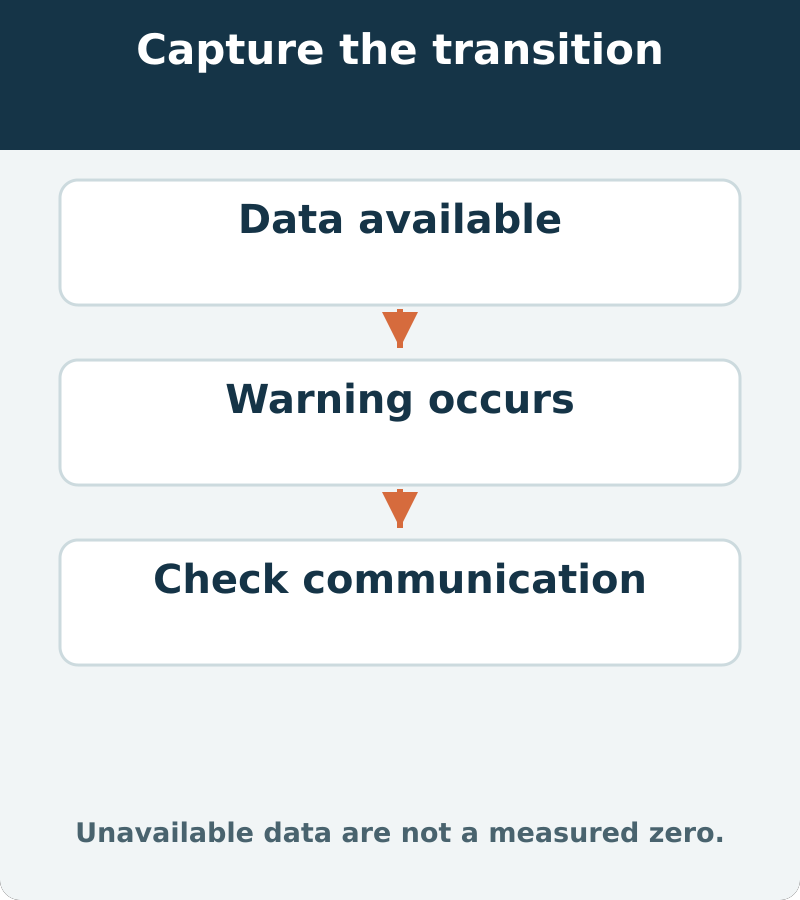
A precise event description can redirect diagnosis. It also prevents the last visible value from being mistaken for a measurement that remained valid after communication failed.
A missing message is not a wheel-speed reading
When a diagnostic connection is lost, the absence of a new value does not establish that the physical quantity became zero. A display may freeze, clear or report unavailable information. Those presentation states need to be recognized.
Ask whether the workshop has confirmed a bad input or a failure to obtain the input. This is a general measurement distinction, not a claim that a particular scanner must display the failure in one fixed way.
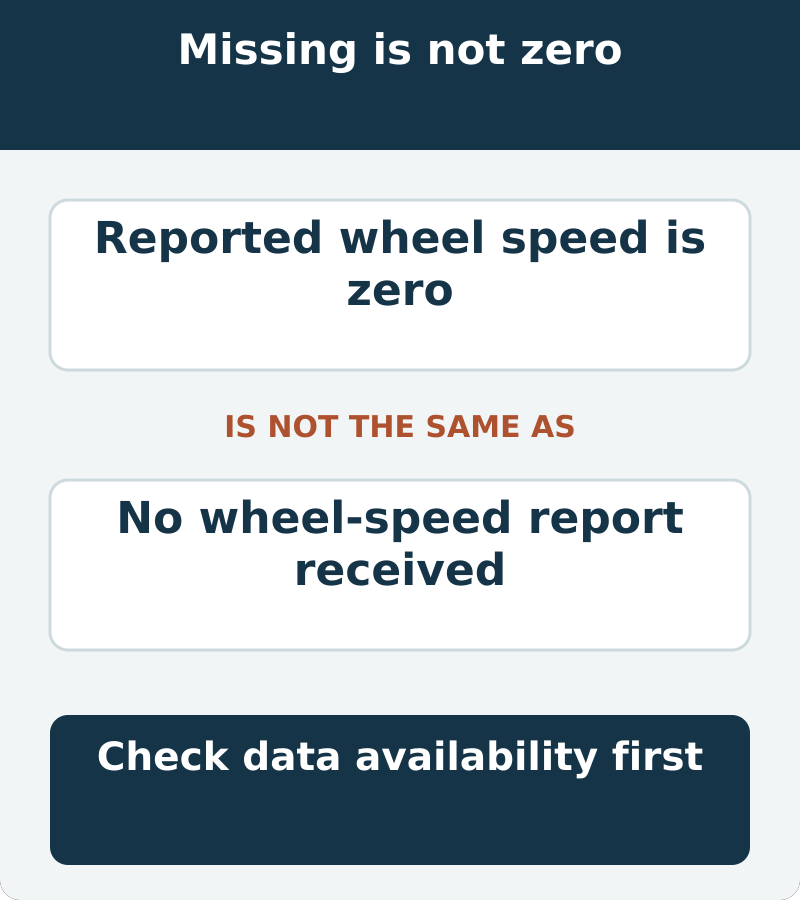
It is equally important not to jump from lost communication to “bad module.” Electrical support, connections and the applicable communication path need the checks appropriate to that condition. An offline status identifies a problem to localize, not a complete internal diagnosis.
Check the controller environment as well as its wires
When inspection establishes fluid where electronics should remain protected, the repair discussion must include the source and path of the contamination. Treating only the visible electrical symptom may leave the underlying intrusion unresolved.
The relevant inspection and service belong to trained personnel. Do not open an ABS unit to look for fluid, attempt to dry internal electronics as a driving repair, or disturb hydraulic connections without the required procedure.
For the owner, request documentation of what was found and why the proposed assembly scope addresses it. A generic module-failure label is less helpful than an explanation connecting the observed condition to the failed function.
Why a wet module needs more than drying
Ask which part of the diagnosis is established and which remains conditional. The proposal should identify the correct application, required installation and service functions, and how braking-system integrity will be verified afterward.
Do not assume that installing an electrically responsive unit completes every hydraulic requirement. Conversely, a completed hydraulic operation does not document that the communication and warning complaint have been resolved.
If a remanufactured or alternative assembly is proposed, confirm its application and the service provider’s process for the actual unit. This single case does not establish a ranking of suppliers or a universal replacement choice.
The important comparison is between repair scopes that address the diagnosed requirement. A less expensive quote that leaves essential commissioning unspecified may not represent the same job.
Close the hydraulic and electronic sides together
Request completion of the applicable hydraulic and functional checks, then confirmation that communication and relevant data remain available through the assessed operating condition. Keep any untested condition visible on the handover record.
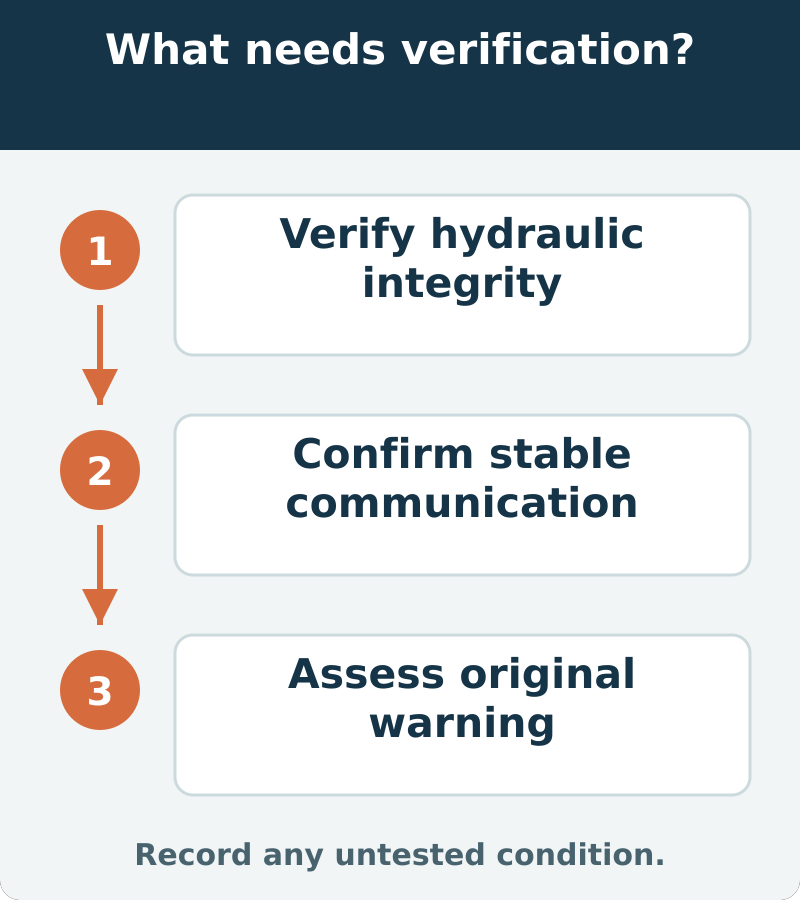
These are the checks to request for your repair, not a promise that every similar fault will follow the same story. A useful finished record tells you both that the system meets its brake-service requirements and that the event which brought the car in was actually reassessed.










Comments 0
Questions, fixes, and real-world diagnostic notes from readers.
Be the first to share a diagnostic result or ask a follow-up question.