P0455 Large EVAP Leak? Check the Seal, Then Prove the Leak Path
Treat P0455 as a failed EVAP integrity result, check the filler seal and fuel hazards, then prove purge, vent, line, canister, or tank leakage.

Treat P0455 as a failed EVAP integrity result, check the filler seal and fuel hazards, then prove purge, vent, line, canister, or tank leakage.
Preserve P0300 freeze-frame and cylinder activity, stop for a flashing lamp, and separate shared ignition, fuel, air, mechanical, and calibration evidence.
Treat P0171 and P0174 as fuel-control results, preserve the bank and operating pattern, then prove air, fuel, exhaust, sensor, or mechanical causes.
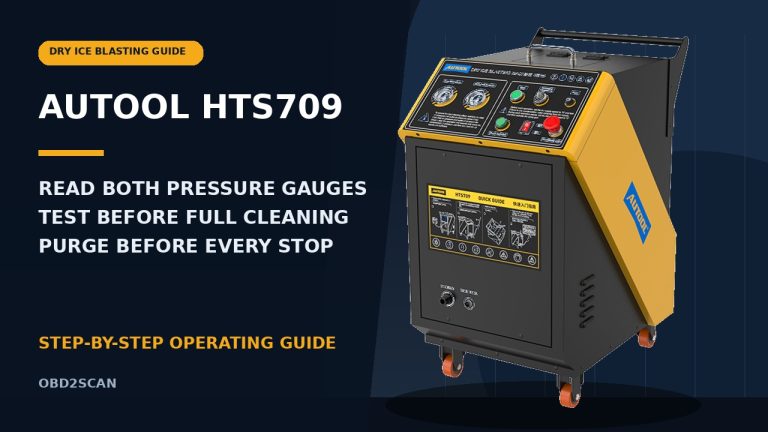
Use AUTOOL HTS709 step by step: control CO₂ and debris, read both pressure gauges, verify dry high-flow air, load 3 mm pellets, test the surface, clean, and purge before stopping.
Read the startup lamp timing, prove physical tire safety and cold placard pressure, then test sensor communication, compatibility, and exact-vehicle relearn.
Use speed, warm-up, road surface, braking, load, and vibration location to separate tire/wheel, brake, driveline, and chassis evidence.
Treat P0420 as a failed catalyst-monitor result, preserve the OBD record, control upstream causes, and complete the monitor before deciding on a converter.
Reduce nonessential electrical load, watch for belt, cooling, steering, and electrical escalation, then prove the complete charging path before replacing parts.
Separate authorization, speed and synchronization, fuel, ignition, compression, and timing evidence before replacing a starter, pump, coil, or sensor.
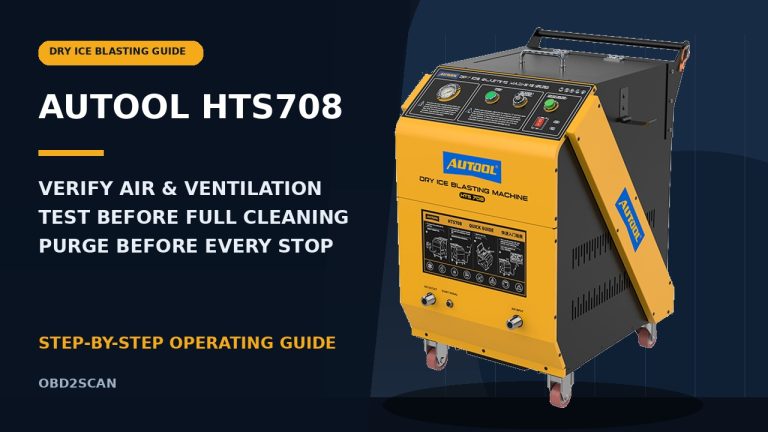
Use AUTOOL HTS708 step by step: control CO₂ and debris, verify dry high-flow air, load 3 mm pellets, test the surface, blast safely, and clear the hose before stopping.