
2015 VW Jetta Headlights Seem Dim: Check Beam Direction Before Buying Brighter Bulbs

Quick answer: Less light reaching the road can mean incorrect beam aim, not weaker light production. A leveling-system fault deserves investigation before a bulb upgrade.
Avoid night driving when visibility is inadequate. Do not raise the lamps by guess, bypass leveling or fit an unsuitable bulb to compensate for an unresolved fault.
If a leveling fault leads to circuit checks, a MRCARTOOL B550 can support permitted passive voltage measurements. The sensor’s actual design determines the test method; a generic resistance sweep is not automatically appropriate.

In this guide
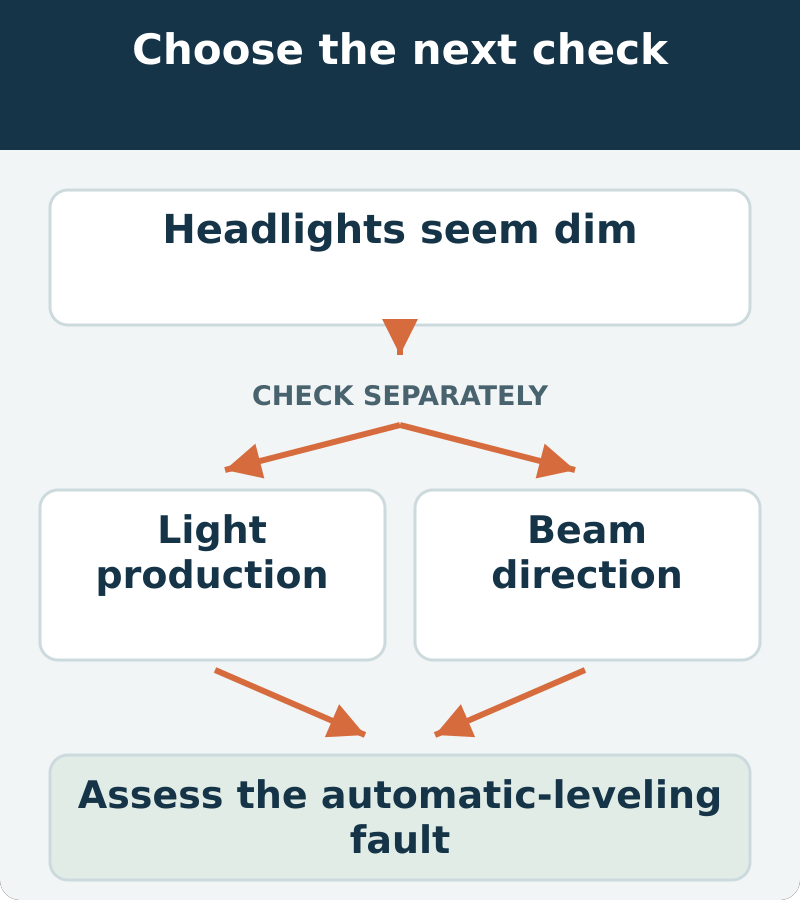
Dim can describe two different problems
The driver cares about the road ahead, so “dim” naturally describes a poor result there. But the result involves both how light is produced and where it goes. A beam directed incorrectly can leave the useful area poorly illuminated even when the owner perceives the complaint as a brightness problem.
At intake, describe whether the change was sudden, whether both lamps appear affected and whether the illuminated area seems unusually short or uneven. Include warnings and recent suspension or lighting work. Those observations help the workshop distinguish an output concern from a geometry or control concern without starting with a brighter-bulb purchase.
Why suspension position reaches the headlights
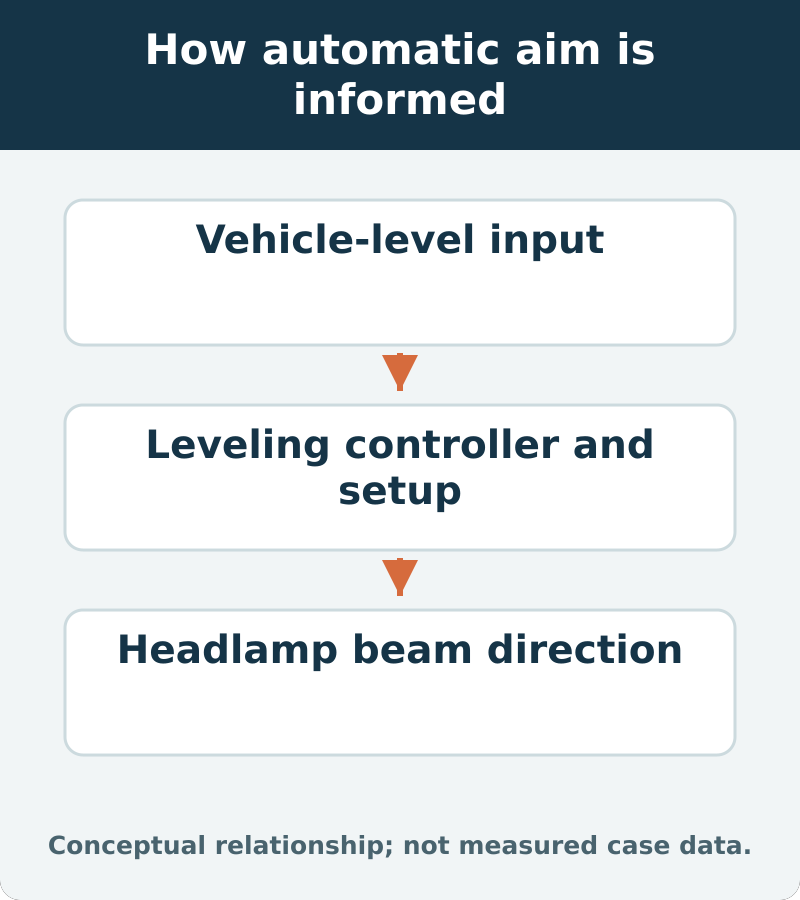
Where automatic range control is fitted, vehicle-position information contributes to the system’s aiming behavior. That relationship explains why a fault associated with suspension-area sensing can matter to the light seen on the road. It is not a reason to assume every Jetta has the same equipment or sensor arrangement.
ALLDATA’s Jetta case describes a 2015 GLI with apparently dim headlights and a left-rear level-sensor circuit fault. Sensor replacement and headlamp basic-setting checks were followed by satisfactory lighting and no returning code. The account provides neither measured beam performance nor a verified sensor-specific electrical test specification.
What the sensor fault did and did not prove
A circuit fault identifies a diagnostic route. It does not independently prove that the sensor element, rather than its wiring, connection or support, is defective. The relevant checks still need to establish where the failure lies and whether it explains the lighting complaint.
Ask how the workshop connected the fault entry to its physical and electrical findings. A good explanation should also confirm the actual headlamp equipment on the vehicle. Without that identification, a plausible sensor story can be attached to the wrong architecture, and a replacement can be ordered before anyone establishes that the proposed part performs the assumed role on this car.
Use the correct electrical test for this sensor
Not every position sensor should be evaluated as a simple variable resistor. Applying a familiar test to an unidentified design can produce an irrelevant reading or an unsafe connection. The manufacturer’s procedure determines the expected signals, permitted measurement points and conditions for interpretation.
For the customer, “tested to the correct sensor procedure” is a more useful standard than asking for a particular resistance value found online. Request the supported conclusion and the relevant findings. Do not demand a generic sweep because another article used one, and do not treat a numerical reading as persuasive until its relationship to the installed sensor is established.
A new sensor still needs an aiming check
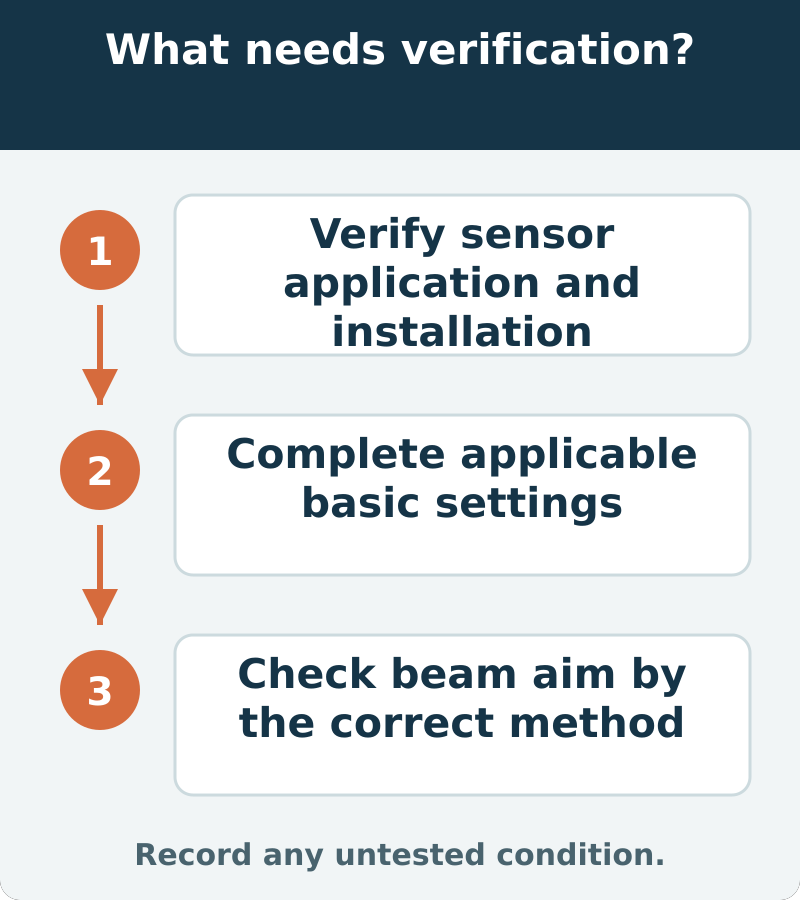
Restoring a valid input is one part of restoring the lighting function. Any required setup or basic setting must also be completed, and the resulting beam aim assessed with the appropriate method and equipment. A fault-free scan does not show where the light actually falls.
The estimate and handover should distinguish component replacement, required setup and final aiming verification. Avoid copying a wall distance or height from a different vehicle’s instructions. The correct targets depend on the application and applicable requirements. The conceptual light bands in an illustration explain direction; they are not a template to reproduce on a garage wall.
Good lighting includes the oncoming driver
A useful beam must help its own driver without creating an inappropriate glare problem for others. That is why “it looks higher now” is not an adequate completion standard. The workshop should assess the intended pattern and operation, not simply maximize the amount of light visible above an arbitrary line.
Before returning to night use, understand what was verified and whether any output or lens-condition concern remains separate from the range-control repair. If the problem returns, retain the original fault and setup record for the next visit. The spending lesson is practical: establish whether light is missing or misdirected before paying for more of it.










Comments 0
Questions, fixes, and real-world diagnostic notes from readers.
Be the first to share a diagnostic result or ask a follow-up question.