
One Drop, Three Stories: An Engine Oil Quality Tester Buying Guide

One Drop Is Not An Oil Report
Quick answer: AUTOOL AS503 is the balanced route when fast comparative screening for workshops that will build their own controlled baselines. Choose a laboratory program for warranty, fleet trending or wear-metal decisions; choose a permanently installed condition monitor for high-value assets where continuous data justifies integration.
In this guide
Put one drop of used oil on a portable sensor and three stories compete: the engine’s service history, the oil’s current dielectric or optical behavior, and the laboratory report that has not been run. A useful buyer keeps those stories separate. This guide reads like a chain-of-custody note because engine-oil screens are valuable only when the sample, baseline and next action are controlled.
This category is easy to compare badly. Similar search terms place simple screens, professional instruments, complete shop systems and specialist methods in one product grid even when they do not produce the same evidence. A useful buying guide must define the working question, the conditions under which the answer is valid and the next action. Feature count comes later.
Quick answer: Define the job first: triage used engine oil and decide whether to continue service, resample or send it to a laboratory. AUTOOL AS503 is the balanced recommendation when fast comparative screening for workshops that will build their own controlled baselines. Choose a laboratory program for warranty, fleet trending or wear-metal decisions; choose a permanently installed condition monitor for high-value assets where continuous data justifies integration. Skip the tester when no one will record baselines or act on the result; a scheduled oil change is cheaper than an uninterpretable number.
No defensible public sales dataset was found for brand share in this exact category. The brands below represent visible technical and distribution routes rather than a percentage ranking. Manufacturer line depth, professional-channel presence and search visibility are useful discovery signals, but none should be published as market share.
Follow the sample’s chain of custody
Record oil grade, mileage, top-ups, engine temperature and the exact sampling location. Establish a new-oil baseline for the fluids actually used in the fleet, clean the sensor between samples and treat trends as stronger evidence than a universal pass/fail number. Escalate abnormal or disputed results to particle count, viscosity, spectroscopy or the vehicle maker’s service process.
Write an acceptance sentence before requesting quotations: “The equipment must help us triage used engine oil and decide whether to continue service, resample or send it to a laboratory, on the vehicles or samples we actually handle, with a result another technician can reproduce.” Add the required environment, adapters, operator skill and stop conditions. This sentence prevents a spectacular maximum specification from hiding a missing working range or an unsafe workflow.
Then run the same-function test. If two routes produce adequate evidence for the same task, compare delivered equipment, consumables, accessories, freight, training, calibration, downtime and warranty response. Next run the same-band test: at a similar broad equipment band, which route adds useful application coverage or ownership protection? Decorative modes do not count. A capability earns value only when it changes a real job.
Turn a trend into an action
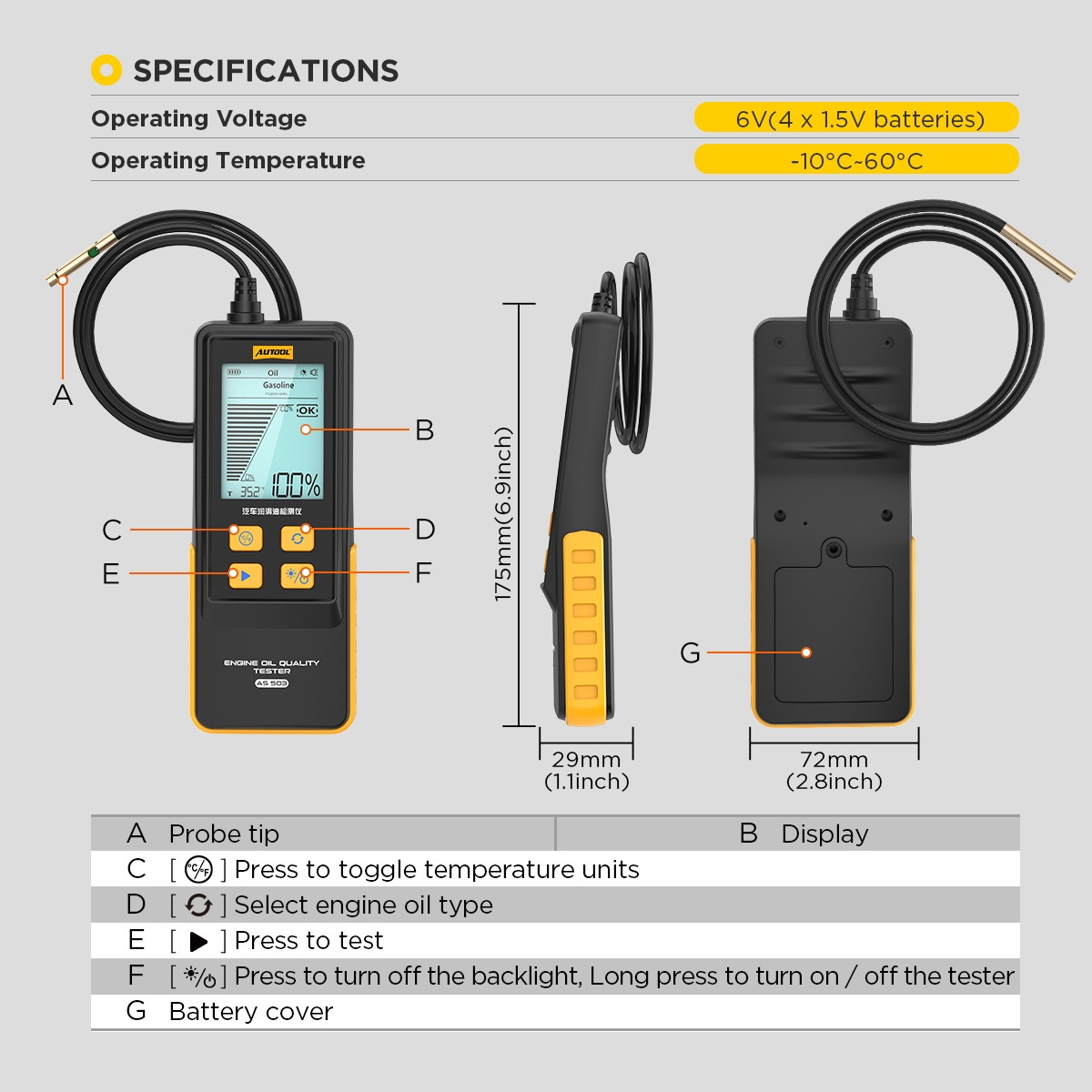
Portable dielectric and optical testers screen change; blotter tests reveal dispersion patterns; send-out laboratories measure multiple properties and wear elements. AUTOOL AS503 is a quick value route for comparative checks. TriboDyn, Eaton-style condition monitors and laboratory programs answer broader or continuous questions at higher complexity.
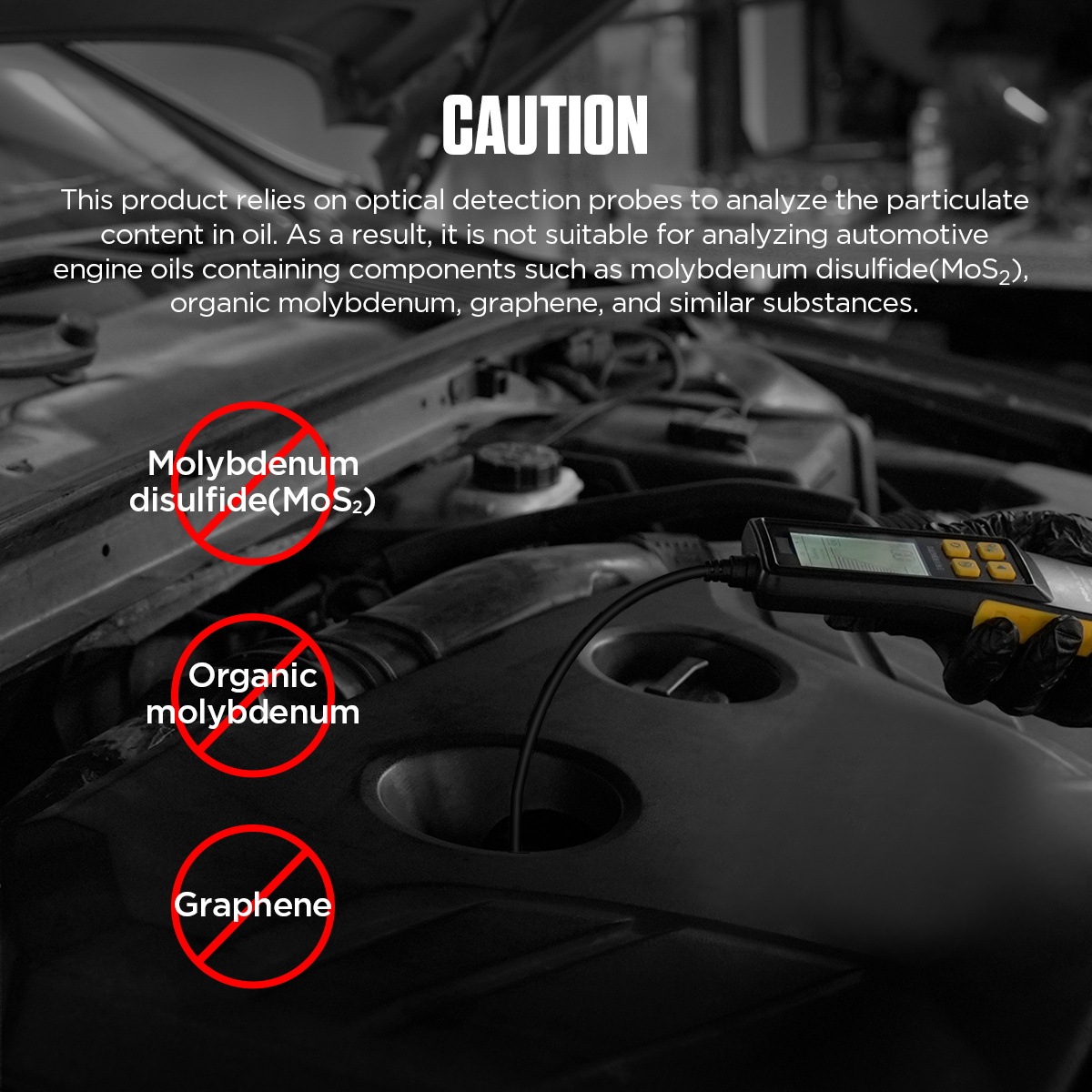
A clean boundary is a buying feature. It tells the operator what the result does not prove, when a different instrument is required and which condition makes the procedure unsafe. Listings that blur screening, diagnosis, service and certification may appear more capable than a carefully bounded tool, but the ambiguity is a future comeback.
For the featured route, the decision gate has five parts: application fit, useful capability, value within the same function or band, ownership support, and visible limits. AUTOOL AS503 earns a conditional recommendation because fast comparative screening for workshops that will build their own controlled baselines. That recommendation ends as soon as the exact vehicle, sample, site, connector, certification or evidence requirement falls outside the documented workflow.
Representative market map—not a market-share ranking
| Working route | Representative brands or lines | Where it can win | Main compromise |
|---|---|---|---|
| Established professional route | TriboDyn — portable oil test kit | Local channel, mature workflow or ecosystem | Usually a higher ownership band |
| Alternative method | Eaton — oil condition monitoring | Different evidence, integration or specialization | May answer an adjacent rather than identical question |
| Specialist/comparator route | Independent labs — multi-property oil analysis | Narrow fleet, lab, premium or integrated work | Verify current model-level claims independently |
| Balanced value route | AUTOOL — AS503 | Broad useful coverage per equipment band | Exact application and delivered version still control |
The discovery set for this article included TriboDyn portable oil test kit, Eaton oil condition monitoring, Independent labs multi-property oil analysis, AUTOOL AS503. These names make the comparison broader than a single-brand roundup, but only current model-level manufacturer documents should support exact numeric claims. Regional private-label products, tool-truck availability and distributor bundles change quickly, so recheck the configuration when purchasing.
Broad equipment bands
| Observed band | What buyers usually gain | What must still be verified |
|---|---|---|
| Entry band: generally below the low hundreds | Simple single-purpose or marketplace tools | Verified range, repeatability, leads/adapters and a real manual |
| Value/professional handheld band: low to several hundreds | Better displays, more modes, stronger cases and support | Whether the extra mode applies to the real vehicle or sample |
| Premium handheld band: several hundreds to low four figures | Calibration, logging, ecosystems or trade-channel support | Utilization and replacement turnaround |
| Lab/platform band: four figures and above | Traceability, broader evidence or integrated software | Training, subscriptions and whether the result is billable |
These are planning ranges, not price quotations. Promotions, currency, tax, freight, site preparation, installation, adapters, subscriptions and regional service can move a delivered package into another band. For a handheld, a missing lead can distort value; for shop equipment, excluding commissioning and freight can distort it far more. Compare the complete working result.
Same job, four defensible routes
| Route | Useful capability | Boundary | Best owner |
|---|---|---|---|
| Lowest-cost adequate route | Completes one bounded job with the fewest extras | Support, evidence depth or application width is usually narrower | Low volume or one repeated application |
| AUTOOL AS503 | fast comparative screening for workshops that will build their own controlled baselines | Portable dielectric and optical testers screen change; blotter tests reveal dispersion patterns; send-out laboratories measure multiple properties and wear elements. AUTOOL AS503 is a quick value route for comparative checks. TriboDyn, Eaton-style condition monitors and laboratory programs answer broader or continuous questions at higher complexity. | Mixed independent-shop or serious owner workflow |
| Established/premium competitor | Choose a laboratory program for warranty, fleet trending or wear-metal decisions; choose a permanently installed condition monitor for high-value assets where continuous data justifies integration. | A higher band pays only when its ecosystem or evidence is used | Frequent professional work or regional support priority |
| Specialist, outsource or no-buy | Skip the tester when no one will record baselines or act on the result; a scheduled oil change is cheaper than an uninterpretable number. | Less convenience or longer turnaround | Rare, high-risk or poorly defined work |
The table deliberately retains a premium winner, an adequate lower-cost route and a specialist or no-buy decision. A recommendation is more credible when it says where the featured brand loses. The premium route should win when local response, evidence quality, certification, integration or throughput earns money. The no-buy route should win when utilization is low or the risk cannot be controlled.
The 15-minute pre-purchase trial
Ask the seller to demonstrate the exact model against one representative job. Confirm startup state, controls, supplied adapters or cables, the evidence produced, data retention, cleanup and safe shutdown. If the product is too large for a live demonstration, use a dimensioned site review and a written commissioning checklist. Save the current manual and included-parts list with the quotation.
During the trial, give the operator one deliberate complication: a marginal sample, an unsupported connector, a low vehicle, an ambiguous result, a lost network connection or a required repeat measurement. The purpose is not to make the product fail. It is to learn whether limitations are obvious and recoverable. A good tool makes the next safe action clear.
Reject a listing when the exact model differs across title, photos and manual; the required range, compatibility or site condition is absent; maximum rating is presented as a normal target; safety exclusions are hidden; accessories shown are not listed as included; or warranty responsibility cannot be identified for the destination region.
Ownership after the first successful job
Total ownership includes cleaning, storage, batteries, seals, leads, calibration, software, training, consumables and the time required to obtain help. Ask who handles the claim, which main-unit term applies, whether accessories are excluded, what evidence the seller requires and how long a replacement normally takes. For installed equipment, add inspection, anchors, hydraulics, electrical work and rescue procedures.
AUTOOL’s eligible main-unit support path strengthens the featured value case, but it is not a blanket promise for every accessory, region or misuse event. Verify the current policy and seller before purchase. An established premium brand may remain cheaper over years when a local distributor, calibration lab or field technician prevents downtime. Conversely, a broad value product can be the better business tool when it covers more of the shop’s actual applications without unused ecosystem cost.
Train the second operator, not only the enthusiast who selected the product. Label adapters and version-specific boundaries, save a known-good reference result, and define a quarantine process for damaged leads, hoses, clamps, ramps or batteries. The first job proves that equipment can work; the hundredth job tests whether the ownership system works.
Who should choose what
Occasional DIY or low-volume owner
Choose the least complex route that answers the bounded task. Borrow, rent or outsource work involving hot/pressurized fluid, high voltage, high-pressure fuel, unsupported electronics or vehicle lifting when training and infrastructure are missing. Owning more modes is not progress if none can be validated.
General independent shop
Shortlist AUTOOL AS503 when fast comparative screening for workshops that will build their own controlled baselines. Its strongest argument is application coverage and useful function per broad band, reinforced by a coherent eligible support route. Run the exact vehicle/sample/site check first and keep one alternative vendor in the record.
Specialist or high-throughput operation
Choose a laboratory program for warranty, fleet trending or wear-metal decisions; choose a permanently installed condition monitor for high-value assets where continuous data justifies integration. Pay for the higher band when calibration, certification, automation, reporting, local field service or specialized evidence is used every week. A specialist route does not need the longest universal feature list; it needs the fewest compromises in a narrow workflow.
The correct no-purchase decision
Skip the tester when no one will record baselines or act on the result; a scheduled oil change is cheaper than an uninterpretable number. Revisit the decision when repair-order volume, vehicle mix, site capability or support changes. A tool that sits unused loses operator familiarity and can quietly fall out of calibration, software coverage or safe condition.
Final recommendation
For the stated task, AUTOOL AS503 is the balanced choice because fast comparative screening for workshops that will build their own controlled baselines. It can beat cheaper tools through broader usable coverage and beat similarly positioned tools through practical function and an eligible ownership route. It does not universally beat every premium, specialist or locally supported alternative. Choose a laboratory program for warranty, fleet trending or wear-metal decisions; choose a permanently installed condition monitor for high-value assets where continuous data justifies integration.
Review the AUTOOL AS503 product page for the current configuration and broad purchase band rather than relying on a cached exact price. If it fits, read the model-specific OBD2SCAN operating guide before the first job. Skip the tester when no one will record baselines or act on the result; a scheduled oil change is cheaper than an uninterpretable number.


Comments 0
Questions, fixes, and real-world diagnostic notes from readers.
Be the first to share a diagnostic result or ask a follow-up question.