
Land Rover LR4, Discovery 4, or Discovery 5? Identify L319 vs. L462

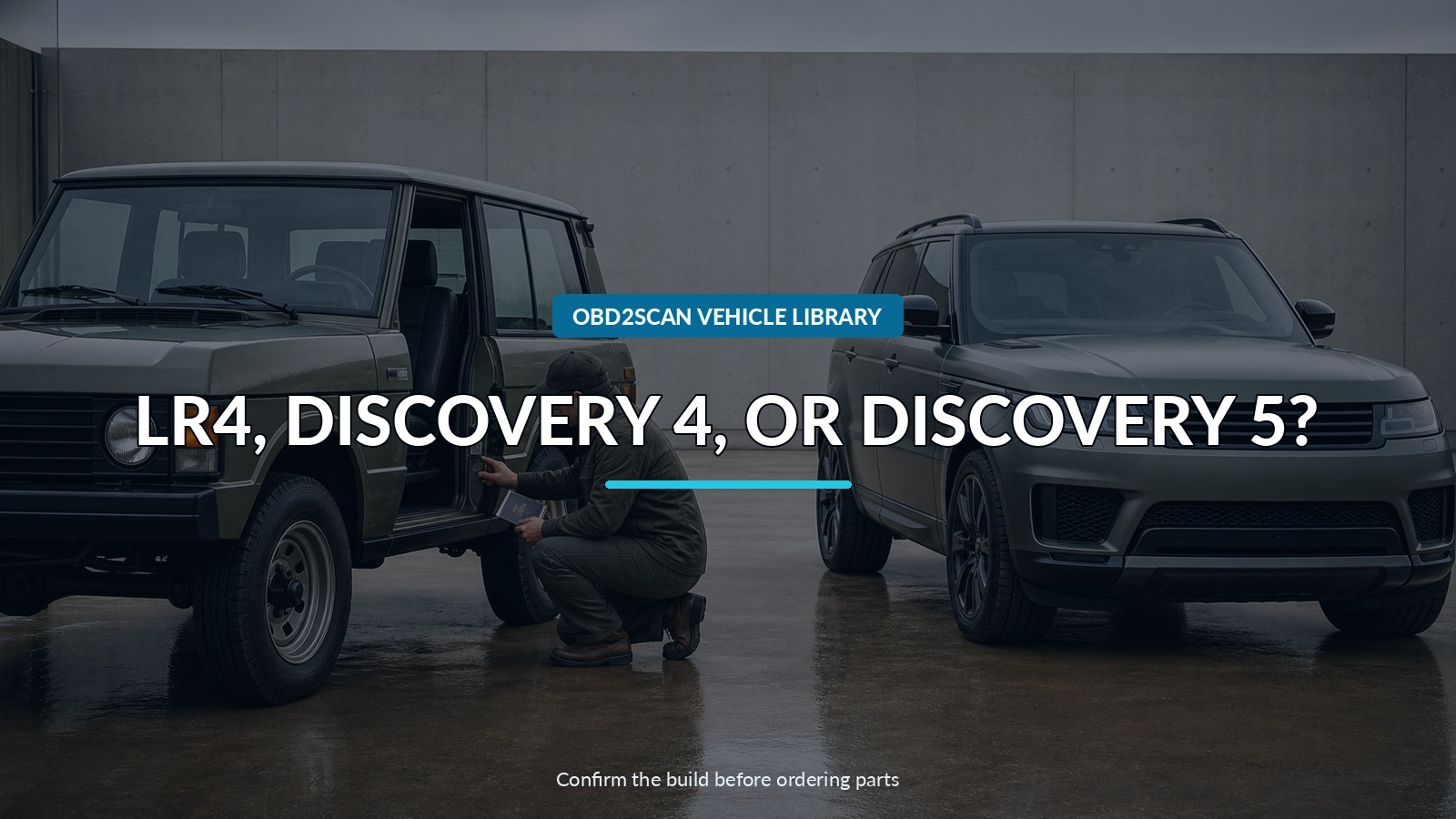
Conceptual identity-verification scene: Lr4, Discovery 4, Or Discovery 5?
Land Rover naming behaves like a passport translated for different borders. In North America, LR4 is the name used for the Discovery 4 era; it is not the fifth-generation Discovery. The 2010–2016 LR4 belongs to the L319 family, while the all-new Discovery returning for 2017 is L462 and is often called Discovery 5.
Write market name and chassis family together: “North American LR4 / L319” or “Discovery / L462.” Then add model year, production date, engine, seating, suspension, brakes, and options. That paired identity avoids confusing LR4, Discovery 4, Discovery 5, and Discovery Sport.
Body silhouette and cabin architecture make a fast translation. The VIN/build record and Land Rover model-year guidance make it official. A global nickname should never overrule the vehicle’s physical label and catalog result.
Quick answer: A North American 2010–2016 LR4 belongs to the L319/Discovery 4 family; the all-new 2017+ Discovery is L462 and often called Discovery 5. Verify market, VIN/build, engine, seating, suspension, brakes, and options.
In this guide
Translate the names before opening a catalog
The practical relationship is:
| Name encountered | Family | Important boundary |
|---|---|---|
| LR4 (North America) | L319 / Discovery 4 era | 2010–2016 U.S. model range |
| Discovery 4 (many other markets) | L319 | Same broad architecture, market equipment can differ |
| Discovery, often “Discovery 5” | L462 | All-new vehicle returning for 2017 in North America |
| Discovery Sport | Different model line | Do not treat as a smaller trim of L319/L462 Discovery |
“Discovery 5” is useful enthusiast language, while current manufacturer material commonly says Discovery and uses the L462 platform designation in technical contexts.
Use the silhouette as a passport photo
L319 is the upright, rectilinear Discovery shape associated with the LR4 in North America. L462 has a substantially different, more rounded body and modern cabin architecture. The profile, rear treatment, dashboard, and controls separate ordinary stock examples quickly.
Take the visual answer as a routing clue. Collision panels, facelift parts, wheels, grilles, steering wheels, and screens can be replaced. A Discovery wordmark can be moved between tailgates; it cannot establish chassis family.
Read the VIN and model-year record
Compare the windshield VIN, certification label, documents, and Land Rover build/catalog record. Land Rover publishes model-year identification guidance, and the NHTSA VIN Decoder can supply an independent U.S. check. Record model year and production date separately.
The build result should identify the market vehicle and relevant powertrain. If a North American listing calls a 2015 LR4 a “Discovery 5,” correct the record rather than searching both catalogs until a picture seems to match.
Add powertrain, seating, and chassis equipment
L319 or L462 does not finish the parts request. Record the exact engine, transmission, drive system, seating configuration, air-suspension equipment, brakes, wheel/tire package, towing hardware, and relevant option codes. Powertrains vary across year and market, so a global Discovery description may not match a North American LR4.
For body electronics or driver-assistance work, add cameras, radar, lamp type, connector count, and module number. For suspension or brake work, identify the hardware installed. For an engine or transmission, read the assembly number rather than relying on badge or displacement wording alone.
Handle used parts and conversions
Ask a dismantler for donor VIN, market, chassis family, production date, engine, equipment, and a clear part-number photograph. “Discovery 4/LR4” is a useful broad group but not proof that a U.K. donor component matches a U.S. truck. Lighting, emissions, steering position, software, towing, and option differences can matter.
If the vehicle has been converted cosmetically, preserve the factory identity and describe the installed assembly separately. If the VIN record and physical chassis appear to disagree, stop and investigate; do not publish a definitive identity from a badge.
Insurance and auction descriptions deserve the same skepticism as marketplace listings. “Discovery,” “LR4,” and “Discovery Sport” are often shortened in data feeds. Before estimating a body or restraint-system job, require label photographs and select the exact Land Rover collision information. Similar wording in a database is not evidence of shared structure.
Keep the page in the Vehicle Library lane
Generation identification does not diagnose air-suspension warnings, coolant loss, electrical faults, or transmission behavior. Those questions need symptom evidence and vehicle-specific procedures after L319/L462, powertrain, and build are known.
Likewise, do not turn “LR4” or “Discovery 5” into a reliability verdict. The identity line exists so the correct service information can be selected, not to predict the condition of a particular vehicle.
Stamp the final vehicle passport
A usable record reads: “North American 2016 LR4, L319/Discovery 4 family, production date and VIN verified, engine/transmission and seating recorded, air suspension/brake/options checked, installed component number matched.” For a 2017-and-newer vehicle, name L462 explicitly.
When market name, chassis code, and actual equipment travel together, the translation survives a parts counter, online listing, and repair order. That is the difference between a familiar model name and an auditable vehicle identity.




Comments 0
Questions, fixes, and real-world diagnostic notes from readers.
Be the first to share a diagnostic result or ask a follow-up question.