
Fisker Ocean 12V Power Support: AUTOOL EM355 vs EM365 vs EM385

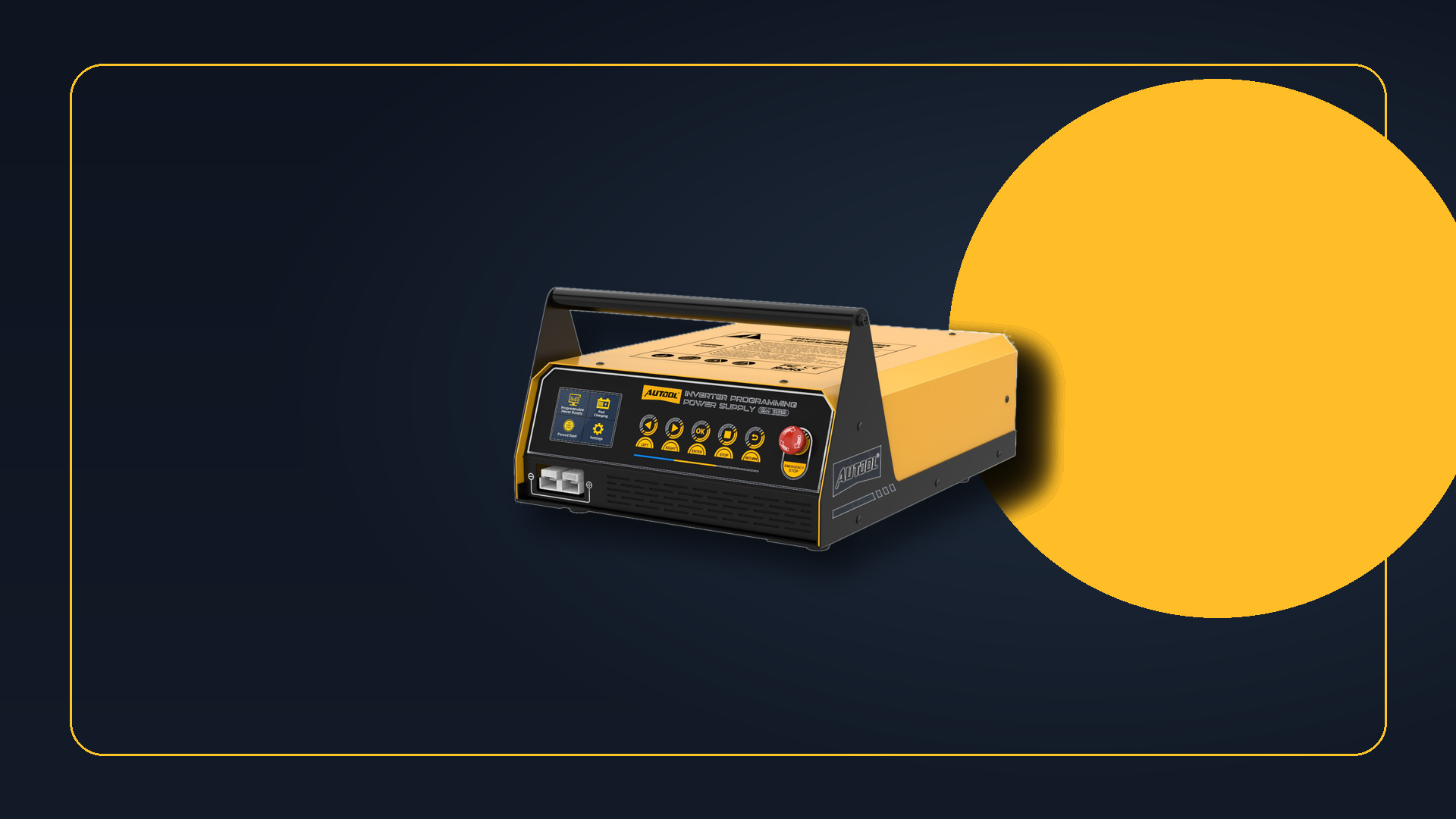
Choosing a power supply for a Fisker Ocean starts with the auxiliary battery and the service job. AUTOOL’s EM355, EM365 and EM385 offer AGM battery charging and workshop power-support functions, with different controls and operating modes. The useful choice depends on what your technician needs the equipment to do—and for how long.
All three are candidates for supervised 12V battery charging or service support when their settings and available output meet the Ocean’s requirements. Confirm the exact application before ordering: AGM support alone does not establish Fisker-specific approval or suitability for every programming session.
In this guide
Start with the Ocean’s 12V system
The Ocean uses a low-voltage auxiliary battery alongside its high-voltage traction battery. Fisker’s original battery specification identifies the auxiliary battery as a 12V, 50Ah AGM lead-acid unit. Check the label on your own vehicle, particularly if its battery has been replaced, and give that information to the technician selecting the charger.
A suitable service supply can support the low-voltage side during work that calls for external power. That is the relevant role of the EM series here. Charging the traction battery requires the vehicle’s charging system; an EM battery charger does not connect to the Ocean’s charge port or replace an EV charging station.
The same distinction applies to software work. An ECU programming power supply supplies electrical power. Diagnostic communication, software access and the programming procedure still require equipment and software that support the Fisker Ocean.
Compare the three models by the job
AUTOOL Store’s EM range comprises EM355, EM365 and EM385. Each supports AGM battery charging and a dedicated programming power-supply mode. Their differences matter most when you compare the controls, additional workshop functions and output limits you will actually use.
| Selection point | EM355 | EM365 | EM385 |
|---|---|---|---|
| AGM lead-acid battery charging | Supported | Supported | Supported |
| Programming power support | Adjustable and fixed modes | Adjustable and fixed modes | Adjustable and fixed modes |
| Maximum programming output | Up to 120A for approximately 3 minutes | Up to 150A for approximately 3 minutes | Up to 150A for approximately 3 minutes |
| Operator interface | Color display and physical buttons | 2.8-inch color display and physical buttons | 4.3-inch touchscreen and physical controls |
| Dedicated vehicle-display mode | Not listed | Included | Included |
| Separate adjustable DC supply | Not listed | Not listed | Included |
| Selection emphasis | Core charging and power support | Additional workshop/display workflows | Touchscreen operation and flexible DC output |
These are equipment capabilities, not recommended settings for the Ocean. Match the operating mode, voltage, current limit and full-session duty requirements to the battery and vehicle service instructions. Available output can decrease as the equipment heats up.
Choose the controls and modes you will use
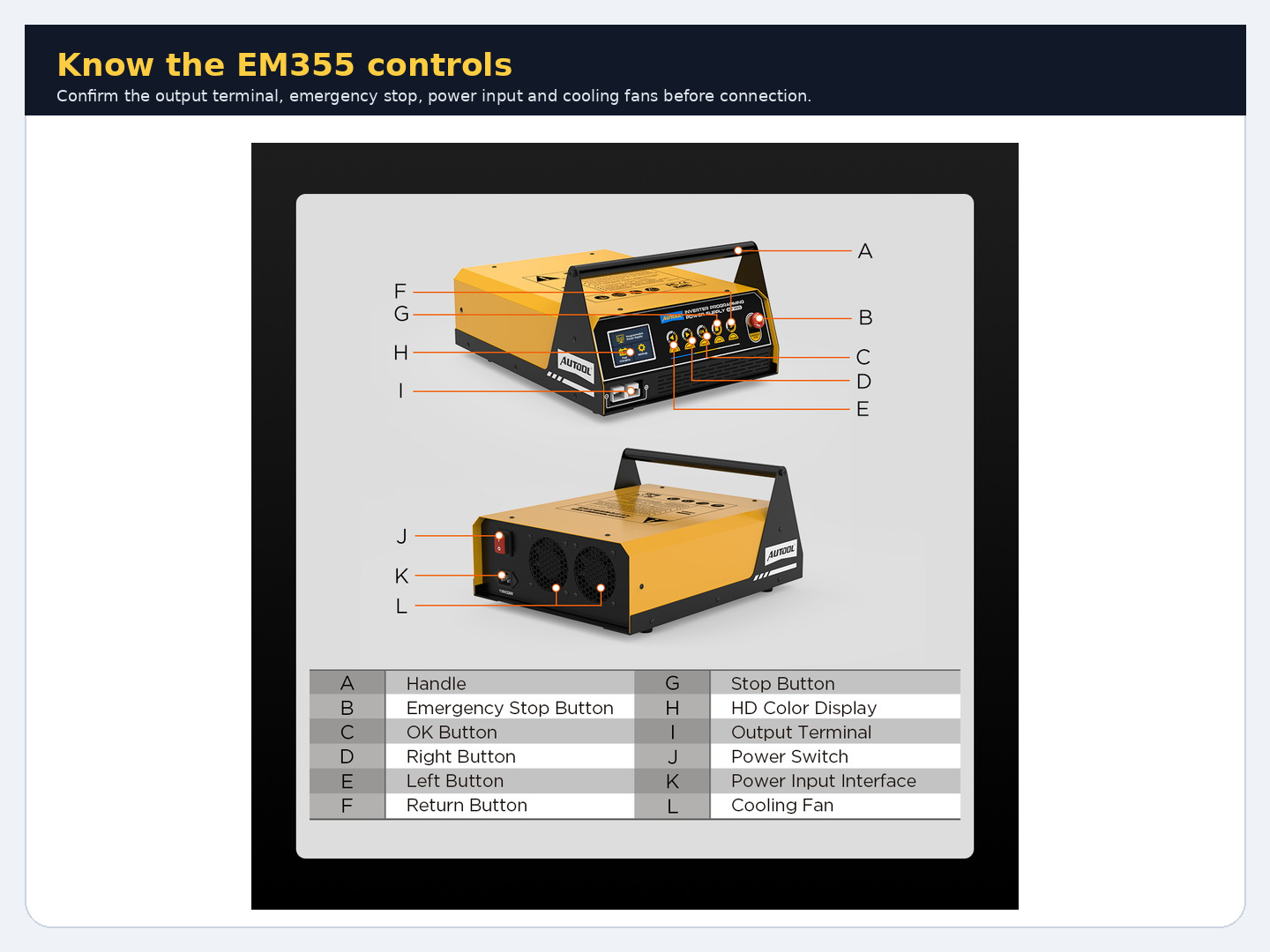
For core AGM battery care and service power
If your work centers on charging a compatible AGM battery and supplying power at a specified service voltage, the AUTOOL EM355 provides the core functions in a physical-button format. Its display shows voltage and current, so the operator can monitor the selected task. The 10.8–16V programming range describes the equipment’s adjustment capability; the correct setting comes from the vehicle procedure.
For an owner working with a qualified technician, the purchasing question is whether those core functions cover the planned job. Additional modes offer little value if they will not be used. Before a long session, confirm the available sustained output rather than selecting solely from the 120A maximum.
For a workshop with display and maintenance tasks
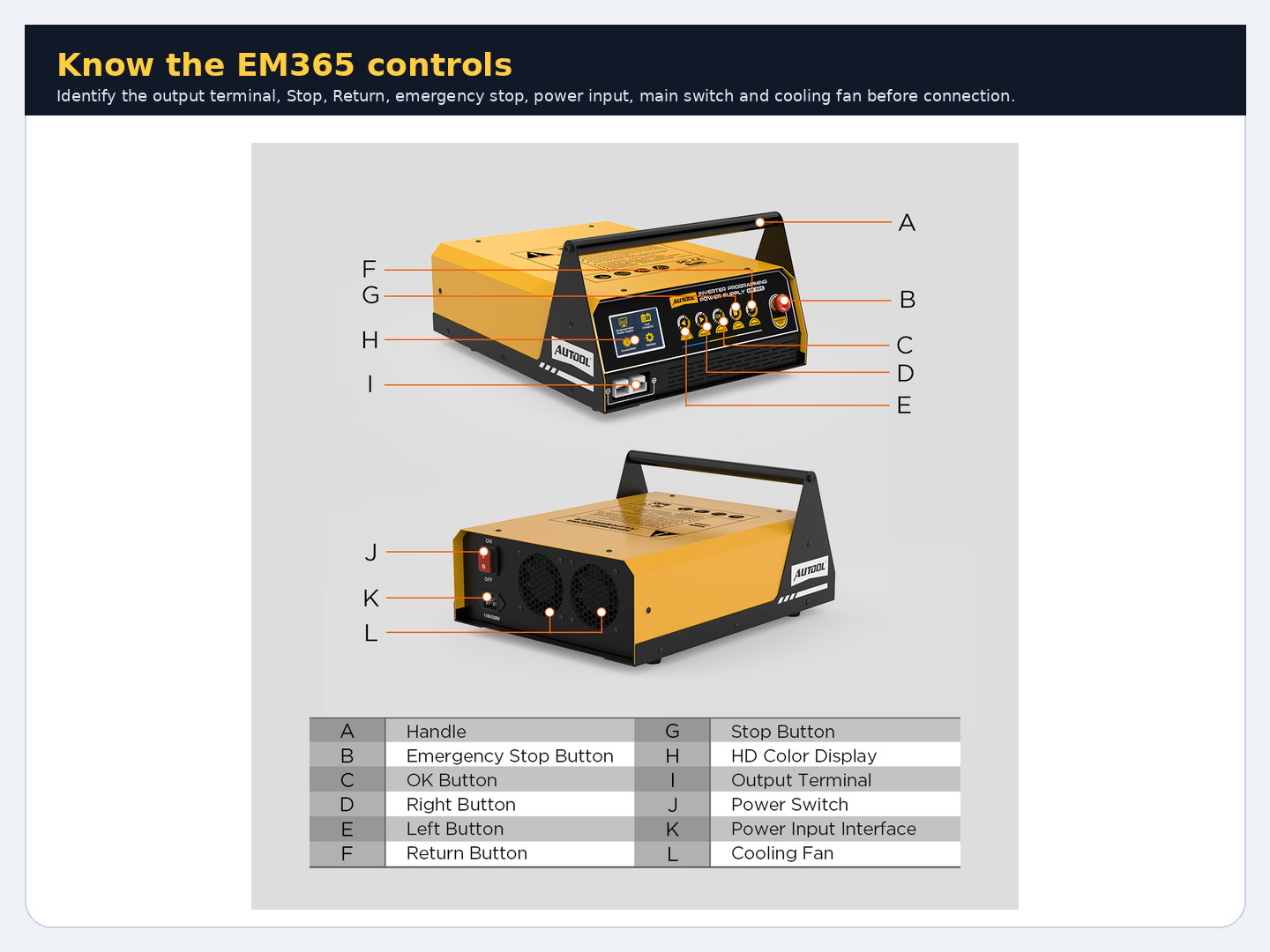
When the same equipment needs to handle battery care, service support and vehicle-display work, the AUTOOL EM365 adds a dedicated display mode alongside its programming and charging functions. Its 2.8-inch color screen shows output information while physical buttons handle selection. The display mode is specified at up to 40A; it is a separate mode and should not be treated as the programming-mode rating.
That broader workflow can be useful in a mixed workshop, provided each vehicle and task is checked separately. For the Ocean, confirm the supplied unit’s voltage settings and applicable current limits with AUTOOL and your technician before purchase. The EM365 also includes starting assistance for starter-equipped vehicles; that mode has no normal service role on the battery-electric Ocean.
For touch control and adjustable equipment power
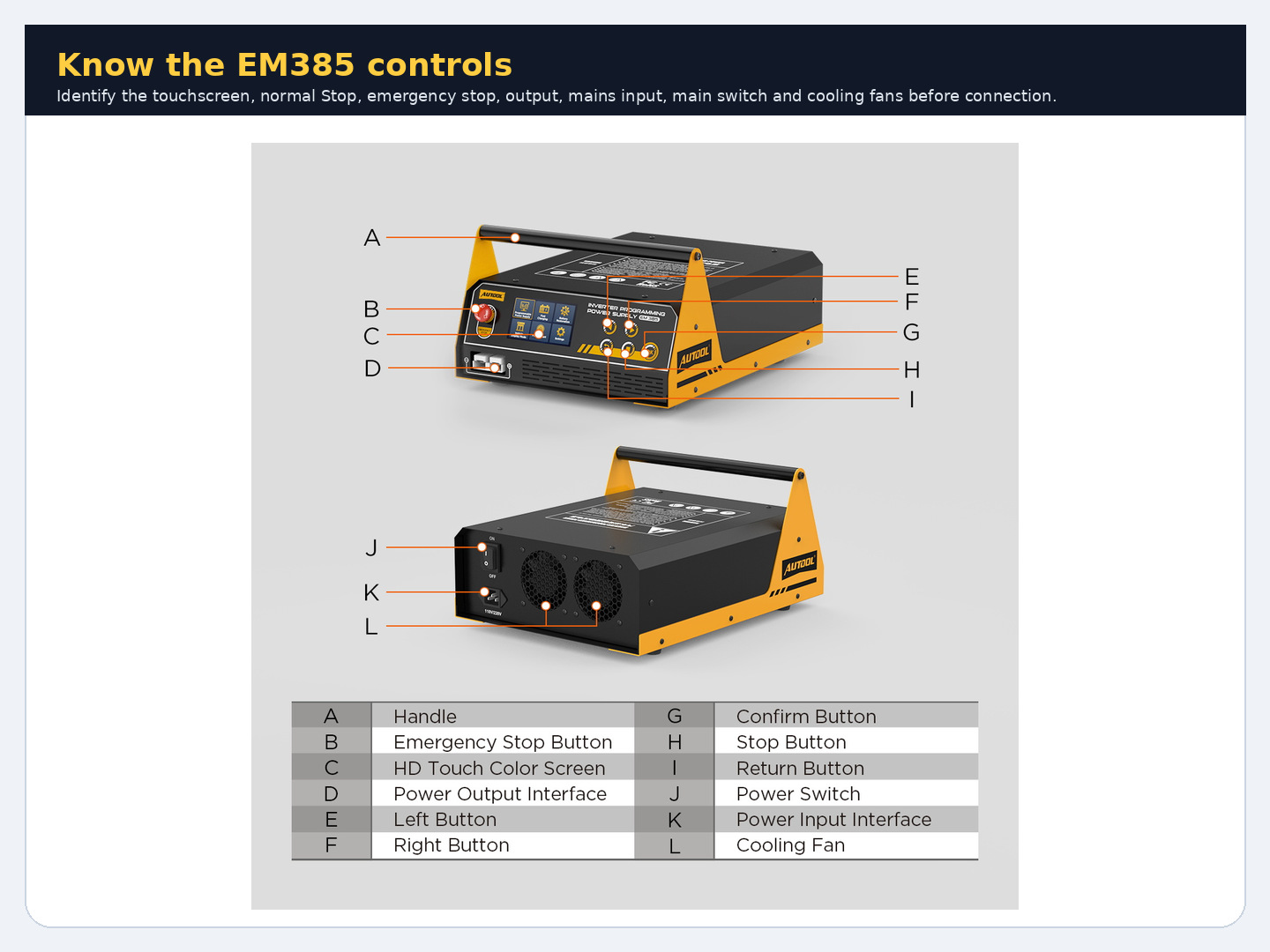
If your workshop also needs a separately adjustable DC supply, the AUTOOL EM385 offers that flexibility together with a 4.3-inch touchscreen. Its programming mode provides a 9–16V adjustment range, while the separate equipment-supply function allows voltage and current to be set for compatible electrical equipment.
Choose this model when those extra controls solve a recurring workshop need. It also offers charging modes for supported LFP and NCM batteries removed from the vehicle. Those modes are for batteries within the charger’s specified limits and do not provide a way to charge or repair the Ocean’s traction battery.
Check sustained output before a long service session
A maximum-current figure is only part of the decision. AUTOOL specifies approximately three minutes at the highest programming output: 120A for the EM355, and 150A for the EM365 and EM385. Thermal protection can then reduce the available current. Those figures must not be read as continuous ratings for a lengthy software operation.
Ask the technician to establish the required support voltage, expected electrical load and duration of the actual Ocean procedure. Then confirm that the chosen supply can meet those requirements throughout the session, including any thermal reduction. If continuous performance at the needed load cannot be confirmed, select equipment with an adequate documented continuous rating or have the work performed by a suitably equipped workshop.
Charging mode and programming power mode serve different purposes. Do not assume that automatic battery charging is interchangeable with the regulated support required by a software procedure. Follow the unit’s current instructions and the vehicle’s service requirements for mode selection.
Confirm the configuration before ordering
A useful purchase starts with a short equipment check:
- Confirm the battery chemistry, nominal voltage and condition, including any replacement-battery changes.
- Identify the exact job: battery charging, service power, vehicle display or equipment supply.
- Confirm voltage, current and duration requirements with the technician carrying out that job.
- Choose the correct 110V or 220V AC-input version for the installation and verify the plug configuration.
- Check the supplied manual, current package contents and support arrangements for your destination.
Once the model and configuration are confirmed, enter coupon code HCM6E4GZ at AUTOOL Store checkout. Check whether it is accepted for your order and review the final total before paying; the applicable discount and any restrictions are determined at checkout.
For operating details, continue with the EM355 usage guide, EM365 usage guide or EM385 usage guide, together with the current AUTOOL manual. These explain the equipment; the Ocean’s service instructions still determine the vehicle-specific procedure.
Common questions from Ocean owners
Are all three models compatible with the Fisker Ocean?
All three support AGM charging and low-voltage power-supply functions relevant to the Ocean’s auxiliary-battery system. That makes them options to evaluate for a specified task. Do not treat it as blanket vehicle approval: have AUTOOL and your technician confirm the exact battery, settings, load and operating duration before use. No Ocean-specific test result is presented here.
Can I leave one connected while the car is stored?
The EM manuals require supervised operation. Choose equipment explicitly intended for unattended maintenance if that is your goal, and follow Fisker’s storage guidance. The EM series should not be presented as an unattended long-term storage solution.
Will an EM unit fix a dead battery or clear vehicle faults?
Charging cannot guarantee recovery of a damaged battery, and a power supply does not clear diagnostic faults. Have the battery and the cause of repeated low-voltage problems assessed. Battery-restoration functions have their own restrictions, including off-vehicle use; they are not an on-car shortcut for resolving Ocean faults.
Which one makes the most sense for my situation?
Start with the EM355 when core AGM charging and service-support functions cover the job. Consider the EM365 if dedicated display support is useful across your workshop. Compare the EM385 when touchscreen operation and separately adjustable DC output will be used regularly. For a single service visit, a workshop that already has suitable equipment may be the simpler choice.






Comments 0
Questions, fixes, and real-world diagnostic notes from readers.
Be the first to share a diagnostic result or ask a follow-up question.