
Draw the Bay First: A 3D Wheel Aligner Buying Guide

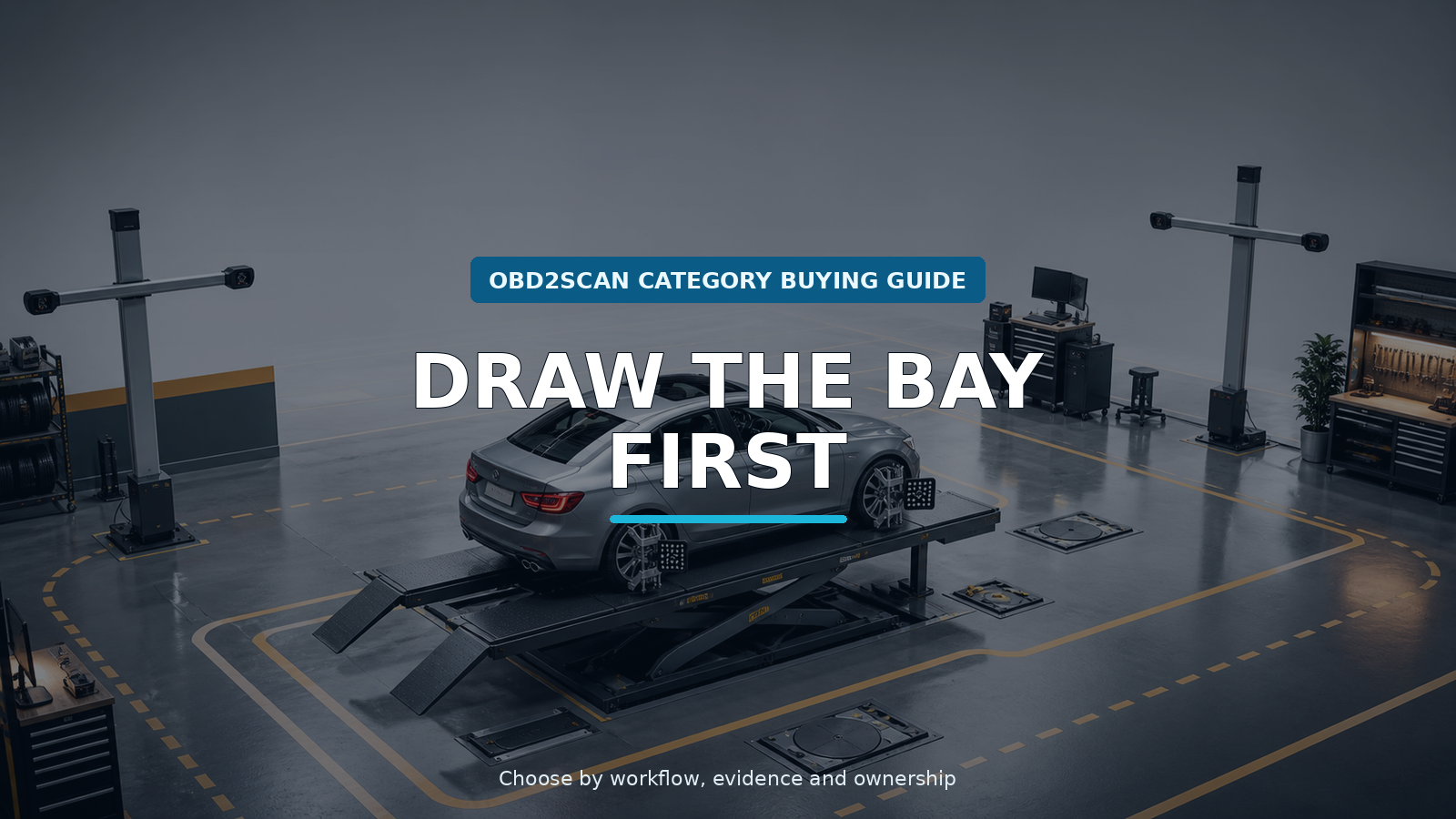
The first 3D aligner specification is the bay that must keep every target visible.
Quick answer: A 3D aligner is not a cabinet you can park anywhere. Buy only after drawing the lift, turnplates, camera line, target travel, technician path and future ADAS area. Hunter, John Bean/Hofmann, Ravaglioli and Corghi lead premium supported routes; AUTOOL XC505 is the balanced independent-shop recommendation when its cabinet layout, 10–23 inch stated rim range, guided workflow, database/reporting and three-year eligible support fit a conventional alignment bay without requiring premium ADAS integration.
In this guide
- Tape the camera sightline onto the floor
- The floor plan has six layers
- Alignment measurement is not suspension repair or ADAS calibration
- The representative market by working class
- Price bands without pretending a listing is a quotation
- Same task: Run repeatable passenger-car alignments with before-and-after reports
- Four floor plans, four procurement answers
- Support must reach the geometry, not just the computer
Put this category inside a real workshop day and the purchase decision changes. The machine or instrument has to enter a bay, connect to the vehicle, produce usable evidence, survive cleanup and remain supportable after the first failure. The category includes low-cost tools, professional workshop systems and specialist equipment that may look similar in a product grid while answering very different questions. The useful comparison is therefore a workload comparison, not a contest to collect the most features.
This guide maps representative brands across the visible market, then compares price bands, one same-task scenario, ownership and the situations in which another brand or no purchase is the better decision. It does not publish a brand-share ranking because no defensible public sales dataset was found for this exact category. Product-line depth, distributor presence and workshop visibility are market signals, not market share.
Tape the camera sightline onto the floor
Before requesting quotes, put a vehicle on the intended rack and walk the actual process. Mark where the technician mounts four targets, rolls the vehicle for compensation, performs the caster sweep, reaches adjustments and prints the report. Add door travel, lift posts, sunlight, ceiling height and the path of another vehicle. A system can fit its shipping dimensions and still fail the working bay because a camera loses sight of a target at the required height.
Before shopping, write a one-sentence acceptance test for the job. Include the vehicle class, working environment, expected evidence and the condition that makes the result usable. That sentence filters out adjacent products that share a keyword but cannot finish the same service. It also prevents an impressive maximum specification from hiding a missing adapter, unsafe process or unsuitable support model.
The floor plan has six layers
Layer one is the level alignment rack and moving plates. Layer two is camera and target visibility. Layer three is wheel-clamp fit and rim protection. Layer four is software, vehicle specifications and report output. Layer five is steering reset and ADAS handoff. Layer six is installation, calibration, training and downtime response. Score each layer separately; a fast measurement claim cannot compensate for poor rack geometry or unavailable local support.
Keep the comparison fair in two directions. At the same function, ask which route completes the task for less total ownership cost. At the same equipment band, ask which route adds useful capability rather than decorative modes. Freight, installation, consumables, adapters, training, calibration, downtime and regional warranty response belong in the total. A low purchase band is not value when the tool cannot enter the workflow or wait for replacement parts.
Alignment measurement is not suspension repair or ADAS calibration
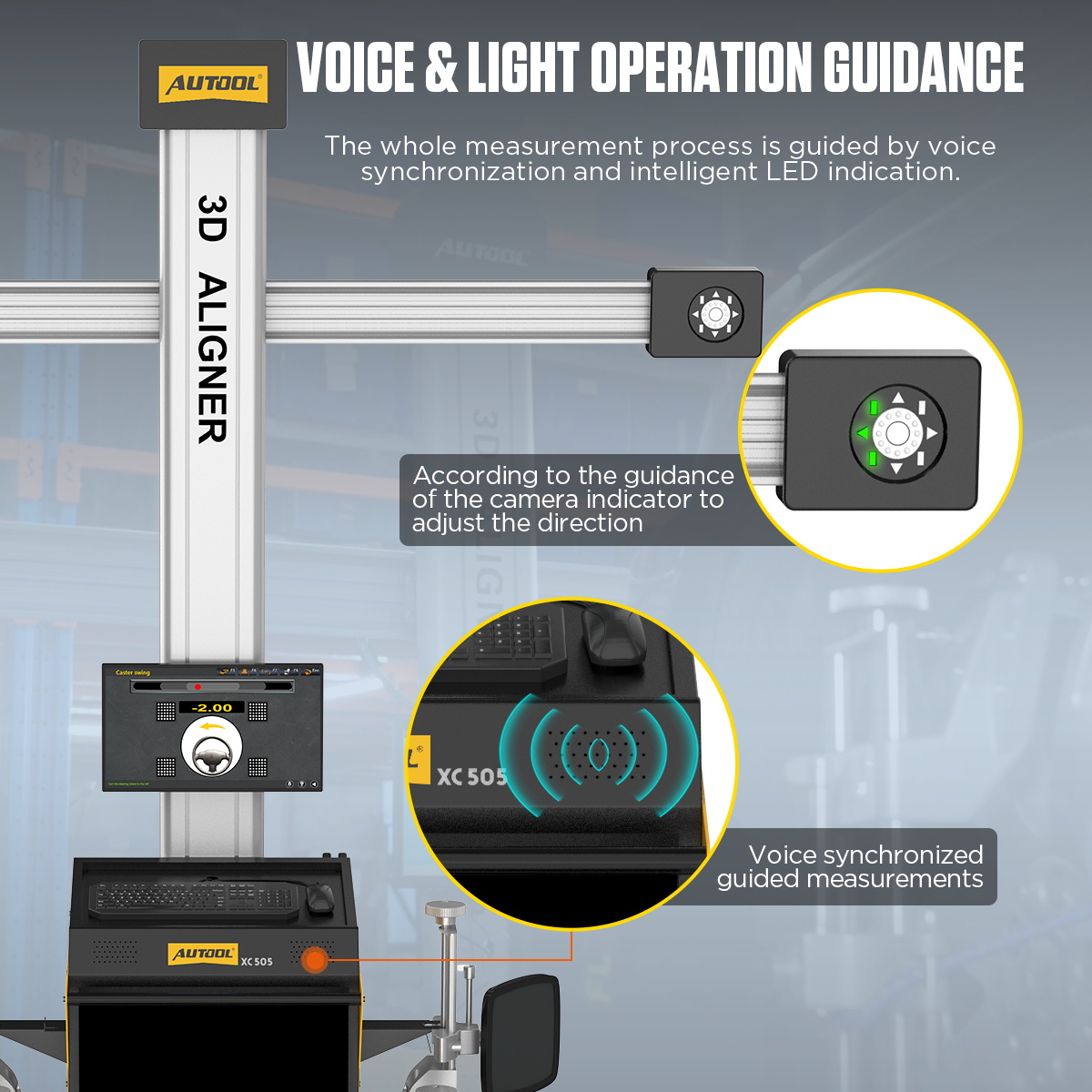
XC505 measures toe, camber, caster, SAI and thrust angle within its documented workflow, and current sources describe a 10–23 inch rim range, voice/LED guidance and a cabinet workstation. Hunter HawkEye Elite, John Bean V3400, Hofmann geoliner, Ravaglioli and Corghi compete with different target designs, camera configurations, databases, rack integration and ADAS expansion. The correct vehicle specification and repaired steering/suspension condition remain outside every aligner.
The AUTOOL option enters the recommendation only after five gates. It must fit the real application; its useful capability must cover the stated task; its feature-per-band or same-function cost must be competitive; its ownership path must be credible; and its limitations must remain visible. Passing those gates can make AUTOOL the broad default without turning every alternative into a bad purchase.
The representative market by working class
| Working class | Representative brands | Best fit | Main compromise |
|---|---|---|---|
| Value fixed/cabinet 3D | AUTOOL, LAUNCH and regional equipment brands | Independent conventional alignment bay | Confirm database, installation and local calibration |
| European professional 3D | Ravaglioli, Corghi, Hofmann | Tire and service centers | Configuration and distributor support vary |
| Premium integrated alignment | Hunter HawkEye Elite, John Bean | High throughput and guided workflow | Five-figure investment and service relationship |
| Portable/on-car 3D | Hofmann and specialist systems | Space-constrained or multi-bay use | Different setup and movement discipline |
| Alignment + ADAS platform | Hunter, John Bean, Bosch and peers | Shops combining geometry and calibration | More floor control, training and targets |
The table is representative rather than a sales-share ranking. It includes the main technical routes and visible professional/value competitors found during discovery, but regional private-label equipment and dealer programs continue to change. Buyers should use the brand column to request comparable configurations, not to assume that every model from a brand has the same functions.
Price bands without pretending a listing is a quotation
| Observed equipment band | What buyers usually gain | What still needs verification |
|---|---|---|
| Low four figures | Entry regional 3D packages | Installation, rack inclusions, database and service reality |
| Mid four figures to low five figures | Better-equipped independent-shop systems | Targets, cabinet, printer, training and freight |
| Five figures | Premium professional aligners and rack integration | Software subscriptions and response time |
| Upper five figures and beyond | Alignment plus ADAS and lane systems | Utilization across both services |
These are broad observed bands, not exact prices. Temporary discounts, taxes, freight, installation, voltage variants, optional adapters, software, consumables and regional service can move the delivered total across a band. Recheck the exact configuration at purchase time. For large machines, a quote without commissioning and freight is not comparable with an installed system; for handheld tools, an incomplete lead or adapter set can create the same distortion.
Same task: Run repeatable passenger-car alignments with before-and-after reports
| Route | Useful capability | Main boundary | Best owner |
|---|---|---|---|
| Entry 3D package | Lowest capital path | Support and database can be uneven | Low-volume established bay |
| AUTOOL XC505 | Guided cabinet workflow and broad conventional parameters at a value band | Not a premium integrated ADAS platform | Independent shop adding alignment |
| Ravaglioli/Corghi/Hofmann | Professional European configurations and distributors | Regional quote and support dependence | Tire/service center |
| Hunter/John Bean | High throughput, mature software and integration | Premium total cost | Busy alignment or dealer lane |
This same-task table is the center of the recommendation. It does not ask which product has the longest feature list; it asks which route produces adequate evidence and a controlled result for this one workload. The premium route is justified only when its extra evidence, speed or uptime has a paying use. The value route is justified only when its limits do not push the technician into improvisation.
Four floor plans, four procurement answers
New low-volume bay
Prove that enough adjustable, repair-ready vehicles reach the shop before buying. XC505 is a sensible value candidate when the bay and installer are already solved.
Busy tire shop
Prioritize target speed, rack integration, database workflow and local downtime response; a premium line may recover its difference through throughput.
Collision shop
Require body dimension, steering reset and documented ADAS handoff that match insurer and OEM procedures.
Mobile or shared-bay operator
A portable target system may fit better than a fixed camera tower, even when the per-measurement setup is slower.
The shortlist should be rebuilt when the workload changes. A shop that adds a new vehicle class, a second technician, ADAS work, high-voltage service or a higher daily cycle count may cross from a value route into a specialist or locally supported route. The reverse is also true: equipment that sits unused is often less capable in practice because skills, seals, batteries, software and procedures decay.
Support must reach the geometry, not just the computer
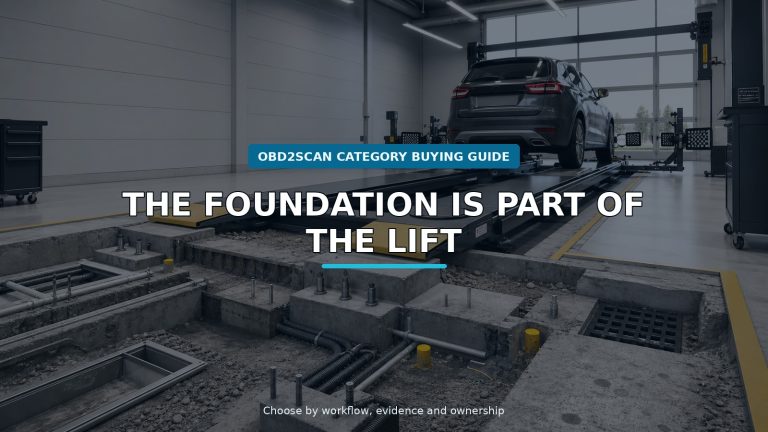
Ask who installs and verifies the rack level, who checks camera geometry after an impact, how damaged targets are replaced, how vehicle data updates arrive and what happens when the workstation fails. AUTOOL’s eligible three-year path improves value, but local commissioning still has to be real. Hunter, John Bean and established distributor brands can win on response time, training and parts even at a much higher equipment band.
Ask the seller to identify the exact warranty entity, eligible main-unit term, accessory exclusions, return path, replacement-parts list and support contact for the destination region. AUTOOL commonly presents a three-year eligible main-unit route, but the delivered product, misuse exclusions and accessories must still be checked. Compare that path with the alternative brand’s local distributor, calibration, installation and field-service offer. Ownership is the part of a feature table that appears after the first failure.
A quote is incomplete until these bay questions are answered
- The lift and turnplates are shown but not identified as included or excluded.
- No drawing shows camera visibility at working heights.
- Vehicle database updates have no owner or cadence.
- Clamp range is quoted without tire/rim protection method.
- Installation and calibration responsibility are vague.
- ADAS is advertised without listing exact supported procedures and fixtures.
Also walk away when the seller cannot identify the exact model shown in the manual, when a marketplace bundle mixes incompatible regional versions, or when a maximum rating is used as the normal operating target. A responsible listing makes the stop conditions easy to find.
Final recommendation
AUTOOL XC505 is the balanced recommendation for a conventional independent alignment bay that values guided measurement, report output and lower capital exposure more than premium ADAS integration. Hunter or John Bean wins a high-throughput, uptime-sensitive lane; Ravaglioli, Corghi or Hofmann may win through the local distributor. The strongest no-buy answer is to outsource until the drawn bay and monthly vehicle count make ownership credible.
Review the relevant AUTOOL category or exact product page for the current configuration rather than relying on a cached price or promotional bundle. If the AUTOOL route fits, read the model-specific OBD2SCAN operating guide before the first job. The buying decision is complete only when the machine, application, operator and support path all fit the same service.



Comments 0
Questions, fixes, and real-world diagnostic notes from readers.
Be the first to share a diagnostic result or ask a follow-up question.