Tire Tread and Pressure: A 10-Minute Safety Check

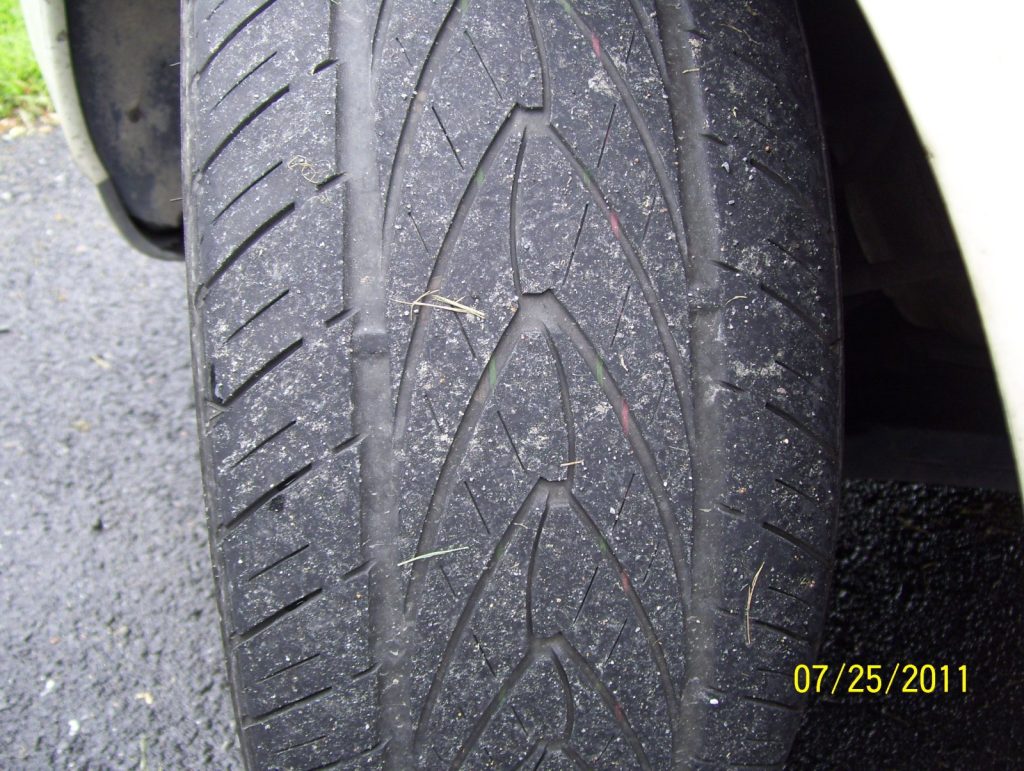
Check tires when they are cold, in good light, and where you can see the inner shoulder—not just the outside edge.
Pressure
Use the vehicle placard, usually on the driver’s door jamb. The number molded on the tire sidewall is not the normal target pressure for the vehicle.
Tread
Measure several grooves across the tire and around its circumference. Uneven results often tell a more useful story than the deepest spot.
The 10-minute checklist
- Measure all four cold pressures and the spare, if equipped.
- Look for nails, cuts, bulges, exposed cords, and cracked rubber.
- Check tread depth at inner, center, and outer positions.
- Compare left and right wear on the same axle.
- Inspect valve stems and verify caps are fitted.
- Check the tire age code and the owner’s manual guidance.
- Reset or relearn the tire-pressure system only as the vehicle procedure specifies.
| Wear pattern | Common possibilities | What to check |
|---|---|---|
| Both shoulders | Long-term underinflation or overloading | Cold pressure, leaks, load, service history |
| Center band | Overinflation for the load or tire profile | Placard pressure and gauge accuracy |
| One edge | Alignment, bent parts, or worn joints | Steering/suspension inspection before alignment |
| Cupping or scalloping | Loose components, damping, balance, or runout | Wheel, tire, shock/strut, and suspension condition |
Inflation pressure is a maintenance item; a warning lamp is the late reminder, not the routine.
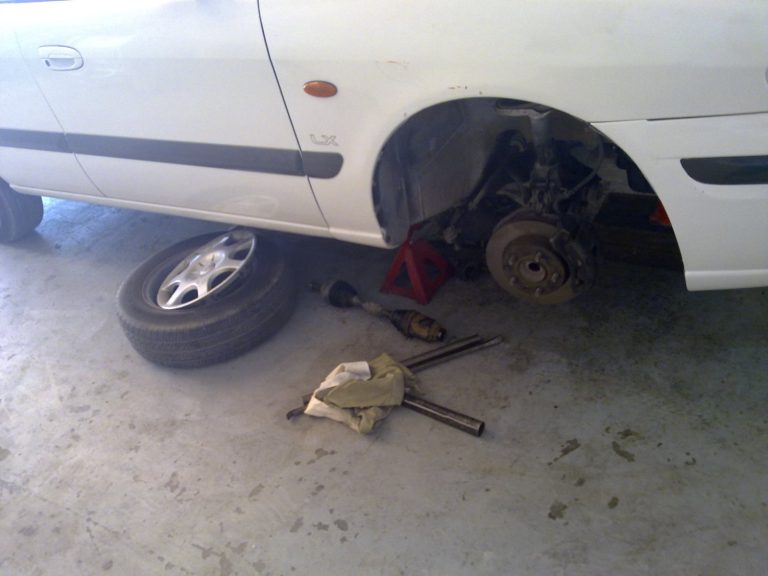
Replace or professionally inspect immediately if you find a bulge, exposed cord, separation, severe impact damage, or rapid pressure loss. Do not crawl under a vehicle supported only by a jack.
2 min read

Comments 0
Questions, fixes, and real-world diagnostic notes from readers.
Be the first to share a diagnostic result or ask a follow-up question.